Providing Best Services in Huntsville & Madison, AL


Follow us on Social.





Sep 1, 2026

3 min

Landscape Design
How to Make a Rain Garden Step by Step
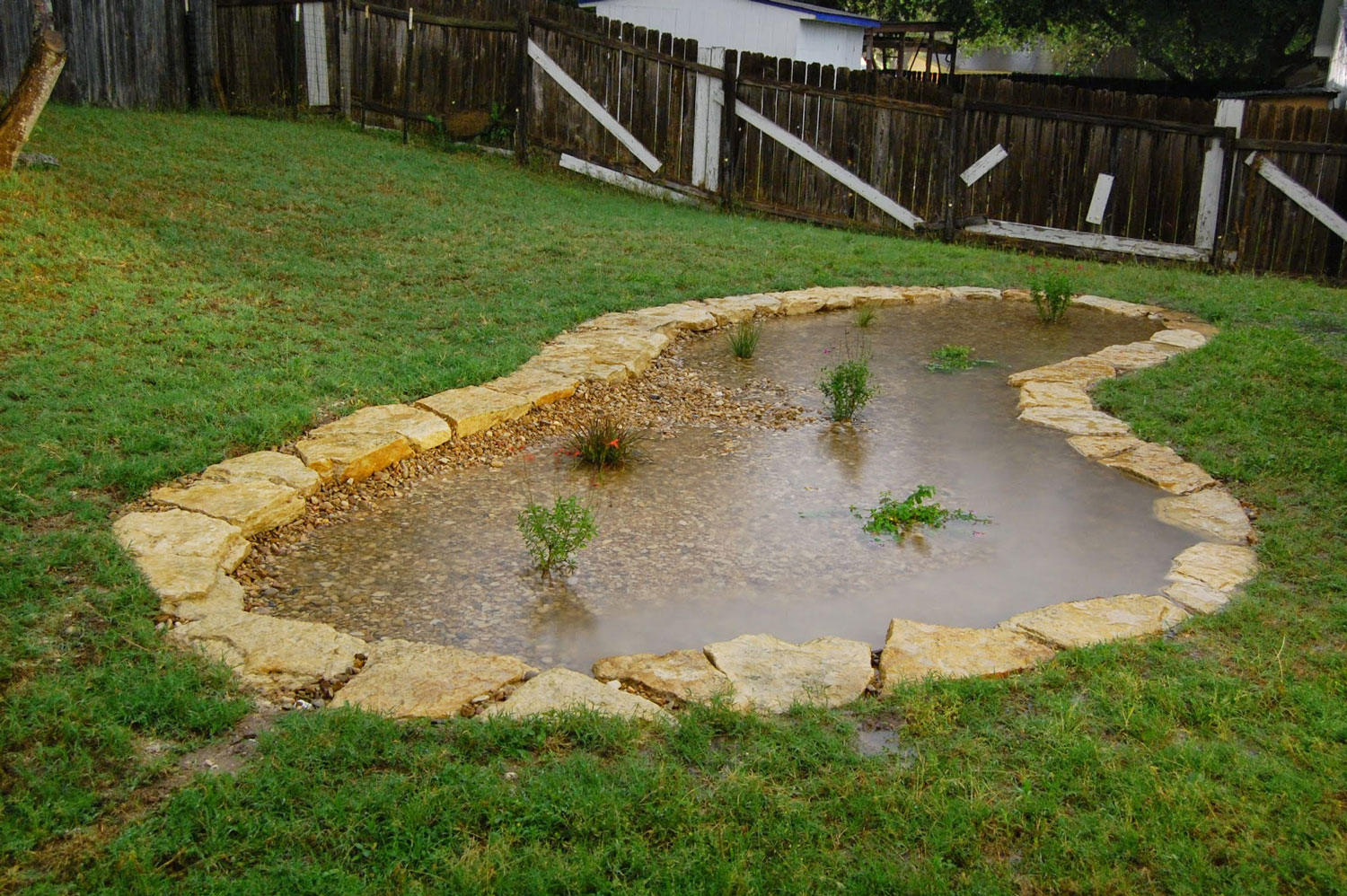
You make a rain garden by choosing a spot at least 10 feet downhill of your foundation, running a percolation test on that spot, sizing the basin at about 10 percent of the hard surface draining to it, digging 3 to 6 inches of ponding depth based on your soil, then shaping a berm and overflow and planting by moisture zone. The whole build takes a weekend for a small garden.
Below we walk all ten steps with the numbers that decide each one, cover what changes on clay soil, reconcile the conflicting sizing rules published by different sources, and list the mistakes that cause most rain gardens to fail.
How to Make a Rain Garden Step by Step
You make a rain garden step by step by working through location, testing, sizing, excavation, shaping, media, planting, and connection in that order. The sequence matters because each step's dimensions are set by the step before it, and skipping the soil test is what causes most failures. A rain garden is an excavated depression planted with wet-tolerant species that captures runoff from a roof, driveway, or walkway and lets it soak into the ground instead of running off, and the EPA notes that these gardens also filter pollutants out of that runoff.
Filtering happens because water slows down long enough for soil and roots to work on it. That slowdown is also what makes the garden effective at volume: Princeton Hydro reports that a garden intercepting only the first inch of rain still captures roughly 90 percent of total annual rainfall, since most storms are small. Large storms overflow by design.
Design by overflow is the difference between a rain garden and a pond, and it is worth reading how the whole system functions before you dig. We covered what a rain garden does hydraulically in a separate post.
Here are the ten steps in build order:
- Watch where water goes during a storm. Note the paths and the low points before you pick anything.
- Choose a location at least 10 feet downhill of the foundation, off any septic field, outside tree drip lines, and away from ground that already stays wet.
- Call 811. The Alabama Cooperative Extension System notes that safe digging is required by law in Alabama and that the call must go in at least two days ahead.
- Run a percolation test. Dig a 12-inch hole, add 8 inches of water, and time the drawdown.
- Measure the impervious area draining to the site. Roof sections, driveway, sidewalk, and patio all count.
- Size the basin and set the ponding depth using your infiltration rate and the 10/20 rule below.
- Excavate to depth plus mulch allowance, with a flat bottom and gently sloped sides.
- Build the berm, the stone inlet, and the overflow spillway from the excavated soil.
- Backfill with the soil media and till compost into the top 12 inches.
- Plant by moisture zone, mulch, then connect the downspout last.
Step one carries more weight than its position suggests, because a garden built in the wrong place cannot be fixed by good work in steps two through ten.
How Do You Build a Simple Rain Garden?
You build a simple rain garden by treating one downspout, digging one shallow basin, cutting one overflow, and planting one hardy palette. A single-downspout garden of 50 to 100 square feet is the standard residential starting point, and Earthwatch Institute reports that the typical residential rain garden falls in exactly that range at a dug depth of 6 to 12 inches.
That dug depth covers both the ponding volume and the mulch layer, so the simple version still needs the same arithmetic as a larger one. What the simple version can skip is the piped downspout connection, the engineered soil media, and the multi-zone plant plan. Grading the ground so water sheets into the basin works in place of a pipe when the downspout already discharges nearby.
What cannot be skipped is the overflow and the percolation test. A basin with no overflow path sends water wherever gravity decides during a large storm, which is usually the worst available direction.
Small gardens also stack. Alabama Extension notes that if a single garden will not fit, you can build multiple rain gardens or build one smaller garden and plan for it to overflow more often. That same logic applies when a yard has more than one wet zone, and we walk through the lower-disruption options to improve drainage in a separate post.
Every version of the build, simple or engineered, starts from the same siting rule.
How Far Should a Rain Garden Be From the House?
A rain garden should be at least 10 feet from the house, and 15 feet is better on flat ground. The setback exists to keep infiltrating water from reaching the foundation or the basement wall, so the garden must also sit downhill of the foundation rather than level with it. Published guidance varies: Earthwatch Institute recommends a minimum of 5 feet from any building, Friends of the Rouge sets 10 feet from your foundation and your neighbor's, and Princeton Hydro calls for at least 15 feet away and downhill.
Ten feet is the number we work from, because it satisfies the majority of published guidance and leaves margin on the 5-foot minimum. Flat lots earn the extra 5 feet, since flat ground gives infiltrating water no lateral direction to prefer.
Several locations disqualify themselves regardless of distance. Princeton Hydro advises against placing a rain garden over a septic tank or underground utility lines, against siting it inside the drip line of any tree you want to keep, and against choosing ground that is already wet from high groundwater or from water arriving off another area, since an already-saturated site cannot infiltrate anything new.
Wet ground that stays wet is a different problem with a different fix. Chronic saturation across a whole yard calls for drainage solutions that move water off the property, and a rain garden placed in that water only relocates the puddle.
A location that clears every one of those constraints still has to pass a soil test before anything gets dug.
How Do You Test Soil Drainage for a Rain Garden?
You test soil drainage for a rain garden with a percolation test that times how fast water leaves a hole. Princeton Hydro gives the protocol as a 12-inch diameter by 12-inch deep hole, a 12-inch ruler set inside it, 8 inches of water added, and the total drawdown time recorded.
Drawdown time converts directly into a rating. Princeton Hydro treats an optimal location as one infiltrating 1 inch per hour, which empties the 8-inch test in about 8 hours, and a good location as one-half inch per hour, which empties in about 16 hours. Anything slower than 24 hours points toward a different location.
Alabama Extension sets a similar floor from the design side, targeting a percolation rate of at least 1 inch per hour and treating a site that fails to draw down within 36 hours as a candidate for a wet rain garden rather than a standard one. Run the test in more than one spot, since infiltration varies across a single yard by more than most homeowners expect.
Sites that fail outright are still fixable, just not with this tool. Where infiltration is genuinely absent, French drains and dry creek beds carry water away instead of asking the soil to absorb it.
A slow result does not automatically mean failure, and that distinction matters most on clay.
Can I Have a Rain Garden in Clay Soil?
Yes, you can have a rain garden in clay soil, and the adjustment is to make the basin shallower rather than to abandon the project. Alabama Extension states that poorly drained soils do not rule out a rain garden and recommends at least 3 inches of depth for clay soils draining slower than 1 inch per hour, against 3 to 6 inches for sandy soils draining faster than that. Some published guidance disagrees, and Princeton Hydro takes the harder line that clay soils are not conducive to a rain garden at all.
The disagreement resolves on depth. A deep basin over clay holds water long enough to drown plants and breed insects, while a shallow basin over the same clay drains inside the target window because there is less volume to move. Alabama Extension makes the reasoning explicit, advising a shallower garden on clay specifically so water does not stand longer than 48 hours.
North Alabama clay puts most local yards in this category, which means the shallow-basin approach is the default here rather than the exception. Compost worked into the top 12 inches of the basin improves the media without changing the underlying soil, and a site that still refuses to draw down within 36 hours becomes a wet rain garden with a plant plan built for standing moisture.
Whole-yard clay problems run past what one basin can absorb. Where the lawn itself stays saturated, yard drainage work comes first and the garden goes in afterward.
Will Water Drain Through Clay Soil?
Yes, water will drain through clay soil, just slowly. Clay particles are small enough that the pore spaces between them restrict water movement, which produces infiltration rates well under the 1 inch per hour that Alabama Extension treats as the ideal design rate. Slow is workable; stopped is not, and the percolation test tells you which one you have.
Compaction is what turns slow into stopped. Equipment traffic, foot traffic, and construction fill all press clay particles together and close the remaining pore space, so a compacted clay yard tests far worse than undisturbed clay of the same type. Loosening the basin floor before backfilling recovers part of that lost rate.
How Long Does Clay Soil Stay Wet?
Clay soil stays wet for days after a heavy rain, and that is the constraint a rain garden has to design around. Alabama Extension sets 48 hours as the outer limit for standing water in a functioning rain garden, so the basin depth has to be small enough that clay can clear it inside that window.
Persistent wetness across an entire lawn is a separate diagnosis. Ground that stays soft between rains points to a high water table or a blocked water path rather than to slow soil, and muddy yards of that kind need the water intercepted upstream.
How Deep Does a Rain Garden Have to Be?
A rain garden has to be 3 to 6 inches deep in ponding depth for most residential sites, with the exact figure set by your infiltration rate. Alabama Extension, drawing on the Oregon Rain Garden Handbook, recommends 12 to 24 inches of depth where soil infiltrates between one-half and 1 inch per hour, 6 to 8 inches where it infiltrates 1 to 2 inches per hour, and 6 inches where it moves faster than 2 inches per hour.
Ponding depth is measured from the lowest point of the basin surface up to the elevation of the outlet, not from the surrounding lawn. Alabama Extension defines it that way because the outlet elevation is what actually controls how much water the garden holds before it spills.
Mulch changes the excavation math. Alabama Extension notes that mulch depth must be added on top of the design depth, so a garden needing 12 inches of ponding with 3 inches of mulch has to be excavated 15 inches from grade. Skipping that addition produces a garden that ponds 3 inches shallower than designed, which is the quiet reason many finished gardens overflow more than expected.
Published standards vary enough to be worth setting side by side.
SourceSizing ratioPonding depthFoundation setbackDrawdown targetAlabama Cooperative Extension System10 percent of impervious area; divide by 10 for 3 in, by 20 for 6 in3 in on clay, 3 to 6 in on sandNot specified; downhill of structuresUnder 48 hoursPrinceton HydroBottom area 1/10 to 1/6 of treated area6 to 8 inAt least 15 ft, downhillUnder 24 hoursFriends of the RougeAbout 1/5 of roof or paved area3 inAt least 10 ftNot specifiedEarthwatch Institute50 to 100 sq ft typical residential6 to 12 in dug depthAt least 5 ft from buildingsNot specified
Sources: Alabama Cooperative Extension System, How to Install a Rain Garden (ANR-2768); Princeton Hydro; Friends of the Rouge, adapted from the Washtenaw County Master Rain Gardener program; Earthwatch Institute.
The spread is real, and it comes from climate and soil rather than from disagreement about physics. Alabama Extension guidance is calibrated to Southeastern rainfall and clay, which is why we work from its numbers on local projects and treat the others as cross-checks.
How Big Should a Rain Garden Be?
A rain garden should be about 10 percent of the impervious surface area draining into it. Alabama Extension gives the shortcut as the 10/20 rule: divide the impervious area by 10 for a 3-inch ponding depth, or by 20 for a 6-inch ponding depth. A 360 square foot roof section at 3 inches of ponding produces a 36 square foot garden.
Larger examples scale the same way. Alabama Extension documents a school project in Opelika where 7,881 square feet of rooftop divided by 20 produced a 394 square foot garden, roughly 20 feet by 20 feet once squared off.
Space limits are negotiable. Alabama Extension notes that a rain garden can be reduced by as much as 30 percent and still control almost 90 percent of the runoff reaching it, which means a garden that does not quite fit the calculation still does nearly all of the work.
Shape follows function. Alabama Extension recommends a minimum width of 5 feet to allow gentle side slopes that hold plants and resist erosion, and a footprint roughly twice as long as it is wide with the long axis running across the slope, which spreads water over more vegetation.
What Is the Easiest Way to Dig in Clay Soil?
The easiest way to dig in clay soil is to work it at moderate moisture with a sharp spade or a mattock, removing material in shallow lifts rather than trying to cut full depth in one pass. Clay at the right moisture releases from the blade; clay that is soaked smears and clay that is baked resists.
Timing beats tooling on clay. A few days after rain usually lands in the workable window, and the same soil is far harder to move during a dry August stretch or the day after a storm. Larger basins justify a rented mini excavator, and Princeton Hydro notes that whether you hand dig or rent equipment is what determines how long the excavation takes rather than whether it succeeds.
Before any of that, the utility call is mandatory. Alabama Extension states plainly that safe digging is required by law in Alabama and that 811 must be called at least two days in advance so the site can be marked, and Princeton Hydro puts the same requirement at 72 hours ahead depending on the state. The markout is free and the alternative is striking a buried line.
Two details shape the finished hole. The bottom should be flat and level so water spreads across the whole basin floor rather than pooling in one corner, and the sides should slope gently inward so soil stays put and plants can hold the slope face. Princeton Hydro also recommends separating the topsoil during excavation for reuse, and using leftover subsoil to fill low areas elsewhere in the lawn.
What Is the Recommended Soil Mix for a Rain Garden?
The recommended soil mix for a rain garden is a permeable, sand-heavy blend with compost worked into the surface layer. Earthwatch Institute describes the target as a permeable soil with increased amounts of sand, which lets water move down while the compost fraction feeds plants and binds pollutants.
Compost quantity and placement both matter. Princeton Hydro specifies backfilling with sand up to the proposed final grade, keeping the basin bottom 6 to 8 inches below the surrounding lawn, then spreading leaf compost at roughly 4 pounds per square foot and hand-tilling it into the top 12 inches. Tilling rather than layering is the point, because a compost blanket sitting on sand behaves like a lid.
Native soil can serve as part of the media on better-draining sites. Where the percolation test comes back adequate, amending in place with compost is often enough, and full media replacement is reserved for sites that failed on infiltration. Correcting the profile with soil amendment across the basin floor is what recovers infiltration lost to compaction.
Layering is where most soil work goes wrong, and it goes wrong most often on clay.
Can I Put Topsoil on Top of Clay Soil?
You can put topsoil on top of clay soil, and doing it without blending the two creates a problem rather than solving one. Water moving down through loose topsoil stalls at the boundary with dense clay, which produces a saturated layer sitting directly on the interface and roots that never grow past it.
Blending fixes the boundary. Tilling the new material into the existing clay for several inches creates a transition zone instead of an abrupt change, which is the same reasoning behind Princeton Hydro's instruction to hand-till compost to a 12-inch depth rather than spreading it on the surface.
Compost alone follows the same rule. Spreading compost on top of clay does improve the surface over several seasons as soil organisms work it downward, and incorporating it produces the same result in one afternoon.
Do You Need a Berm Around a Rain Garden?
Yes, you need a berm around a rain garden on any sloped site, because the berm is what holds water in the basin long enough to infiltrate. Princeton Hydro instructs builders to create a berm around the perimeter from excavated soil, with the sides of the hole forming a gentle slope toward the middle.
The berm needs a deliberate weak point. Princeton Hydro describes carving a spillway as a small indentation in the berm, lining it with permeable weed control fabric, and filling it with decorative stone so excess water can overtop and leave the garden during a storm that exceeds its capacity. Friends of the Rouge adds the placement rule, directing overflow water a safe distance from sidewalks, property lines, and retaining walls.
The inlet needs armoring for the opposite reason. Earthwatch Institute recommends adding rocks or riprap where water enters, which keeps incoming flow from arriving fast enough to cut a channel through the basin floor and the new plantings.
Where the volume outruns what a berm and spillway can manage, a piped drainage system carries the excess to a safe discharge point instead of letting the berm decide.
Can You Connect a Downspout to a Rain Garden?
Yes, you can connect a downspout to a rain garden, and the pipe should be the last thing you install. Princeton Hydro recommends saving the drainage pipe for the end so the project is not flooded by a rainstorm while the basin is still open.
Slope governs whether the pipe works. Princeton Hydro calls for positive slope across the entire run at a minimum of one-quarter inch per foot, checked with a level, since that pitch keeps soil and debris moving through instead of settling into a clog. The trench gets lined with stone to resist erosion before the pipe goes in.
Two elevations protect the house. Princeton Hydro specifies that the garden's spillway sit at least 12 inches below the ground surface at the foundation so water cannot back up toward the building, and suggests an optional pop-up emitter placed at least 10 feet from the house to release any backed-up water safely. The pipe itself should extend about a foot into the basin.
With water arriving and leaving under control, the garden is ready to plant.
What Plants Thrive in a Rain Garden?
Plants that thrive in a rain garden are native perennials that tolerate both saturated soil and dry spells. Princeton Hydro identifies the key as native wetland or wet-tolerant plants that can withstand periods of drought, using hardy perennial species with well-established root systems. Alternating flood and drought is the actual condition, and plants selected for wet soil alone fail in August.
A rain garden holds three moisture zones, and treating it as one zone is the most common planting error:
- Basin floor (wettest): the zone that ponds after every storm and dries last. Cardinal flower, iris, sedges, and rushes belong here, and Earthwatch Institute lists cardinal flower and iris among its recommended species.
- Side slopes (intermediate): briefly wet, then draining. Native asters, coneflowers, black-eyed Susan, and switchgrass hold this zone and stabilize the slope face at the same time.
- Rim and berm (driest): effectively an ordinary planting bed that rarely sees standing water. Little bluestem, coreopsis, and drought-tolerant shrubs finish the edge.
Spacing and establishment are set by two figures. Princeton Hydro specifies placing plants 12 inches apart with each hole dug twice as wide as the plug and the crown of the plant level with the ground, followed by wood mulch across the bed and frequent watering until establishment. Friends of the Rouge adds that seed generally washes out of a rain garden before it can establish, so seedlings are the reliable route, and that more plants fill the garden faster and leave less room for weeds.
Slope faces inside and around the basin follow the same logic as any graded surface, and the same erosion control plants that hold a hillside will hold a rain garden's side slopes.
Watering is heavy at first and then stops. Friends of the Rouge recommends regular watering through the first growing season to reduce plant loss and speed root development, after which native plants only need water during very dry weather, and Princeton Hydro reports that no watering is necessary once plants are established.
What Plants Like Constantly Wet Soil?
Plants that like constantly wet soil include ferns, iris, milkweed, blazing star, sedges, and rushes, and these are the species a wet rain garden runs on. Friends of the Rouge recommends exactly that group of native wetland plants for locations that stay wet, since those sites do not drain well enough for a standard palette.
A wet rain garden is a legitimate design rather than a failed one. Alabama Extension describes it as the appropriate response when an infiltration test confirms a site will not draw down in 36 hours, and notes that such gardens need a more specific vegetation plan to support plant survival, appearance, and insect prevention.
Do Rain Gardens Attract Mosquitoes?
No, rain gardens do not attract mosquitoes when they are built correctly, because the water leaves before mosquitoes can complete their life cycle. Alabama Extension states that mosquito larvae require 2 to 3 days of standing water and that a rain garden should drain so water does not stand more than 48 hours, which closes the window.
The biology leaves a margin. NC State Extension reports that mosquito eggs typically hatch within 24 to 48 hours and that the larvae then progress through growth stages over the following seven to ten days, so a basin clearing inside two days never reaches the larval stage that matters.
A garden that holds water past 48 hours is the failure case, and it is a design problem rather than a mosquito problem. Chronic standing water in a finished garden means the basin is too deep for the soil, the site was already saturated, or the media sealed over.
Depth correction usually solves it. Reducing ponding depth or regrading the basin floor brings drawdown back inside the window without rebuilding the garden.
Yard-wide insect pressure has other sources besides the garden. Clogged gutters, low spots, and shaded damp corners all breed mosquitoes on their own, and the practices that keep mosquitoes away start with removing every place water can sit.
Most of these failures trace back to a short list of build errors.
What Are Some Common Rain Garden Mistakes?
Common rain garden mistakes are skipping the percolation test, digging too deep for the soil, siting the garden in already-wet ground, forgetting to add mulch depth to the excavation, building no overflow path, seeding instead of planting seedlings, and abandoning the plants after installation. Every one of them has a prevention step in the sequence above.
Depth and soil have to match, and they are the pair that fails most often. Alabama Extension ties depth directly to infiltration rate and caps standing water at 48 hours, so a 12-inch basin over clay that moves a half inch per hour is oversized by design rather than by accident. Testing first and sizing second prevents it.
Siting errors are unrecoverable without moving the garden. Princeton Hydro advises against locations that already receive water from elsewhere or sit over high groundwater, because a saturated site has no capacity to accept new water no matter how well the basin is built.
Two arithmetic errors show up in finished gardens. Mulch depth left out of the excavation produces a basin that ponds shallower than designed, and impervious area measured incompletely produces a basin too small for the water arriving. Counting the driveway and sidewalk alongside the roof section prevents the second one.
The last mistake is the easiest to avoid. Plants installed and then ignored through their first summer die at high rates, and Friends of the Rouge notes that weeding is most critical in the first season or two, after which established plants compete well enough that weeds mostly appear at the edges.
When Is the Best Time to Build a Rain Garden?
The best time to build a rain garden is spring or fall, when soil is workable and plants can establish before extreme weather. Fall installation gives roots a full cool season to develop before the first summer, and spring installation works when watering through the first growing season is realistic.
Clay narrows the window further. Soil that is soaked will not hold a shaped slope and soil baked hard in midsummer resists excavation, so the shoulder seasons are as much about workability as about plant survival. Yards in Huntsville and Madison generally offer the best digging conditions in early spring and mid to late fall.
Winter installation is not wasted. Alabama Extension notes that plant activity is reduced during dormancy but the rain garden still slows stormwater and encourages infiltration through the winter, so the hydraulic function begins immediately even when the planting looks bare.
Timing also depends on how the garden fits the rest of the yard. Placing the basin where it reads as an intentional feature rather than a hole takes the same planning as any bed, and we work that out during landscape design before excavation begins.
Frequently Asked Questions
Does Wetting Clay Soil Make It Easier to Dig?
Wetting clay soil makes it easier to dig only up to a point, and soaking it makes the job harder. Lightly moist clay releases from a shovel blade, while saturated clay sticks to the tool, smears instead of breaking, and will not hold the shaped side slopes a rain garden basin needs. A few days after rain is the practical window.
Can I Plant Straight Into Clay Soil?
Yes, you can plant straight into clay soil, provided the species tolerates it and the planting hole is not turned into a bathtub. A hole dug in clay and backfilled with loose potting media holds water against the roots, so blending the backfill with the native clay works better. Princeton Hydro recommends digging each hole twice as wide as the plug with the plant crown level with the ground.
Do You Have to Call 811 Before Digging?
Yes, you have to call 811 before digging, and in Alabama it is a legal requirement. Alabama Extension states that safe digging is required by law and that the call must be placed at least two days ahead so utilities can mark the site, while Princeton Hydro recommends 72 hours of lead time. The markout costs nothing.
Does a Rain Garden Need Mulch?
Yes, a rain garden needs mulch, and Princeton Hydro recommends applying wood mulch over the bed after planting. Mulch holds moisture between storms, suppresses weeds while plants fill in, and protects the basin floor from the impact of incoming water. Alabama Extension adds that mulch depth has to be added to the excavation depth so the finished ponding depth still matches the design.
Do Rain Gardens Work in Winter?
Yes, rain gardens work in winter, though the plants contribute less. Alabama Extension notes that dormant plants have reduced activity while the garden continues to slow stormwater and encourage infiltration. Frozen ground temporarily limits infiltration, and the basin still detains water and releases it more slowly than bare ground would.
How Long Does It Take to Build a Rain Garden?
Building a rain garden takes a weekend for a small residential basin with help. Earthwatch Institute reports that constructing one can be done in a weekend with family or friends depending on size, and Princeton Hydro notes that hand digging versus renting a small excavator is what drives the total time. Add lead time for the 811 markout before the work starts.
Putting It All Together
A rain garden is a sequence, and the numbers in each step come from the step before it. Water paths pick the location, the percolation test qualifies it, infiltration rate sets the ponding depth, depth and impervious area set the size, and the size sets everything you dig. Clay soil changes the depth rather than canceling the project, a berm with a stone spillway keeps the basin working during storms it cannot absorb, and plants selected by moisture zone survive the flood-then-drought cycle that kills a single-palette planting. Drain inside 48 hours and the mosquito question answers itself.
Most rain gardens that fail were sized before they were tested. If you would rather have the testing, grading, and plant selection handled together, the team at White Shovel Landscapes has installed over 500 drainage systems and is glad to look at where your water actually goes.
We can run the percolation test, calculate the basin from your roof and driveway area, and lay out the planting zones before anything gets dug.
A free estimate is an easy place to start.



You May Also Like

Sep 12, 2026
3 min
How to Keep Landscape Edging Straight

Sep 11, 2026
3 min
How to Decorate a Patio: Ideas for 2025 and 2026
Sep 9, 2026
3 min
How to Trim Around Landscape Edging
Sep 7, 2026
3 min
What Does a Lawn Look Like After Aeration
Have a Project in Mind?
If this post sounds like your yard, tell us about it. Request an estimate online or give us a call, and we’ll talk through what your property needs.





Transforming Huntsville & Madison yards since 2011 with expert landscape design, garden makeovers, mulching, and top-quality installations.


