Providing Best Services in Huntsville & Madison, AL


Follow us on Social.





Sep 7, 2026

3 min

Lawn Care
What Does a Lawn Look Like After Aeration
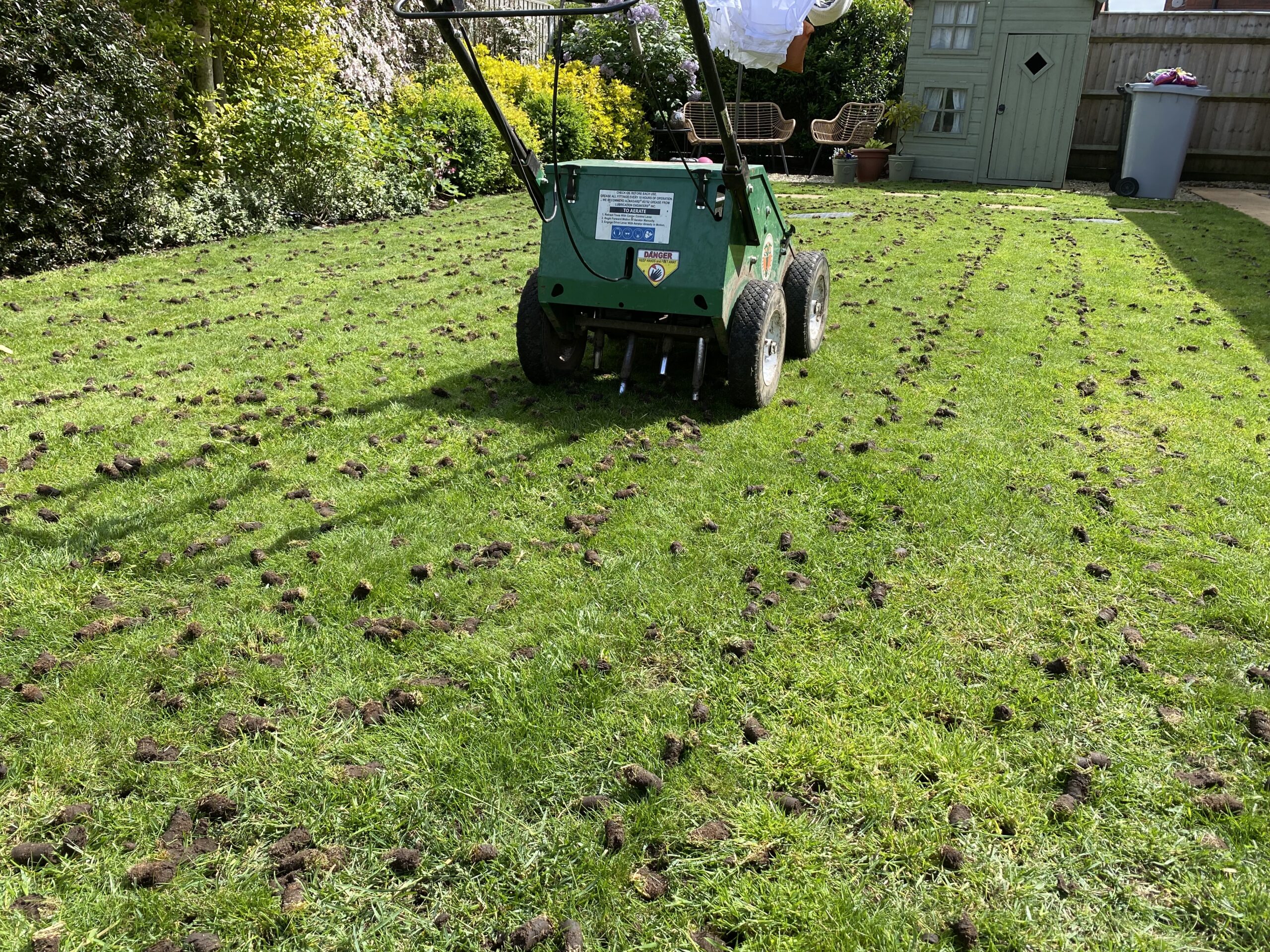
A lawn after aeration looks like a yard covered in small, scattered clumps of soil and finger-sized holes. Core aerators pull up small cylinders of dirt, often called plugs or cores, that are about 0.5 to 0.75 inches wide and 2 to 3 inches long, according to The Spruce. These plugs scatter across the grass like small pieces of brown clay or mud. The lawn shows neat rows of small holes where the plugs came from, and those holes sit roughly 2 to 5 inches apart from one another. You may also see a small amount of lifted thatch, which is the matted layer of dead grass between the green turf and the soil. The appearance is temporary. Lawn aeration plugs break down naturally within 1 to 2 weeks, and the grass begins growing thicker and greener as roots expand into the loosened soil beneath.
What Do Aeration Plugs Look Like?
Aeration plugs look like small cylinders of compacted soil, roughly the size and shape of a wine cork or the tip of your index finger. Each plug is approximately 0.5 to 0.75 inches in diameter and 2 to 3 inches long, depending on the soil moisture and the aerator machine used. The color of the plugs matches the color of your soil. Clay-heavy soil produces firm, dark brown or grayish plugs that hold their shape for several days. Sandy soil produces lighter, crumblier plugs that begin breaking apart almost immediately after being deposited on the surface.
A typical core aerator deposits hundreds of these plugs across the lawn in a single pass. The plugs land on top of the grass blades and sit there until rain, irrigation, or mowing activity breaks them down. Fresh plugs look like scattered pieces of dried mud on top of an otherwise green lawn. The contrast between the brown soil cylinders and the green grass is what makes the lawn appear messy or rough in the first few days after aeration. That visual contrast is the most common reason homeowners worry about their lawn's appearance immediately after the service.
What Does a Lawn Look Like the First Few Days After Aeration?
A lawn looks rough, messy, and slightly disrupted during the first few days after aeration. Soil plugs cover the grass surface in scattered rows. Small holes dot the turf where each plug was removed. You may notice patches of lighter green or yellowish color in areas where the aerator disrupted the top layer of thatch. The overall appearance suggests the lawn was just worked on rather than groomed, which is exactly what happened.
The roughness is a sign that the aeration was performed correctly. A core aerator that pulls clean, full-length plugs from the soil has done its job. Shallow, crumbling plugs or areas with no visible holes may indicate the machine did not penetrate deep enough, which happens when the soil is too dry or the equipment is not properly weighted. The University of Maryland Extension reports that core aerators should pull plugs 2 to 4 inches deep, and soil should be moist but not wet before aeration to allow the tines to reach full depth.
During these first days, important changes are already happening below the surface. Air is entering the root zone through the open holes. Water is soaking into the soil more efficiently instead of pooling on the surface. Roots that were compressed by compacted soil are beginning to access oxygen for the first time in months. These underground improvements are invisible, but they drive every visible change that follows over the next several weeks.
Why Does My Lawn Look Bad After Aeration?
Your lawn looks bad after aeration because the process temporarily disrupts the surface of the turf. The messy appearance is completely normal and expected. Soil plugs scattered across the grass, visible holes in the turf, and lighter-colored patches where thatch was lifted all combine to make the lawn look worse before it looks better. This temporary ugliness alarms many homeowners, but it is a sign that the aeration reached the correct depth and broke through the compacted layer that was restricting root growth.
The lighter green or yellowish patches that sometimes appear after aeration have a straightforward explanation. When the aerator pulls a plug, it exposes a small circle of bare soil at the bottom of each hole. Soil sitting at the surface dries out faster than the surrounding turf, and the disrupted thatch layer loses some moisture. The combination of exposed soil and slightly stressed grass produces temporary color variation that resolves on its own within 1 to 2 weeks as the plugs decompose, the holes fill in, and the grass resumes normal growth.
A lawn that looks dramatically worse, with large torn sections, deep ruts, or standing mud, suggests a problem with the aeration process itself rather than normal post-aeration appearance. Aerating when the soil is too wet creates smeared holes that compact the soil around each opening rather than relieving compaction. Aerating with solid-tine or spike equipment instead of hollow-tine core aerators pushes soil sideways and increases compaction, according to the University of Maryland Extension. A properly aerated lawn looks messy with plugs and holes but does not look damaged or torn.
Does Aeration Damage Your Lawn?
No, aeration does not damage your lawn when performed correctly during the active growing season. Core aeration intentionally disrupts the soil surface to relieve compaction, and the temporary roughness is part of the process. Clemson University Extension explains that the tines sever stolons and rhizomes as they pull plugs, which actually stimulates grass plants to produce new shoots and roots that fill the holes and increase turf density over the following weeks. The short-term visual disruption leads directly to long-term improvement in thickness, color, and root health.
What Does a Lawn Look Like 2 to 4 Weeks After Aeration?
A lawn looks noticeably improved 2 to 4 weeks after aeration. The soil plugs have broken down and disappeared into the turf. The holes are less visible as grass begins growing into the open spaces. Color becomes more consistent across the yard, and growth patterns even out in areas that were previously thin or patchy. The lawn feels softer underfoot because the top layer of soil is no longer compacted into a hard surface.
These changes reflect what is happening in the root zone. Roots that were confined by compacted soil are expanding into the loosened channels created by the aeration holes. Kansas State University Extension reports that roots make up 90% of the grass plant, and healthier roots translate directly into healthier, thicker grass blades above ground. Water infiltration improves measurably during this period, with Crabapple LandscapExperts reporting that core aeration can produce up to 25% water savings by reducing runoff and improving irrigation efficiency.
Lawns that received overseeding along with aeration begin showing new grass seedlings during this window. Ryegrass seedlings typically emerge within about 14 days, while Kentucky bluegrass takes 3 to 4 weeks. The combination of new seedlings filling bare spots and existing grass growing thicker from improved root function produces the most noticeable visual improvement during weeks 2 to 4.
What Does a Lawn Look Like 4 to 6 Weeks After Aeration?
A lawn looks significantly thicker, greener, and more uniform 4 to 6 weeks after aeration. Thin spots that were visible before the service are filling in with new growth. The overall color is richer because roots are absorbing nutrients more efficiently through the decompacted soil. Water soaks into the ground instead of running off the surface, which means the grass stays hydrated longer between waterings.
The visual timeline below summarizes what homeowners typically see at each stage after core aeration, based on whether the service was performed alone or combined with overseeding and fertilization.
TimeframeLawn AppearanceWhat Is Happening Below GroundDay 1 to 3Soil plugs scattered on surface; small holes visible; may look rough or messyAir entering root zone; water infiltration begins improving immediatelyWeek 1 to 2Plugs breaking down; color evening out; surface feels softerRoots beginning to expand into loosened soil channels; microbial activity increasingWeek 2 to 4Plugs gone; grass greener and more consistent; new seedlings emerging if overseededRoot system deepening; nutrient uptake improving; thatch decomposition acceleratingWeek 4 to 6Turf noticeably thicker; bare spots filling in; lawn looks healthier overallRoots fully established in new channels; soil structure improved for months ahead
The most dramatic visual transformation happens when aeration is paired with both overseeding and fertilization. The Mississippi State University Extension reports that severely compacted soils cause annual yield losses of 20 to 40% in turfgrass, meaning a lawn growing in compacted soil is only performing at 60 to 80% of its potential. Aeration unlocks that remaining capacity, and the combination of loosened soil, new seed, and fresh nutrients pushes the lawn closer to its full genetic potential for density and color.
Should You Leave Aeration Plugs on Your Lawn?
Yes, you should leave aeration plugs on your lawn. Do not rake, blow, or remove the plugs. The soil cores decompose naturally within 1 to 2 weeks and return beneficial nutrients and organic matter back into the turf as they break down. Removing the plugs eliminates that nutrient return and adds unnecessary labor to the process.
Rain and irrigation speed up plug decomposition by softening the soil cylinders and washing the particles into the surrounding grass. Running a lawn mower over dried plugs helps chop and scatter them across the lawn surface, which distributes the soil material more evenly and speeds up the breakdown process. Mowing over plugs is one of the simplest ways to make the lawn look cleaner faster without losing the nutrient benefits of leaving the cores in place.
What Is the Next Step After Aerating Your Lawn?
The next steps after aerating your lawn are to water deeply, apply fertilizer, overseed thin or bare areas, and minimize foot traffic for at least 2 weeks. Each step takes advantage of the open soil channels while they are fresh, delivering resources directly to the root zone where they produce the fastest visible improvement.
- Water the lawn thoroughly within 24 hours. Deep watering pushes moisture through the aeration holes into the root zone and starts the plug decomposition process.
- Apply fertilizer the same day or within 48 hours. Nutrients travel through the open channels more efficiently than they would on compacted soil, reaching roots faster and producing greener growth sooner.
- Overseed any thin or bare areas immediately after aerating. The holes provide direct seed-to-soil contact that significantly improves germination rates compared to surface broadcasting.
- Reduce foot traffic on the lawn for at least 2 weeks. Walking on freshly aerated soil compresses the channels before roots expand into them, reducing the long-term benefit of the service.
- Leave the soil plugs on the surface. They break down within 1 to 2 weeks and return nutrients to the lawn naturally.
Properties that combine aeration with soil amendment work see the most comprehensive improvement because both the physical structure and the nutrient content of the soil are addressed at the same time.
Do You Put Topsoil Down After Aerating?
No, you do not need to put topsoil down after aerating. The aeration holes should remain open so air, water, and nutrients can flow freely into the root zone. Filling the holes with topsoil seals those channels and defeats the purpose of the aeration. The one exception is topdressing with a thin layer of compost, which adds organic matter to the soil profile without blocking the channels. Compost topdressing is most beneficial on lawns with heavy clay soil that needs organic matter to improve long-term structure and drainage.
How Soon Can I Mow My Lawn After Aeration?
You can mow your lawn approximately 1 to 2 weeks after aeration, once the soil plugs have broken down and the grass has begun recovering. Mowing too soon after aeration can damage new grass seedlings in overseeded areas and compact the freshly loosened soil under mower wheels. When you do mow, running the mower over the remaining dried plugs helps break them apart and scatter the soil back into the lawn, which actually improves the lawn's appearance faster. Avoid cutting more than one-third of the blade height in a single pass to minimize stress on recovering turf.
How to Tell If a Lawn Needs Aeration
Several visual and physical signs indicate that a lawn needs aeration. Compacted soil does not always announce itself with a single obvious symptom, but the combination of multiple indicators below suggests the soil has become too dense for healthy grass growth.
- The soil feels hard underfoot, even after recent rainfall or irrigation
- Water puddles on the surface or runs off instead of soaking into the ground
- The lawn looks thin or patchy despite regular watering and fertilizing
- Grass growth slows down during periods when it should be actively growing
- A screwdriver pushed into the soil meets resistance within the first 2 to 3 inches
- The lawn receives heavy foot traffic from children, pets, or equipment
- The property was recently built or renovated, and heavy machinery compacted the soil during construction
The University of Maryland Extension notes that a compacted layer as thin as 1/4 to 1/2 inch can greatly impede water infiltration and gas exchange between soil and atmosphere. Properties with persistent puddling may also need professional drainage solutions alongside aeration to address water flow at the yard level. Clay-heavy soils common across North Alabama compact more readily than sandy or loamy soils, which means lawns in this region often benefit from annual aeration. Professional landscape design services evaluate soil conditions as part of the planning process to determine whether aeration should be part of the ongoing maintenance schedule.
How Long Does a Lawn Take to Recover After Aeration?
A lawn takes 2 to 4 weeks to show visible recovery after aeration and 4 to 6 weeks to reach full improvement when combined with overseeding and fertilization. Cool-season grasses like fescue and bluegrass fill aeration holes within 2 to 4 weeks during fall's active growth period. Warm-season grasses like bermuda and zoysia recover in 2 to 3 weeks during late spring when growth is most vigorous. The full timeline of aeration results depends on grass type, soil condition, weather, and post-aeration care.
Choosing the right grass type for your climate zone determines how quickly the lawn bounces back from aeration and how dense the turf becomes over the following season. The most important factor in recovery speed is performing aeration during the lawn's active growing season. Aeration done during dormancy or heat stress produces significantly slower recovery because the grass lacks the energy to grow new roots into the open channels. Fall is the best time for cool-season grasses, and late spring through early summer is the best window for warm-season grasses, according to Dr. Grady Miller, professor and extension turfgrass specialist at North Carolina State University.
How Do You Speed Up Lawn Recovery After Aeration?
You speed up lawn recovery after aeration by watering consistently, applying fertilizer immediately after the service, overseeding thin areas, and avoiding foot traffic. Water 1 inch within 24 hours of aeration, then maintain consistent moisture for the next 2 to 3 weeks to support root expansion and seed germination. Fertilizer applied right after aeration reaches the root zone through the open channels, producing faster greening than fertilizer applied to compacted soil. Overseeding fills bare spots with new grass seedlings that emerge within 2 to 4 weeks, accelerating the visual improvement. Professional landscape installation teams often pair aeration with overseeding and fertilization as a single service because the combined approach produces results faster than any single treatment alone.
Frequently Asked Questions
Is Aerating Your Lawn Really Worth It?
Yes, aerating your lawn is worth it. Core aeration relieves soil compaction, improves water infiltration, strengthens root systems, and increases turf density over time. The Mississippi State University Extension reports that severely compacted soils reduce turfgrass yields by 20 to 40%. Aeration reverses that decline by opening the soil to air, water, and nutrients that roots need to grow. Lawns aerated annually develop deeper roots, thicker turf, and greater resistance to drought, heat, and traffic stress.
How Many Times Are You Supposed to Aerate Your Lawn?
You are supposed to aerate your lawn once or twice per year for high-traffic properties and once every 2 to 4 years for standard home lawns, according to the University of Maryland Extension. Lawns on clay-heavy soil benefit from annual aeration because clay compacts faster and more severely than sandy or loamy soil types. Each aeration cycle builds on the previous one, deepening root systems and improving soil health progressively over multiple seasons.
Can I Aerate My Lawn Too Often?
Yes, you can aerate your lawn too often. Over-aerating stresses grass by repeatedly severing roots, stolons, and rhizomes before they recover from the previous aeration. Most home lawns need aeration only once or twice per year. Aerating more frequently than that disrupts the turf faster than it can heal, which produces the opposite of the intended benefit.
What Month Is Best to Aerate a Lawn?
The best month to aerate a lawn depends on the grass type. For cool-season grasses like fescue and bluegrass, September through October is the best window. For warm-season grasses like bermuda and zoysia, May through June produces the fastest recovery. The key is to aerate during the lawn's peak growing season so the grass fills the holes quickly and takes full advantage of the improved soil conditions. Our aeration timing guide covers scheduling in more detail.
When Should You Not Aerate Your Lawn?
You should not aerate your lawn during dormancy, extreme heat, drought, or when the soil is saturated with water. Aerating dormant grass opens the soil to weed invasion without recovery benefit. Aerating waterlogged soil clogs machine tines and smears the hole walls, increasing compaction rather than relieving it. Aerating during drought dries out exposed roots in the holes and can cause additional stress to already struggling turf.
The Takeaway
A lawn after aeration looks messy and rough for the first few days, with small soil plugs scattered across the surface and finger-sized holes visible in the turf. That temporary appearance is completely normal and a sign that the aeration reached the proper depth. The plugs break down within 1 to 2 weeks, the holes fill in as roots expand, and the grass grows thicker and greener over the following 4 to 6 weeks. Pairing aeration with fertilization and overseeding accelerates visible results and produces the most dramatic improvement in turf density and color.
If your lawn looks tired, thin, or hard underfoot, compaction is likely holding it back from reaching its full potential. We help homeowners across North Alabama improve soil health, fix bare spots, and build thicker, healthier lawns through professional soil and turf services. Reach out to us at White Shovel Landscapes or call 256-612-4439 for a free estimate.



You May Also Like

Sep 12, 2026
3 min
How to Keep Landscape Edging Straight

Sep 11, 2026
3 min
How to Decorate a Patio: Ideas for 2025 and 2026
Sep 9, 2026
3 min
How to Trim Around Landscape Edging
Sep 7, 2026
3 min
How to Dig a Trench for Landscape Edging
Have a Project in Mind?
If this post sounds like your yard, tell us about it. Request an estimate online or give us a call, and we’ll talk through what your property needs.




Transforming Huntsville & Madison yards since 2011 with expert landscape design, garden makeovers, mulching, and top-quality installations.


