Providing Best Services in Huntsville & Madison, AL


Follow us on Social.





Jun 10, 2026


Lawn Care
How to Improve Drainage in Clay Soil
You can improve drainage in clay soil by aerating the ground, adding organic matter like compost, installing proper drainage systems, regrading low spots, and avoiding compaction from foot traffic when the soil is wet. Clay soil is made up of extremely fine particles that pack tightly together, leaving almost no pore space for water to move through. Fixing it takes a combination of approaches, not just one.
In this article, we explain why clay soil drains so poorly, walk through every effective method for improving it, cover the best amendments to use, and answer the real questions homeowners ask about turning heavy clay into soil that actually works.
Why Clay Soil Drains So Poorly
Clay soil drains poorly because its particles are incredibly small, less than 0.002 millimeters in diameter, and they pack together so tightly that water has almost no pathway to move through. The USDA Natural Resources Conservation Service classifies clay soils as Group D, the lowest infiltration group, with very slow infiltration rates and high runoff potential. While sandy soils absorb water at 0.74 to 1 inch per hour, clay soils absorb water at only 0.11 to 0.31 inches per hour, according to irrigation research data. That is 3 to 9 times slower than sand.
Cornell University's soil science program confirms that steady infiltration rates for clay soils drop below 0.2 inches per hour once the soil is saturated. During a normal rainstorm that delivers half an inch of rain in 30 minutes, clay soil simply cannot keep up. The water has nowhere to go, so it pools on the surface, runs off into low spots, and creates the soggy, waterlogged yards that frustrate homeowners across North Alabama.
The problem gets worse over time. Every time someone walks across wet clay, drives a mower over it, or lets heavy rain pound the surface, the particles pack even tighter. That compaction reduces the already limited pore space and makes drainage even slower. It is a cycle that feeds itself unless you actively break it. Yards with chronic standing water are almost always dealing with some combination of clay soil and compaction.
What Is the Best Drainage Solution for Clay Soil?
The best drainage solution for clay soil is a combination approach: core aeration to break up surface compaction, organic matter amendments to improve soil structure from the inside, and installed drainage systems like French drains to move water away from problem areas. No single fix solves clay drainage on its own. You need to attack the problem from multiple angles.
For surface-level issues where water sits on top of the lawn after rain, aeration and topdressing with compost are the first steps. For deeper issues where water collects in specific areas or threatens your home's foundation, engineered drainage solutions like French drains, catch basins, and regrading are necessary.
Here is a breakdown of the most effective methods, ranked by how much impact they have on clay soil drainage.
MethodHow It WorksBest ForTimeline for ResultsCore AerationRemoves soil plugs to create channels for water and airCompacted lawns; surface pooling2 to 4 weeksOrganic Matter (Compost)Loosens clay structure; increases pore space; feeds soil biologyLong-term soil improvement1 to 3 seasons of consistent applicationFrench DrainGravel-filled trench with perforated pipe that redirects water undergroundPersistent low spots; water near foundationsImmediate after installationRegradingReshapes the land surface so water flows away from problem areasFlat or reverse-sloped yardsImmediate after gradingDry Creek BedShallow stone channel that guides surface water to a safe exit pointSlopes; visible water flow pathsImmediate after installationGypsum ApplicationCalcium ions encourage clay particles to clump, creating pore spaceSodic or sodium-heavy clay soils; Southeastern U.S. claysSeveral months
Sources: USDA NRCS, Cornell University, Oregon State University Extension, University of Maryland Extension, Pennington
The best results come from layering these methods. Aerate in late spring, topdress with compost, install a French drain in the worst areas, and keep traffic off the clay when it is wet. Over two to three seasons of consistent work, the soil structure will noticeably improve.
How Do You Fix Waterlogged Clay Soil?
You fix waterlogged clay soil by first removing the excess water, then improving the soil's ability to absorb and drain water going forward. If water is actively pooling, the immediate fix is redirecting it with surface grading, a temporary trench, or a pump. The long-term fix is improving the soil structure so it stops getting waterlogged in the first place.
Start with core aeration as soon as the ground is dry enough to work. The aeration holes create immediate channels for surface water to drain down into the root zone. Follow that with a topdressing of compost to introduce organic matter into the holes. According to the USDA, organic matter holds 18 to 20 times its weight in water, but it also creates pore space that allows excess water to drain through rather than sit on the surface. The difference is that organic matter regulates water, while clay traps it.
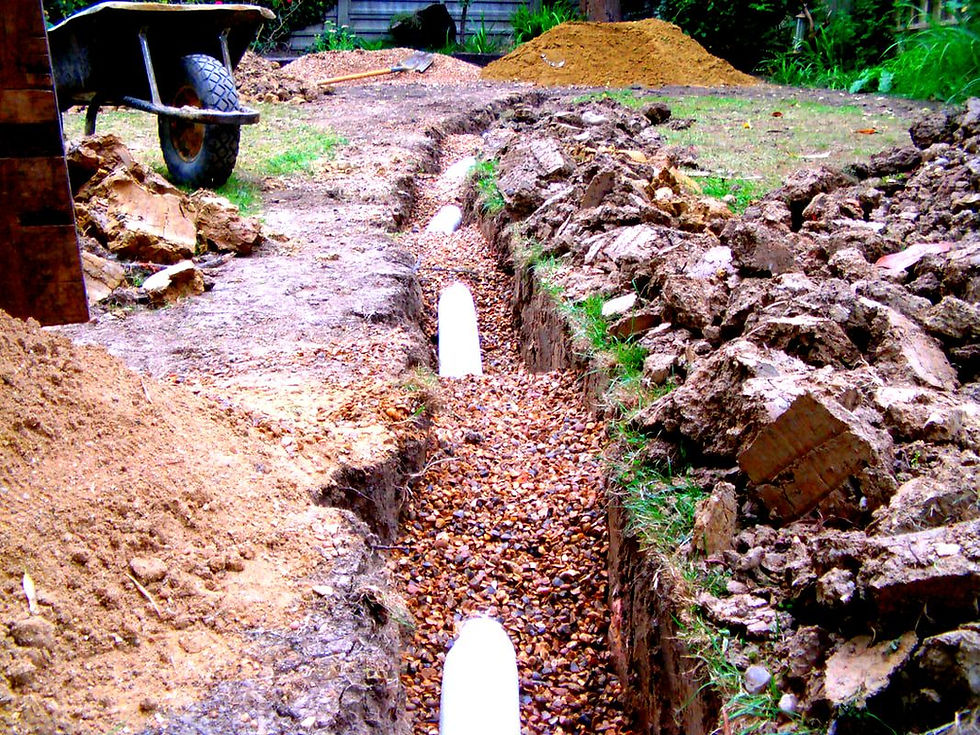
For chronically waterlogged areas, a French drain or catch basin is often the permanent answer. These systems collect water below the surface and channel it away through a perforated pipe embedded in gravel. If your yard turns into a swamp every time it rains, we have seen this kind of yard drainage improvement solve the problem for good.
How to Turn Clay Soil into Well Drained Soil
You turn clay soil into well drained soil by consistently adding organic matter, aerating annually, and avoiding practices that worsen compaction. Clay soil will always be clay soil, but you can dramatically improve its structure and drainage capacity over time. Oregon State University Extension soil scientist Linda Brewer puts it plainly: repeated additions of organic matter do change clay soils, but the additions must be at least annual to maintain the changes, and the soil will remain clay forever.
The transformation happens at the particle level. When you add compost to clay, the organic material feeds soil microorganisms. Those microorganisms produce sticky substances that bind tiny clay particles into larger clumps called aggregates. Bigger aggregates mean bigger pore spaces between them, and bigger pore spaces mean better drainage. It is a biological process that builds on itself each year as you keep adding organic matter.
For new garden beds or areas you can dig into, add a layer of 3 to 6 inches of organic matter and work it into the top 10 to 12 inches of soil. Pennington recommends this depth because that is where most plant roots grow. In the years that follow, add 1 to 3 inches of organic mulch as a topdressing each season. As it decomposes, it continues feeding the soil biology and improving structure. For lawns where you cannot dig, aeration and topdressing are the path forward. Professional soil amendment programs can accelerate this process significantly.
What Is the Best Thing to Add to Clay Soil?
The best thing to add to clay soil is organic compost. Compost improves soil structure, increases pore space, feeds beneficial microorganisms, and gradually transforms heavy clay into a more workable growing medium. The University of Maryland Extension specifically recommends adding organic matter such as compost, farm manure, or shredded leaves to clayey soil to improve drainage and air circulation.
Other effective amendments include composted pine bark, aged manure, and leaf mold. Each of these adds organic matter that breaks down slowly and improves the soil over time. Gypsum (calcium sulfate) can also help in certain situations. According to Oregon State University, calcium ions from gypsum attract negatively charged clay particles and encourage them to clump together, which creates larger pore spaces. However, gypsum works best on sodic (sodium-heavy) clays common in the Southeastern United States and arid regions. It is not a universal fix for all clay soils.
One thing you should never add to clay soil is sand in small amounts. Small volumes of sand mixed into clay can create a mixture that sets up almost like concrete. If you are going to use sand, you need a very large quantity, at least 50% by volume, to actually change the texture. For most homeowners, compost is the safer, more effective choice.
What Should I Top Dress Clay Soil With?
You should top dress clay soil with a 1/4 to 1/2 inch layer of fine, well-composted organic material spread evenly over the lawn surface after aerating. This compost fills the aeration holes, introduces organic matter directly into the root zone, and slowly improves clay structure from the inside out.
The best compost for topdressing is dark, crumbly, and fully decomposed with no large chunks or visible food waste. Screened compost works best because it spreads evenly and settles into the turf without smothering the grass. You can also use a 50/50 blend of compost and coarse sand for topdressing, which improves both drainage and soil texture at the same time. Apply topdressing after every aeration event, at least once a year, and the cumulative effect on clay soil structure will become noticeable within 2 to 3 seasons.
Can I Put Topsoil on Top of Clay Soil?
Yes, you can put topsoil on top of clay soil, but it must be done correctly or it will create more problems than it solves. Laying topsoil over clay without any preparation creates a drainage barrier between the two layers. Water moves easily through the topsoil but then hits the dense clay underneath and has nowhere to go. The result is a soggy layer of topsoil sitting on top of an impervious clay base, almost like a bathtub effect.
To avoid this, you need to blend the two layers together. Till or rake the top 2 to 3 inches of the clay surface before adding topsoil so the materials can mix at the boundary. Adding compost to the topsoil before spreading it also helps bridge the gap between the two soil types. For lawn areas, the standard recommendation is 4 to 6 inches of topsoil worked into the top few inches of existing clay to create a blended root zone.
If you are dealing with a large area or a significant grade change, the better approach is to install proper drainage below the topsoil layer so trapped water has an escape route. A layer of gravel for drainage beneath the topsoil can serve as a path for water to move laterally toward a drain or daylight outlet.
How Thick Should Topsoil Be Over Clay?
Topsoil should be at least 4 to 6 inches thick over clay for lawn establishment. This depth gives grass roots enough nutrient-rich, well-draining material to anchor and grow before they encounter the denser clay below. For garden beds and planting areas, 8 to 12 inches of amended topsoil is better because shrubs and perennials send roots deeper than turf grass.
Keep in mind that depth alone does not solve the problem if the boundary between topsoil and clay is not blended. Always loosen the clay surface before adding topsoil so water can transition between the two layers instead of pooling at the interface. A soil testing report can tell you exactly what your clay needs so you choose the right topsoil blend to pair with it.
How to Improve Clay Soil Without Digging
You can improve clay soil without digging by using a combination of core aeration, surface topdressing with compost, mulching, and letting biological activity do the work for you over time. This approach is especially useful for established lawns where you cannot tear up the turf and till amendments into the soil.
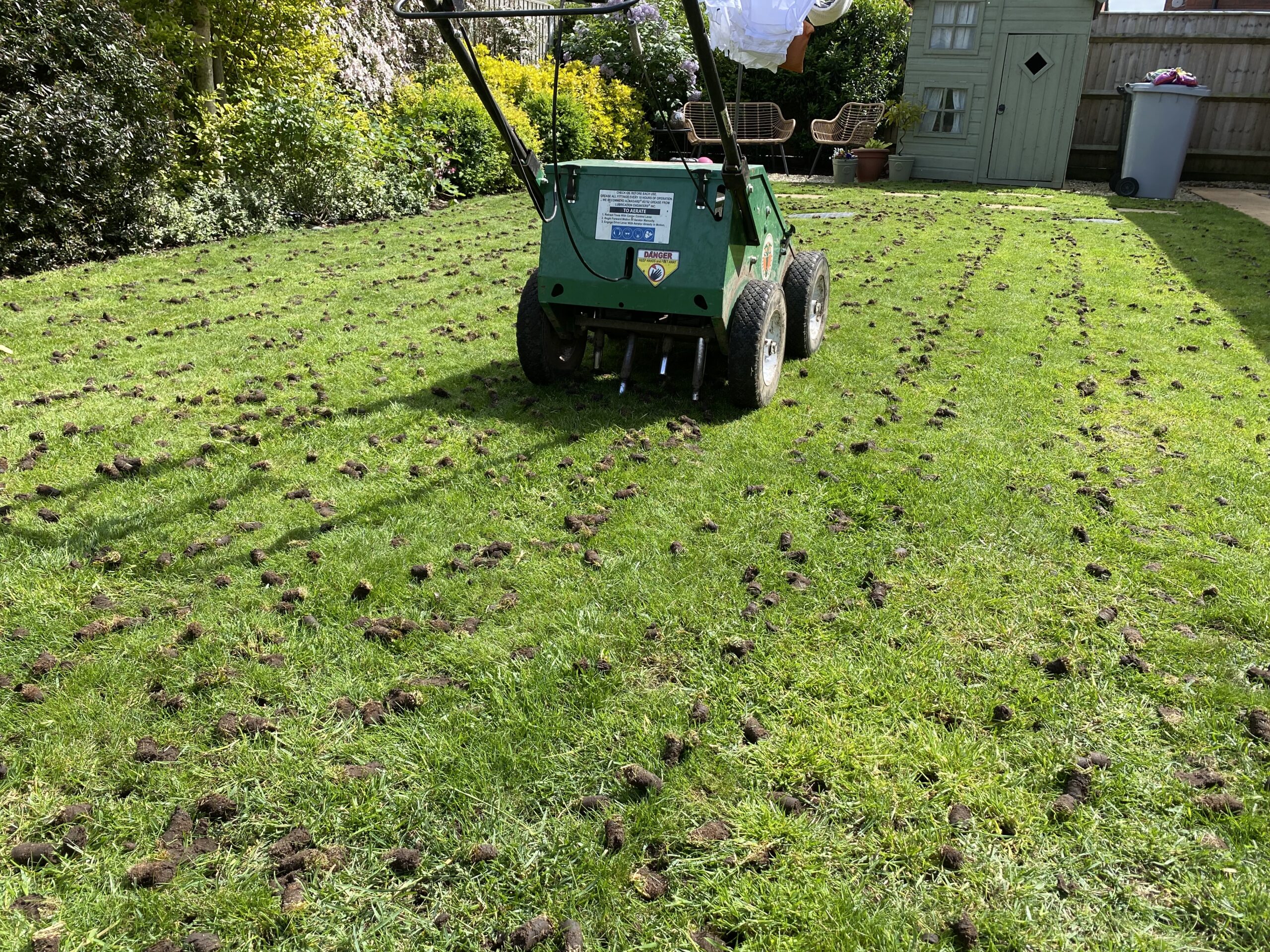
Core aeration is the foundation of the no-dig approach. The aerator pulls plugs of compacted clay out of the ground and leaves behind open channels. Spreading a thin layer of compost over the aerated surface fills those channels with organic matter. Rain and watering push the compost deeper into the soil profile. Earthworms and other soil organisms then carry organic material even further down, gradually loosening the clay from below.
Mulching with organic materials like shredded leaves, grass clippings, or wood chips around landscape beds has the same effect over time. As the mulch decomposes, it adds organic matter to the soil surface. That organic matter feeds the soil food web, which in turn improves soil structure without you ever picking up a shovel. According to Alluvial Soil Lab, consistent organic matter additions typically take 2 to 3 years to produce significant changes in clay soil structure, so patience is part of the process.
The Huntsville area sits on a mix of clay and limestone-based soils that respond well to organic amendments and aeration. Yards with persistent muddy patches after rain are prime candidates for the no-dig method combined with targeted drainage improvements in the worst spots.
Can I Overseed on Top of Clay?
Yes, you can overseed on top of clay, but the seed will germinate far better if you aerate and topdress first. Grass seed needs contact with loose, moist soil to sprout. Throwing seed directly onto hard, compacted clay gives it very little chance to take root because the surface is too dense for roots to penetrate and too slick for seeds to stay in place.
Aerate the clay first, then spread a thin layer of compost or topsoil over the surface. Scatter the seed, lightly rake it in, and water consistently. The aeration holes and compost layer create thousands of tiny seedbeds where seeds can germinate in protected, nutrient-rich pockets. This is the same technique we use for any landscape installation on heavy clay sites. Choosing the right seed for the region matters too. Bermuda and Zoysia are the most common warm-season grasses in Alabama, and both handle clay reasonably well once established.
When to Call a Professional for Clay Soil Drainage
DIY aeration and composting work well for mild clay drainage issues. But some problems need professional assessment and equipment. Here are the signs that it is time to call in help.
Water pools near your home's foundation after every rain. According to the American Society of Civil Engineers, poor drainage is one of the leading causes of residential foundation damage. If water is collecting within 5 feet of your foundation walls, a professional drainage system is not optional. It is urgent. Drainage problems near foundations should never be ignored.
Large sections of your yard stay soggy for days after rain, not just hours. If the ground is still soft and squishy 48 hours after a storm, the clay compaction and drainage issues are deeper than surface-level fixes can address. A professional crew can assess the site, determine where water is coming from and where it needs to go, and install the right combination of French drains, catch basins, and regrading to solve the problem permanently.
Your lawn has developed erosion channels where water flows across the surface during rain. This means the soil is not absorbing any of the runoff, and the moving water is actively washing away your topsoil. Dry creek beds or French drains can intercept this flow and redirect it safely before it causes real damage to your landscape.
Frequently Asked Questions
Does Adding Sand Improve Clay Soil Drainage?
No, adding sand in small amounts does not improve clay soil drainage and can actually make it worse. Small quantities of sand mixed into clay create a dense, cement-like mixture because the tiny clay particles fill in the gaps between the larger sand grains. To genuinely change clay texture with sand, you would need to add at least 50% sand by volume, which is impractical for most yards. Compost is a safer, more effective choice for improving clay drainage.
How Long Does It Take to Improve Clay Soil?
It takes 2 to 3 seasons of consistent organic matter additions to see significant improvement in clay soil structure. Some benefits, like reduced surface pooling after aeration, are visible within weeks. But the deeper structural changes that make clay drain well year-round require repeated applications of compost and mulch over multiple growing seasons. Oregon State University Extension confirms that the additions must be at least annual to maintain the improvements.
Will a French Drain Work in Clay Soil?
Yes, a French drain works very well in clay soil. In fact, French drains are especially effective in clay because the clay's low permeability forces water to stay near the surface where the drain can collect it. The drain provides an escape route that the clay itself cannot. The key is proper installation with an adequate gravel bed around the perforated pipe and a positive slope to carry water to a discharge point.
Can Grass Grow Well in Clay Soil?
Yes, grass can grow well in clay soil when the surface compaction is managed and the soil is amended with organic matter. Clay actually holds nutrients and moisture better than sandy soil, which can be an advantage for grass during dry spells. The challenge is compaction and poor drainage, not a lack of fertility. Bermuda, Zoysia, and tall fescue all perform well in clay once aeration and organic amendments open up enough pore space for roots to breathe.
Should I Use Gypsum on My Clay Soil?
Gypsum can help improve clay soil structure in specific situations, particularly on sodic (sodium-heavy) clay soils common in the Southeastern United States and arid regions. Oregon State University Extension confirms that calcium ions in gypsum encourage clay particles to clump together, which creates pore space and improves drainage. However, the University of Maryland Extension cautions that there is no scientific evidence gypsum improves clay structure in all soil types. A soil test is the best way to determine if gypsum will benefit your specific clay.
How Often Should I Aerate a Clay Soil Lawn?
You should aerate a clay soil lawn at least once a year, ideally twice. The first aeration should happen in late spring during peak grass growth. A second aeration in early fall helps the soil recover from summer compaction before winter. Clay compacts faster than other soil types, so it benefits from more frequent aeration than sandy or loamy soils. Always water the lawn a day before aerating so the tines can penetrate the clay properly.
Putting It All Together
Clay soil is challenging, but it is not a lost cause. The same properties that make it hold water too tightly also make it hold nutrients better than any other soil type. The fix is not replacing the clay. It is improving its structure so water can move through it while nutrients stay in it. Aerate every year, add compost consistently, install yard drainage where water pools, and stay off the clay when it is wet. Over time, these practices transform problem clay into soil that supports a thick, healthy lawn.
If your yard is battling standing water, erosion, or soil that feels like concrete, White Shovel Landscapes has been solving exactly these problems for homeowners since 2011. We would be happy to take a look and recommend the right plan for your property.



You May Also Like

Sep 12, 2026
3 min
How to Keep Landscape Edging Straight

Sep 11, 2026
3 min
How to Decorate a Patio: Ideas for 2025 and 2026
Sep 9, 2026
3 min
How to Trim Around Landscape Edging
Sep 7, 2026
3 min
What Does a Lawn Look Like After Aeration
Have a Project in Mind?
If this post sounds like your yard, tell us about it. Request an estimate online or give us a call, and we’ll talk through what your property needs.




Transforming Huntsville & Madison yards since 2011 with expert landscape design, garden makeovers, mulching, and top-quality installations.


