Providing Best Services in Huntsville & Madison, AL


Follow us on Social.





May 18, 2026

3 Min

Landscaping
Ground Leveling Before Landscape Installation
Ground leveling before landscape installation creates a stable, well-drained surface that prevents water damage, soil erosion, and uneven plant growth. Proper grading requires a minimum slope of 2 percent away from your home's foundation, which equals about a 6-inch drop over 10 feet.
Ground leveling before landscape installation is the process of shaping and smoothing the soil surface to create proper drainage, a stable base for plants and structures, and an even, usable yard. According to the International Residential Code, the grade around your home must fall a minimum of 6 inches within the first 10 feet from the foundation to prevent water from pooling near the structure. Skipping this step is one of the most common reasons new landscapes fail. In this article, we cover how to prep your ground for landscaping, the right slope for drainage, common grading mistakes, and what professional leveling looks like from start to finish.
How to Prep Ground for Landscaping
To prep ground for landscaping, you need to clear the site, test the soil, establish the correct grade, compact the subsoil, and add amendments before any planting or installation begins. Each step builds on the one before it. Rushing through any of them leads to settling, drainage problems, and plant failure down the road.
Start by removing everything from the surface: old grass, weeds, rocks, construction debris, tree roots, and any material larger than 2 to 3 inches in diameter. According to Saratoga Sod, initial tilling to a depth of at least 2 inches should be completed before adding soil amendments. This breaks up compacted ground, controls annual weeds, and allows new roots to push into the soil.
Next, check your soil. A simple soil test from your local extension office tells you the pH level, nutrient content, and soil type. This information determines whether you need to add compost, lime, or other amendments before planting. Clay-heavy soil, which is common in many parts of Alabama, compacts easily and drains poorly. Adding organic matter loosens the structure and helps water move through it. We address these issues directly through our soil amendment services before any plants go into the ground.
After clearing and testing, rough grade the entire area. This means shaping the land so water flows away from your home and toward designated drainage points. Then finish grade the surface to create a smooth, even base for sod, plants, or hardscape features.
What Do Landscapers Use to Level Ground?
Landscapers use a combination of heavy equipment and hand tools to level ground, depending on the size and complexity of the project. For large-scale grading, professionals rely on motor graders, skid steer loaders, and compact track loaders (often called bobcats) to move soil quickly and accurately. For smaller areas and finish work, hand tools like landscape rakes, shovels, wheelbarrows, and plate compactors get the job done.
According to Cat Equipment, the most popular option for yard grading is a motor grader, which can reshape large areas efficiently. For residential projects, skid steer loaders and mini excavators are more practical because they fit through gates and work in tighter spaces. A laser level or transit level helps professionals measure slope and elevation changes with precision, so the finished grade hits the drainage targets exactly.
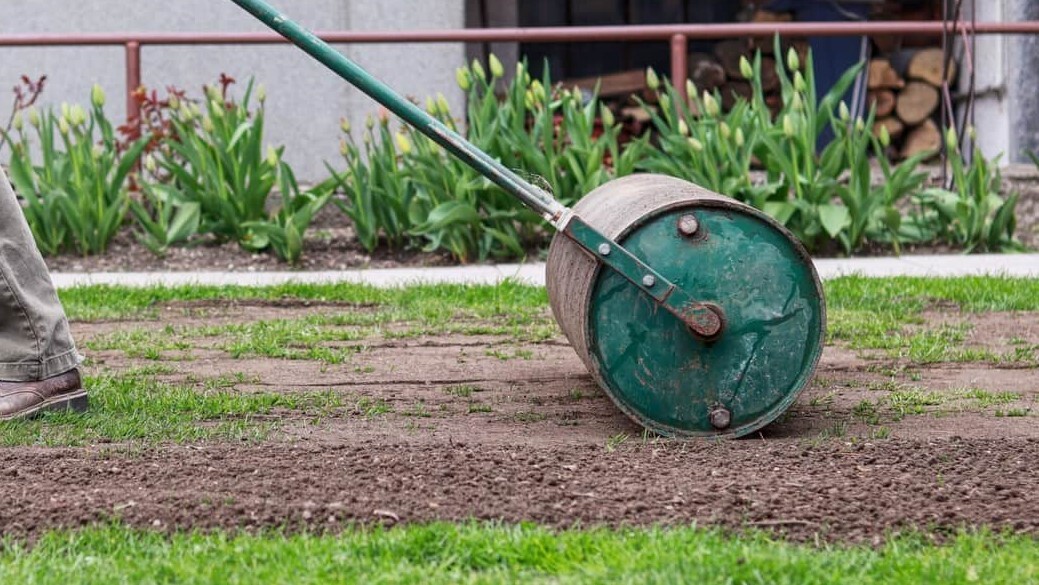
For the final pass, a landscape rake flipped upside down smooths the soil surface and reveals any remaining high or low spots. According to Sod Solutions, using the back of a landscape rake encourages consistency in leveling across the entire yard. Once the surface is smooth, a lawn roller compacts the soil lightly to prevent settling after installation. Proper landscape installation always includes this detailed finish grading step, because even small dips or humps cause problems once sod or plants go in.
What Is the Cheapest Way to Level Ground?
The cheapest way to level ground is to do it yourself with basic hand tools for small, shallow corrections. A landscape rake, a shovel, a wheelbarrow, and a bag of topsoil or sand can fix minor bumps and dips in a yard for under $100 in materials. For simple topdressing to smooth out a lawn, a mix of sand, topsoil, and compost spread in thin layers works well.
However, DIY leveling only works for minor issues. According to This Old House landscape contractor Lee Gilliam, if the drop in your yard is greater than 2 feet, or if the ground slopes toward your home instead of away from it, you should hire a professional. Larger jobs require equipment like a skid steer or mini excavator, which rental costs alone can run several hundred dollars per day. The risk with DIY grading on bigger projects is getting the slope wrong, which can direct water toward your foundation and cause thousands of dollars in damage.
According to Schmitt Waterproofing, acceptable grades for yard grading typically range between 3 percent and 25 percent, with an ideal slope of about 5 percent. Getting that percentage right requires measurement tools and experience. A $500 grading job done correctly prevents the $5,000 to $15,000 foundation repair bill that comes from getting it wrong.
Can I Level My Lawn in October?
Yes, you can level your lawn in October, but only under the right conditions. October is a good time to topdress and fill in low spots on cool-season lawns because the grass is actively growing and can recover before winter. For warm-season lawns like Bermuda grass, October is less ideal because the grass is heading into dormancy and cannot repair itself until spring.
Avoid leveling when the ground is frozen, waterlogged, or excessively wet. Working wet soil causes compaction that is difficult to fix later. According to Cider Mill Landscapes, if your lawn is already stressed from drought, disease, or pests, hold off on leveling until the grass has recovered and stabilized. The best time for major regrading in the Huntsville area is late spring through early fall when the soil is warm, workable, and dry enough to handle without clumping.
What Are the Common Mistakes in Leveling?
The common mistakes in leveling are grading the slope toward the house instead of away from it, failing to compact the soil properly, ignoring existing drainage problems, and skipping soil preparation. Each of these errors leads to bigger, more expensive problems down the line.
The most costly mistake is creating a negative grade. This happens when the ground slopes toward the foundation instead of away from it. According to Bayscape, approximately 60 percent of building foundation problems stem from poor water management around the property perimeter. A negative grade sends every drop of rainwater straight toward your home, where it builds hydrostatic pressure against the walls and eventually causes cracking, leaking, and structural shifting.
Poor soil compaction is another frequent problem. If you do not compact the subsoil after regrading, it settles over time. That settling creates new low spots where water pools and grass dies. According to EarthShapers, inadequate soil compaction leads to settling and uneven surfaces that undermine everything built on top, from patios to hardscaping features to sod lawns.
Ignoring existing drainage issues before leveling is also a major error. If water already pools in certain areas or runs toward the house, simply adding soil on top does not fix the underlying problem. You need to address the root cause first, whether that means installing a French drain, rerouting downspouts, or regrading a larger section of the yard.
What Are the Three Methods of Leveling?
The three methods of leveling in landscaping are rough grading, finish grading, and topdressing. Each method serves a different purpose and is used at a different stage of the project.
Rough grading is the first step. It involves moving large amounts of soil with heavy equipment to establish the basic shape and slope of the land. This is where you cut down high spots, fill in low areas, and create the overall contour that directs water away from structures. According to Outdoor Makeover, rough grading uses bobcats, front loaders, and excavators to create a rough, flat surface before any fine work begins.
Finish grading comes next. This step refines the surface to make it smooth and even, ready for sod, seed, or planting. A landscape rake and a plate compactor are the primary tools at this stage. The goal is to eliminate any remaining bumps, dips, or soft spots so the final surface is consistent. According to The Site Group, finish grading prepares the ground perfectly for laying sod, planting, or installing hardscaping like patios and walkways.
Topdressing is the lightest method. It involves spreading a thin layer of soil, sand, or compost over an existing lawn to fill in minor low spots and smooth the surface without tearing up the turf. This works well for yards that need minor correction rather than a full regrade.
Why Ground Leveling Protects Your Foundation
Ground leveling protects your foundation by directing water away from the base of your home. Water that pools against foundation walls creates hydrostatic pressure, which pushes against the concrete and causes cracking, bowing, and leaking over time. According to Bayscape, foundation cracks from water damage can require $5,000 to $15,000 in repairs, while basement waterproofing adds another $3,000 to $10,000.
The International Residential Code requires impervious surfaces within 10 feet of a building's foundation to have a slope of at least 2 percent away from the structure. For permeable surfaces like lawns, the standard is a 6-inch drop over the first 10 feet. According to the Building America Solution Center at Pacific Northwest National Laboratory, good water management practices like sloping the grade away from the house are the best defense against water saturation around the foundation.
According to Cleveland Foundation Repair Pros, foundation repair costs average $4,000 to $15,000, and proper drainage is essential to prevent these issues. The cost of grading a yard correctly before a landscape installation is a fraction of what it costs to fix foundation damage after the fact. We have seen this play out many times in our work across North Alabama, and it is always cheaper to get the grade right the first time.
What Are the Four Common Mistakes Landscapers Make When Planting?
The four common mistakes landscapers make when planting are skipping soil preparation, planting at the wrong depth, neglecting drainage, and not matching plants to the site conditions. Each of these leads to poor plant health, wasted money, and landscapes that fail within the first year.
Skipping soil prep is the biggest offender. Planting directly into hard, compacted, nutrient-poor soil gives roots nowhere to go. The plant sits in a shallow hole, cannot absorb water or nutrients, and slowly dies. Proper soil repair before planting gives roots the loose, fertile ground they need to spread and anchor.
Planting too deep or too shallow is another common problem. If the root ball sits too deep, the crown stays wet and rots. If it sits too high, the roots dry out and the plant topples in wind. The top of the root ball should sit level with or slightly above the surrounding soil surface.
Neglecting drainage means plants sit in waterlogged soil after every rain. Roots need oxygen, and saturated soil suffocates them. And choosing plants that do not fit the light, soil, and moisture conditions of the site is a recipe for failure. A landscape design that matches the right plant to the right spot prevents all of these problems from the start.
How Proper Grading Prevents Erosion and Standing Water
Proper grading prevents erosion and standing water by creating a controlled path for rainwater to follow. When the ground slopes at the right angle, water moves slowly and evenly across the surface instead of carving channels through the soil or pooling in low spots. According to SS Grading, most expert landscapers recommend a minimum of 6 inches of slope for every 100 feet of land for residential lawns.
Without proper grading, heavy rain strips away the top layer of soil, which is the nutrient-rich layer your plants depend on. Over time, this erosion exposes roots, undermines retaining walls, and creates gullies that get worse with every storm. Yards with steep slopes are especially vulnerable and need careful grading combined with erosion-control plants or ground cover.
Standing water is the other side of the problem. Flat or poorly graded yards trap water in low spots where it sits for days. According to Allentuck Landscaping, grades that do not slope away from the home can cause water to pool near the foundation rather than drain away. That standing water drowns grass roots, breeds mosquitoes, and creates soggy, unusable areas in the yard. Proper leveling eliminates both problems at the same time.
Grading SlopePercentageDrop per 10 FeetBest UseMinimum (Code Requirement)2%~2.4 inchesImpervious surfaces near foundationStandard Residential5%~6 inchesLawns, garden beds, general landscapingModerate10%~12 inchesDrainage swales, side yardsSteep (Max Recommended)25%~30 inchesControlled hillside areas (requires stabilization)Patios and Walkways1-2%~1/4 inch per footHardscape surfaces
Sources: International Residential Code (IRC), Building America Solution Center (PNNL), Schmitt Waterproofing, Garden Enlightenment, Allentuck Landscaping
When Is the Best Time to Level Your Yard?
The best time to level your yard is during the active growing season for your grass type, when the soil is warm, dry enough to work without clumping, and firm enough to hold its shape after compaction. For warm-season lawns like Bermuda and Zoysia, late spring through early summer is ideal. For cool-season lawns like Tall Fescue, early fall is the best window.
Avoid grading when the ground is frozen, saturated from recent rain, or during extreme drought. Wet soil compacts poorly and creates clumps that leave an uneven surface. Frozen ground cannot be shaped at all. According to Cat Equipment, the best time to grade and level a lawn is when it has been dry and relatively warm for a few days.
If you are planning a full landscape installation that includes sod, plants, and hardscaping, grading should happen first, before anything else goes in. Building on an unleveled surface means every element placed on top inherits the problems underneath. Getting the grade right at the beginning saves time, money, and frustration for the entire project.
What Happens If You Skip Ground Leveling?
If you skip ground leveling, you risk water damage to your foundation, uneven plant growth, dead grass, standing water, soil erosion, and premature failure of patios, walkways, and other structures. Every landscaping element performs worse on an improperly graded surface.
According to TLC Incorporated, repair costs for water damage caused by poor drainage range from $500 to $2,500 for minor surface damage, $2,500 to $10,000 for moderate grading issues, and $10,000 to $40,000 or more for severe foundation and structural impact. According to Modernize, poor drainage is a leading cause of foundation failure, with regrading or French drain installation typically costing $1,500 to $4,000. The math is simple: leveling before installation costs far less than repairing the damage from skipping it.
Sod laid on uneven ground develops gaps at the seams as it settles. Those gaps fill with weeds and dry out faster than the rest of the lawn. Plants placed in low spots sit in standing water after every rain and develop root rot. Patios and walkways built on poorly compacted, unleveled ground shift, crack, and become tripping hazards. We see these problems regularly on properties where the initial preparation was skipped or rushed.
Frequently Asked Questions
How Long Does It Take to Grade a Yard?
Grading a yard takes anywhere from one day to a full week, depending on the size of the area, the severity of the slope issues, and the equipment used. Small residential projects with minor corrections can often be completed in a single day. Larger properties or yards with significant drainage problems may take several days of work with heavy equipment.
Do I Need a Permit to Regrade My Yard?
In many areas, you do not need a permit for minor regrading on your own property. However, if the project involves significant changes to drainage patterns, affects neighboring properties, or requires moving large volumes of soil, your local building department may require a grading permit. Always check with your municipality before starting work to avoid fines or required teardowns.
How Much Does Yard Grading Improve Property Value?
Yard grading improves property value by protecting the home from water damage and creating a usable, attractive outdoor space. According to Bayscape, property values can decrease by 10 to 15 percent when foundation issues caused by poor drainage are discovered during a home inspection. Proper grading eliminates that risk and makes the landscape look polished and well maintained.
Can You Grade a Yard Without Heavy Equipment?
Yes, you can grade a yard without heavy equipment for small, shallow corrections. A shovel, landscape rake, wheelbarrow, string level, and topsoil are enough to fix minor dips and bumps. For anything involving a slope change greater than a few inches or an area larger than a few hundred square feet, heavy equipment like a skid steer or mini excavator makes the job faster and more accurate.
What Is the Difference Between Grading and Leveling?
The difference between grading and leveling is that grading involves creating a specific slope for drainage, while leveling means making a surface flat and even. In landscaping, the two often work together. You grade the yard to create the right angle for water flow, and then you level the surface within that grade to make it smooth enough for sod, plants, or hardscaping.
Does Grading Fix Standing Water Problems?
Yes, grading fixes standing water problems by redirecting water flow away from low spots and toward proper drainage outlets. If the standing water is caused by a flat or negatively sloped yard, regrading creates the slope needed to move water. In cases where the water table is high or the soil drains very slowly, grading may need to be combined with a French drain or dry creek bed to fully solve the problem.
What It All Comes Down To
Ground leveling is the single most important step in any landscape installation. It determines how water moves across your property, how well your plants grow, and how long your patios, walkways, and lawn last. A proper grade of at least 2 percent away from your foundation prevents water damage that can cost tens of thousands of dollars to repair. Every element of a successful landscape depends on what is underneath it, and that starts with getting the ground right.
If your yard has drainage problems, uneven surfaces, or areas where water pools after rain, White Shovel Landscapes can help you fix it the right way. Call us at 256-612-4439 to schedule a free estimate and take the first step toward a landscape that works as good as it looks.



You May Also Like

Sep 12, 2026
3 min
How to Keep Landscape Edging Straight

Sep 11, 2026
3 min
How to Decorate a Patio: Ideas for 2025 and 2026
Sep 9, 2026
3 min
How to Trim Around Landscape Edging
Sep 7, 2026
3 min
What Does a Lawn Look Like After Aeration
Have a Project in Mind?
If this post sounds like your yard, tell us about it. Request an estimate online or give us a call, and we’ll talk through what your property needs.




Transforming Huntsville & Madison yards since 2011 with expert landscape design, garden makeovers, mulching, and top-quality installations.


