Providing Best Services in Huntsville & Madison, AL


Follow us on Social.





May 18, 2026

3 MIN

Landscape Design
Layered Planting Design for Visual Depth
Functional landscape design for outdoor living spaces is the process of planning your yard so it looks beautiful and works for the way you actually live. It combines plants, patios, walkways, lighting, and drainage into one plan that turns wasted yard space into a place for cooking, relaxing, playing, and gathering.
According to the National Association of Realtors (NAR), an overall landscape upgrade results in a 100% cost recovery of the average $9,000 spent. For homeowners in Huntsville and Madison, Alabama, where the outdoor season stretches from early spring through late fall, a well-designed landscape is one of the smartest investments you can make. This guide covers the rules, principles, and practical steps behind creating an outdoor space that adds real value to your home and your daily life.
What Is Functional Landscape Design for Outdoor Living?
Functional landscape design for outdoor living is a planning approach that treats your yard as an extension of your home. It goes beyond just picking plants and placing them in the ground. Instead, it maps out zones for dining, entertaining, playing, and relaxing, then connects those zones with pathways, lighting, and plantings that look good and serve a purpose.
According to the National Association of Landscape Professionals (NALP), the landscape design industry has grown 9.6% annually over the past three years, reaching $7.7 billion in 2024. That growth is driven by homeowners who want their yards to do more than just sit there. A 2025 survey by Fixr found that 56% of home improvement experts agree that homeowners are prioritizing outdoor living and backyard upgrades more than they have in the past.
Homeowners in Huntsville, Alabama know this firsthand. With warm temperatures from March through October, a functional outdoor space gives you seven or more months of extra living area each year. A landscape design that accounts for how your family uses the yard, not just how it looks from the street, is the difference between a yard you admire and a yard you actually use.
What Is the Rule of 3 in Landscaping?
The rule of 3 in landscaping states that elements arranged in groups of three are more visually appealing and natural-looking than elements grouped in even numbers. This principle applies to plants, hardscape features, color choices, and focal points throughout your outdoor space.
According to The Site Group, a professional landscape firm, odd-numbered groupings create a sense of balance and proportion without looking rigid or predictable. The human eye reads groups of three as more organic and dynamic compared to pairs, which can look staged and formal. This is why professional designers plant shrubs in clusters of three, use three different textures in a garden bed, and create three distinct outdoor zones rather than two or four.
In a functional outdoor living space, the rule of 3 might look like this: three seating areas (a dining zone, a lounge zone, and a fire pit nook), three layers of planting (ground cover, mid-height shrubs, and tall trees), and three material choices (natural stone, wood, and metal). Homeowners across Madison, Alabama who apply this simple principle consistently end up with yards that feel intentional and professionally designed.
What Are the 5 Principles of Landscape Design?
The 5 principles of landscape design are unity, balance, proportion, rhythm, and focalization. These principles work together to create an outdoor space that feels cohesive, comfortable, and visually interesting.
Unity means every element in your yard connects to a central theme or style. Balance can be symmetrical, where both sides of a space mirror each other, or asymmetrical, where different elements carry equal visual weight. Proportion refers to the size relationships between your plants, hardscapes, and the home itself. According to Garden Design magazine, a patio for a single-story home should be about the same width as the height of the house. For a two-story home, the patio width should be about two-thirds of the building height.
Rhythm is created through repetition, like planting the same boxwood at regular intervals along a walkway. Focalization means designing a clear focal point that draws your eye, such as a water feature, a specimen tree, or a fire pit. For homeowners in Huntsville who are planning a full landscape installation, keeping these five principles in mind from the start prevents costly mistakes and redesigns later.
What Is the Golden Ratio in Landscape Design?
The golden ratio in landscape design is a mathematical proportion of approximately 1 to 1.6 that creates naturally pleasing visual balance. This ratio has been used in art, architecture, and design for thousands of years, from the Greek Parthenon to modern landscape architecture.
According to Garden Design magazine, landscape architect Thomas D. Church applied this ratio extensively in his work, using it to lay out terraces, patios, arbors, and lawns. A practical example is a raised garden bed measuring 5 feet by 8 feet, which closely follows the 1:1.6 golden rectangle proportion. Another application from garden design professionals suggests dividing outdoor spaces so that two-thirds goes to greenery and plantings while one-third goes to pathways, seating areas, and hardscape features.
The golden ratio is not a rigid formula. It is a guideline that helps designers create spaces that feel balanced without looking forced. For a patio in the Huntsville area that measures 10 feet wide, the golden ratio suggests a length of about 16 feet. This proportion naturally looks right to the eye, even if you cannot explain why. Combining this ratio with the rule of 3 and the 5 design principles gives homeowners a solid framework for creating a yard that feels both functional and beautiful.
What Are the Six Rules of Landscape Design?
The six rules of landscape design are the law of significant enclosure, the golden ratio, the rule of three, the principle of plant layering (big to small), the rule of regulating lines, and Church's step design ratio. These rules give designers a practical toolkit for making outdoor spaces that feel comfortable and look polished.
The law of significant enclosure states that you feel enclosed when the vertical edge of a space, like a hedge or wall, is at least one-third the height of the horizontal space. According to Garden Design magazine, a 17-foot-wide patio needs at least a 6-foot hedge to feel protected and intimate. This principle explains why some outdoor spaces feel cozy while others feel exposed.
The principle of plant layering says to always plant from big to small: trees first, then shrubs, then perennials, then ground cover. This approach is both compositional and practical, because seeing the larger forms first gives a clearer picture of the overall structure. For homeowners in Madison, Alabama dealing with dead gardens or failed plantings, following this layering sequence often solves the problem by creating the right growing conditions from the canopy down.
What Adds the Most Value to a Garden?
The feature that adds the most value to a garden is a well-maintained lawn paired with professional landscape design. According to the National Association of Realtors, basic lawn care delivers a 217% return on investment, making it the single highest-returning outdoor project. Landscape maintenance, which includes pruning shrubs, planting flowers, and maintaining driveways, returns 104% of the investment.
The American Society of Landscape Architects reports that professional landscaping can boost a home's resale value by 15% to 20%. For a home worth $300,000, that translates to an increase of $45,000 to $60,000 in market value. A Zillow analysis of more than 2 million home sales in 2024 found that listings with outdoor features like outdoor kitchens, showers, or TVs sold for 3.1% more than expected.
Patios are another strong value-add. According to the NAR, patios deliver a 95% return on investment, while decks recover about 83% to 89% of their cost. For homeowners in Huntsville and across North Alabama, investing in a combination of healthy plantings, a clean patio, and good hardscaping creates the biggest boost in both home value and daily enjoyment.
Landscape Feature ROI Comparison Table
Sources: National Association of Realtors (NAR) Remodeling Impact Report, Angi, HomeLight, This Old House
What Are the Four Common Mistakes Landscapers Make When Planting?
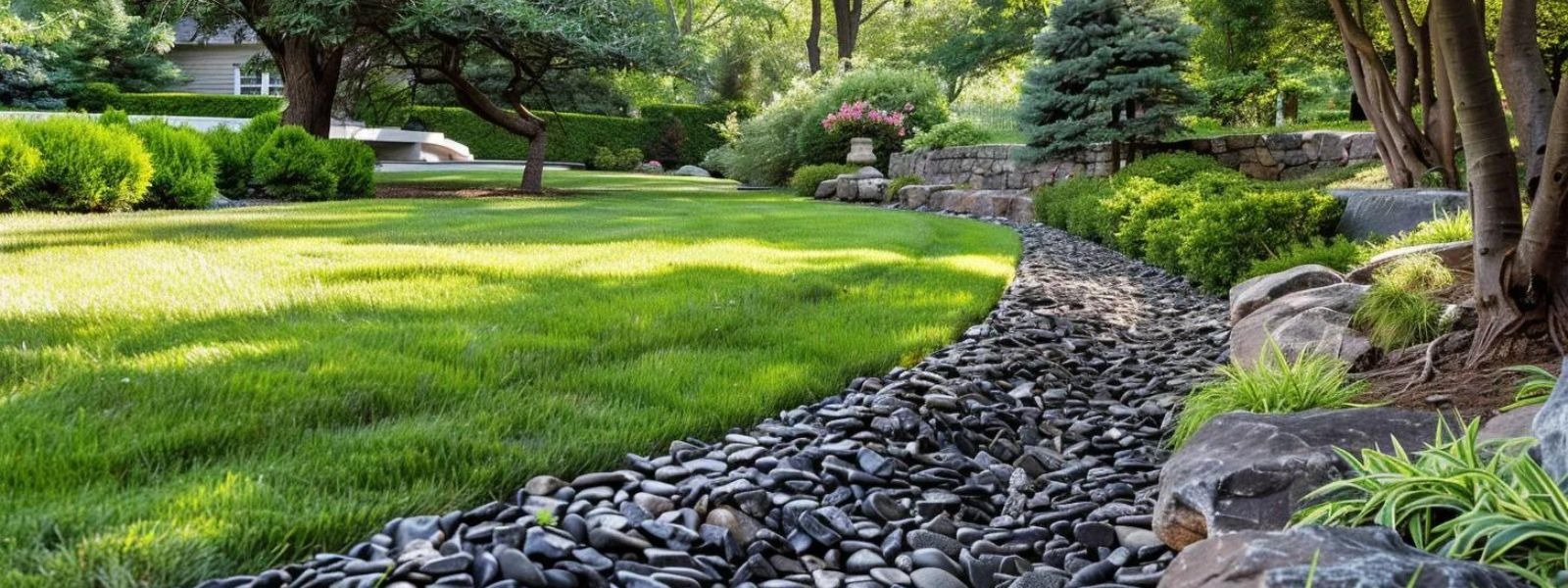
The four common mistakes landscapers make when planting are planting too deep, ignoring soil conditions, crowding plants too close together, and choosing plants that do not match the local climate or sun exposure. Each of these mistakes can kill plants within weeks and waste hundreds of dollars in materials.
Planting too deep suffocates roots and prevents water from reaching them properly. According to the Alabama Cooperative Extension System, soils in the Huntsville area are primarily red clayey soils derived from weathered limestone. These dense soils hold water and resist drainage, which means plants set too deep will sit in saturated conditions and rot. Testing your soil before planting is one of the most important steps you can take.
Crowding plants is another major issue. Every plant needs room to grow to its mature size. When plants are packed too tightly, they compete for water, sunlight, and nutrients. This leads to weak growth, disease, and a yard that looks overgrown within two years. Homeowners dealing with weed infestation often find that overcrowded beds are a contributing factor, because dense plantings that fail leave bare soil where weeds take hold.
How Do You Design a Landscape Layout?
You design a landscape layout by starting with a site analysis, mapping your property boundaries, identifying sun and shade patterns, testing your soil, and then creating zones for different activities. The layout should flow naturally from the back door outward, creating a smooth transition from indoor to outdoor living.
According to the National Association of Landscape Professionals, 65% of homeowners who renovated their landscaping in 2024 hired a professional. Among those, 21% hired a landscape contractor, 17% hired a stone, paver, or concrete specialist, and 15% hired a general contractor. Professional help is especially valuable during the layout phase because mistakes in spacing, grading, and drainage are expensive to fix later.
A strong landscape layout for homes in Madison and Huntsville should address three critical local factors. First, drainage: with 55 inches of annual rainfall (according to BestPlaces), your layout must direct water away from the home and toward proper drainage solutions. Second, sun exposure: Alabama's intense summer sun means shade structures and heat-tolerant plants are essential. Third, soil: the red clay found across North Alabama requires soil amendment and repair before most plants will thrive.
What Is the 3-5-7 Rule in Decorating Outdoor Spaces?
The 3-5-7 rule in decorating outdoor spaces states that you should group decorative elements in odd numbers, specifically 3, 5, or 7 items, to create visual interest and a natural, unforced look. This rule applies to everything from planters on a patio to candles on an outdoor table to groupings of ornamental grasses in a garden bed.
The rule works because odd-numbered groupings prevent the eye from automatically pairing items and moving on. According to design professionals, even numbers create symmetry that the brain processes quickly and dismisses, while odd numbers force continued engagement and create more memorable visual impressions.
In a functional outdoor living space, the 3-5-7 rule can guide pot placement on a patio (3 pots of varying sizes), the number of accent plants in a border (5 ornamental grasses), or the count of landscape lights along a pathway (7 fixtures spaced evenly). Homeowners in Huntsville who follow this simple guideline find that their outdoor spaces feel more curated and professional without spending extra money on additional materials.
What Not to Do in Landscaping?
What not to do in landscaping includes ignoring drainage, planting without a plan, choosing high-maintenance plants you do not have time to care for, over-mulching around tree trunks, and installing too much hardscape with too few plantings. These mistakes cost time, money, and often lead to a complete redo within a few years.
According to Houzz research, 77% of homeowners upgraded outdoor plants, shrubs, or trees as part of their landscape renovation, with the most popular choices being flowering plants (82%), low-maintenance plants (71%), and native plants (52%). Choosing plants that are not suited to your climate zone is one of the most common and expensive landscaping mistakes. For homeowners in Huntsville, Alabama (USDA Hardiness Zone 7b), selecting plants rated for Zones 7 through 9 gives the best chance of long-term success.
Another major mistake is neglecting the balance between hardscape and softscape. Many garden designers recommend about 30% hardscape (paths, patios, walls) and 70% plantings. Too much concrete and stone makes a yard feel sterile, while too many plants without structure can look chaotic. Getting this balance right is one reason why working with a professional landscaping design team pays for itself over time.
What Does 30 Minutes of Gardening Do for Your Body?
Thirty minutes of gardening burns approximately 150 to 300 calories depending on body weight and the activity, strengthens muscles in the hands, arms, and core, and provides documented mental health benefits. According to research published by Harvard Medical School, 30 minutes of general gardening burns about 135 calories for a 125-pound person and about 200 calories for a 185-pound person.
Beyond physical fitness, gardening has measurable effects on stress and mood. A study published in the Journal of Health Psychology found that gardening lowered cortisol levels (the body's stress hormone) more effectively than other leisure activities. The mental health benefits extend to reduced anxiety, improved focus, and a stronger sense of accomplishment, especially when you can see the results of your work growing in your own yard.
For homeowners in Madison, Alabama who invest in a functional outdoor living space, daily gardening becomes more accessible and enjoyable. A well-designed yard with raised beds, easy-access pathways, and good soil gives you a reason to spend time outside every day, which adds up to real health benefits over months and years.
What Is the 3-Year Rule for Plants?
The 3-year rule for plants states that most perennial plants follow a predictable growth pattern: they sleep the first year, creep the second year, and leap the third year. This means newly planted perennials will look small and underwhelming in year one, show modest growth in year two, and finally reach their full size and flowering potential by year three.
This rule is important for homeowners to understand because impatience is one of the top reasons people rip out healthy plants and start over. According to multiple Extension Service programs across the U.S., perennials need time to establish root systems before they put energy into above-ground growth. The first-year "sleep" period is when roots are spreading underground, building the foundation for future growth.
In the Huntsville area, the warm growing season and ample rainfall give perennials an advantage, but the dense clay soil can slow root establishment. Starting with proper soil preparation makes a big difference. Homeowners who struggle with plants that never seem to take off often find that soil amendment and repair solves the problem by giving roots the loose, nutrient-rich environment they need to thrive during that critical first year.
What Is the Most Common Mistake of First-Time Gardeners?
The most common mistake of first-time gardeners is planting too much too fast without preparing the soil first. New gardeners often buy a cart full of plants on a Saturday morning and have everything in the ground by Sunday afternoon, without testing the soil, checking drainage, improving the bed, or researching what each plant actually needs.
According to the Alabama Cooperative Extension System, soil testing is the single most important step for successful gardening in Alabama. The test tells you your soil's pH level, nutrient content, and organic matter percentage. Most plants prefer a pH between 6.0 and 7.0, but many Alabama soils trend acidic. Without this information, you are guessing, and guessing usually leads to dead plants.
The second most common mistake is not accounting for water. Huntsville receives about 55 inches of rain per year, but that rain does not fall evenly. Long dry stretches in summer can stress plants that were thriving in spring. A functional landscape design accounts for irrigation needs from the start. It also addresses drainage to prevent standing water that drowns root systems during heavy rain events.
How to Create a Low-Maintenance Functional Outdoor Space?
You create a low-maintenance functional outdoor space by choosing native and drought-tolerant plants, using hardscaping for high-traffic areas, installing drip irrigation, applying proper mulch, and designing clear zones that are easy to maintain. The goal is to build a yard that looks great with the least amount of weekly work.
According to a 2024 Houzz survey, the most popular plant choices among renovating homeowners were low-maintenance plants (71%) and native plants (52%). Native plants are adapted to local soil and climate conditions, which means they need less water, less fertilizer, and less attention than non-native species. For Huntsville homeowners, good native choices include oakleaf hydrangea, coneflower, black-eyed Susan, and switchgrass.
Mulch is another low-maintenance powerhouse. A 2 to 3 inch layer of organic mulch reduces weeding by up to 90%, retains soil moisture, and regulates soil temperature. Pairing proper mulch with rock and mulch landscaping ideas for front yard combinations creates a yard that stays neat year-round with minimal effort. Adding a simple drip irrigation system takes the guesswork out of watering and keeps plants healthy through Alabama's hot, dry stretches in July and August.
Frequently Asked Questions
How Much Does Landscape Design Cost in Huntsville, Alabama?
The cost of landscape design in Huntsville varies based on yard size, complexity, and the features included. According to the National Association of Realtors, the average overall landscape upgrade costs about $9,000 and delivers a 100% return on investment. Professional design plans with digital previews, plant selection, and installation specs are well worth the investment because they prevent costly mistakes during the build phase.
What Is the Best Time to Start a Landscape Project in North Alabama?
The best time to start a landscape project in North Alabama is early fall or early spring. Fall planting, from late September through November, gives plants cooler temperatures and natural rainfall to establish roots before summer heat arrives. Spring, from March through May, is also strong for planting in the Huntsville and Madison area because the soil is warming up and rain is plentiful.
Does a Patio Add Value to a Home in Madison, AL?
Yes, a patio adds significant value to a home in Madison, AL. According to the National Association of Realtors, patios deliver a 95% return on investment. In a market where buyers look for outdoor entertainment space, a clean patio combined with good landscaping creates a strong first impression that translates to faster sales and higher offers.
What Plants Work Best in Huntsville's Climate?
Plants that work best in Huntsville's climate are those rated for USDA Hardiness Zone 7b. According to Houzz, the most popular choices among homeowners are flowering plants (82%), low-maintenance varieties (71%), and native plants (52%). In Huntsville, native options like oakleaf hydrangea, coneflower, and black-eyed Susan thrive in the red clay soil and tolerate the heat and humidity of Alabama summers.
How Do I Fix a Yard That Holds Water After Rain in Huntsville?
You fix a yard that holds water after rain in Huntsville by improving drainage through grading, French drains, or surface drains. The red clay soil across North Alabama resists water percolation, which causes pooling. Professional drainage solutions redirect water away from your home and yard, protecting both your foundation and your landscape investment.
Can Landscaping Really Increase My Home's Value by 15% to 20%?
Yes, landscaping can increase your home's value by 15% to 20%. According to the American Society of Landscape Architects, professional landscaping delivers this range of return. The NAR confirms that 97% of realtors agree curb appeal is important to attracting buyers. For a home in the Huntsville market, that percentage boost can mean tens of thousands of dollars in added equity.
What Is the Difference Between Hardscaping and Softscaping?
The difference between hardscaping and softscaping is that hardscaping refers to non-living elements like patios, walkways, retaining walls, and fire pits, while softscaping refers to living elements like plants, trees, shrubs, and grass. Most designers recommend a balance of about 30% hardscape to 70% softscape for a yard that feels both structured and alive.
Final Thoughts
Functional landscape design for outdoor living spaces is about more than making your yard look pretty. It is about creating a space that works for your family every single day, from morning coffee on the patio to weekend cookouts with friends to quiet evenings by the fire pit. The data backs it up: the NAR reports a 100% cost recovery on landscape upgrades, the American Society of Landscape Architects confirms a 15% to 20% boost in home value, and 97% of realtors say curb appeal matters to buyers.
For homeowners in Huntsville and Madison, Alabama, the long outdoor season, heavy rainfall, and clay soil make professional design even more important. The right plan accounts for drainage, sun exposure, soil conditions, and how your family actually uses the yard, turning potential problems into features that add value and enjoyment for years to come.
If you are ready to turn your yard into a true outdoor living space, call White Shovel Landscapes today at 256-612-4439 or request a free estimate online. With over 13 years of experience and a team of dedicated designers, White Shovel creates custom landscape designs that are built for the way North Alabama families actually live. Schedule your free consultation and see a digital preview of your dream yard before a single shovel hits the dirt.



You May Also Like

Sep 12, 2026
3 min
How to Keep Landscape Edging Straight
Sep 11, 2026
3 min
How to Decorate a Patio: Ideas for 2025 and 2026
Sep 9, 2026
3 min
How to Trim Around Landscape Edging
Sep 7, 2026
3 min
What Does a Lawn Look Like After Aeration
Stay Connected and Inspired
Get the latest landscaping tips, seasonal care guides, and exclusive offers delivered straight to your inbox. Don’t miss out on expert advice and ideas to transform your outdoor spaces.
Sign Up for Our Newsletter Today!




Transforming Huntsville & Madison yards since 2010 with expert landscape design, garden makeovers, mulching, and top-quality installations.


