Providing Best Services in Huntsville & Madison, AL


Follow us on Social.





Mar 19, 2026

3 Min

Lawn Care
Retaining Wall Construction for Sloped Yards
Yes, you can build a retaining wall on a slope, and for many homeowners in Huntsville, Alabama, it is the single best way to stop erosion, create usable flat space, and protect your home's foundation. Retaining wall construction for sloped yards turns problem hillsides into functional outdoor living areas.
Yes, you can build a retaining wall on a slope, and for many homeowners in Huntsville, Alabama, it is the single best way to stop erosion, create usable flat space, and protect your home's foundation. Retaining wall construction for sloped yards turns problem hillsides into functional outdoor living areas. According to HomeAdvisor, most homeowners spend between $3,196 and $9,201 on a retaining wall, with the national average coming in at $6,073. Home appraisers estimate a 100% to 200% return on that investment, making retaining walls one of the highest-ROI hardscaping projects you can take on. This guide covers everything from material types and footing depth to drainage, permits, and the most common construction mistakes to avoid.
Can I Build a Retaining Wall on a Slope?
Yes, you can build a retaining wall on a slope. In fact, slopes are the most common reason homeowners need retaining walls in the first place. A retaining wall holds back soil on the uphill side and creates a flat, usable area on the downhill side. This turns a steep, unusable hillside into space for a patio, garden, walkway, or play area.
According to Fixr, building a retaining wall on a slope costs $40 to $200 per linear foot depending on the size and complexity of the project. Sloped sites require more excavation, careful grading, and often terracing, which can increase labor costs by 50% or more compared to building on flat ground, according to Angi.
For homeowners in Huntsville and Madison, Alabama, slopes are common across the Tennessee Valley landscape. The varied terrain, from the ridges near Monte Sano to the flatter areas around Madison, means many properties have elevation changes that benefit from hardscaping solutions like retaining walls. A properly built wall stops soil from sliding downhill after every rainstorm and gives you back yard space you thought you had lost.
What Is the 1/3 Rule for Retaining Walls?
The 1/3 rule for retaining walls states that you should bury approximately one-third of the total wall height below grade. This means the buried portion of the wall should equal about one-third of the exposed height plus the buried portion combined. For example, if you want a wall that stands 3 feet above ground, you should bury about 1 foot below grade, making the total wall height 4 feet.
According to Allan Block, a leading retaining wall manufacturer, a commonly used embedment depth calculation for walls on level ground is 1 inch of depth per foot of wall height, with a minimum of 6 inches for commercial projects. For residential walls on sloped yards, deeper embedment is required for stability.
This rule exists because the buried portion anchors the wall against the massive lateral pressure exerted by the soil behind it. Without enough buried depth, even a heavy wall can tip, slide, or settle over time. Homeowners in the Huntsville area who deal with yard erosion on sloped lots should pay close attention to this rule, as the red clay soil across North Alabama holds water and exerts significant pressure against wall structures.
What Is the Best Retaining Wall for a Steep Slope?
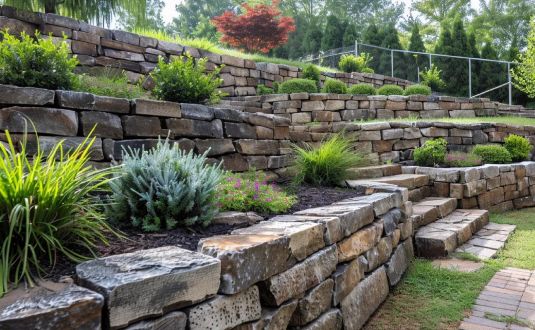
The best retaining wall for a steep slope is a terraced system using segmental concrete blocks or natural stone with proper geo-grid reinforcement. Terracing means building two or more shorter walls in a stair-step pattern instead of one tall wall. This approach distributes the soil pressure across multiple structures and is both safer and more visually appealing.
According to HomeAdvisor, concrete block retaining walls cost $10 to $45 per square foot, while natural stone walls range from $5 to $100 per square foot depending on the stone type. For steep slopes, many engineers recommend terraced walls because a single tall wall requires significantly deeper footings, structural engineering, and often a building permit.
Gravity walls, which rely on their own weight to hold back soil, work well for slopes under 3 feet of elevation change. For anything taller, cantilever walls with reinforced footings or segmental block systems with geo-grid are the better choice. Homeowners across Madison and Huntsville who have steep hillsides often find that terraced walls paired with good drainage solutions create the most stable and attractive result.
Does a 3 Ft Retaining Wall Need Drainage?
Yes, a 3-foot retaining wall needs drainage. Every retaining wall, regardless of height, needs a drainage system to prevent water buildup behind it. According to AZTA Engineering, hydrostatic pressure from trapped water is the single most common cause of retaining wall failure. Water weighs about 8.34 pounds per gallon, and when it saturates the soil behind a wall, the lateral pressure can increase dramatically.
A proper drainage system includes at least 12 inches of free-draining gravel backfill behind the wall, a perforated drain pipe at the base, and weep holes to allow water to escape through the wall face. Without these features, water accumulates behind the wall, builds pressure, and eventually causes bulging, cracking, or complete collapse.
This is especially critical in Huntsville, Alabama, where annual rainfall averages about 55 inches, according to BestPlaces. That is 45% more rain than the national average. Combined with the dense clay soil that resists drainage, every retaining wall in the North Alabama area must be designed with water management as a top priority.
How Steep Can a Slope Be Without a Retaining Wall?
A slope can generally be up to a 3:1 ratio (three feet of horizontal run for every one foot of vertical rise) without a retaining wall, as long as it is properly vegetated and maintained. This equals roughly an 18-degree angle. Slopes steeper than 3:1 are at much higher risk of erosion, soil movement, and instability.
According to the American Society of Civil Engineers, poor maintenance of retaining structures leads to thousands of property damage cases every year, totaling around $200 million in damages. About 30% of retaining walls fail within just a few years of being built, usually because of improper drainage, inadequate reinforcement, or poor construction practices. These statistics show how important it is to build correctly the first time.
For slopes steeper than 3:1, a retaining wall is strongly recommended. In the Huntsville area, heavy spring rains can accelerate erosion on unprotected slopes very quickly. Homeowners who notice muddy yards or soil washing down their hillside after storms should consider a retaining wall before the damage reaches their foundation.
What Is the Cheapest Retaining Wall to Build?
The cheapest retaining wall to build is a timber (wood) wall, which costs approximately $15 to $30 per square foot according to Fixr. Treated pine timbers or railroad ties are the most affordable option and work well for short walls under 3 feet. Vinyl walls are another budget option at $10 to $15 per square foot according to LawnStarter.
However, cheap does not always mean best value. Wood retaining walls last only 5 to 20 years before rot and insect damage take their toll, according to HomeAdvisor. Concrete block walls cost more upfront at $10 to $45 per square foot but can last 50 to 100 years with proper installation and maintenance. Stone walls can last up to 200 years.
For homeowners in Madison and Huntsville, the hot, humid Alabama climate accelerates wood decay. A pressure-treated timber wall may look great for the first few years but can start showing signs of rot within a decade. Investing in concrete block or natural stone for a retaining wall provides far better long-term value, especially for walls that are holding back significant amounts of soil on a sloped yard.
What Are Common Retaining Wall Mistakes?
The most common retaining wall mistakes are skipping the drainage system, not burying the base deep enough, using the wrong backfill material, ignoring soil type, and building too tall without engineering. According to Foundation Systems Engineering, the leading causes of retaining wall failure are inadequate design, inadequate drainage, poor construction practices, and soil and foundation issues.
Skipping drainage is the number one mistake. Water buildup behind a wall creates hydrostatic pressure that can cause the wall to bow, crack, or collapse. According to AZTA Engineering, hydrostatic pressure is the single most common cause of retaining wall failure. Using clay or topsoil as backfill instead of free-draining gravel is another frequent error that traps water right where you do not want it.
Building too tall without a permit or engineering is also a serious mistake. Most municipalities require permits for walls over 3 to 4 feet tall, according to Angi. Permits cost between $50 and $450 but are a small price compared to the cost of a wall that fails because it was not designed to handle the load.
Does a 2 Foot Retaining Wall Need a Footing?
A 2-foot retaining wall does not typically need a poured concrete footing, but it does need a properly prepared base. Most segmental block walls under 3 feet use a compacted gravel base that is 6 inches deep and extends the full width of the trench. This gravel base acts as the footing, providing drainage and a stable platform for the first course of blocks.
According to How to Hardscape, the minimum trench width for a retaining wall should include 6 inches of base material in front of the wall, the depth of the wall block (typically 8 inches), and at least 12 inches of drainage area behind the wall. This adds up to a minimum trench width of about 26 inches.
For short decorative walls in the Huntsville area, a compacted gravel base is usually sufficient. However, if the wall is on a slope, near a structure, or retaining heavy soil loads, a poured concrete footing adds significant stability. When in doubt, consulting with a professional landscaping design team is the safest approach.
How Deep Should My Footing Be for a Retaining Wall?
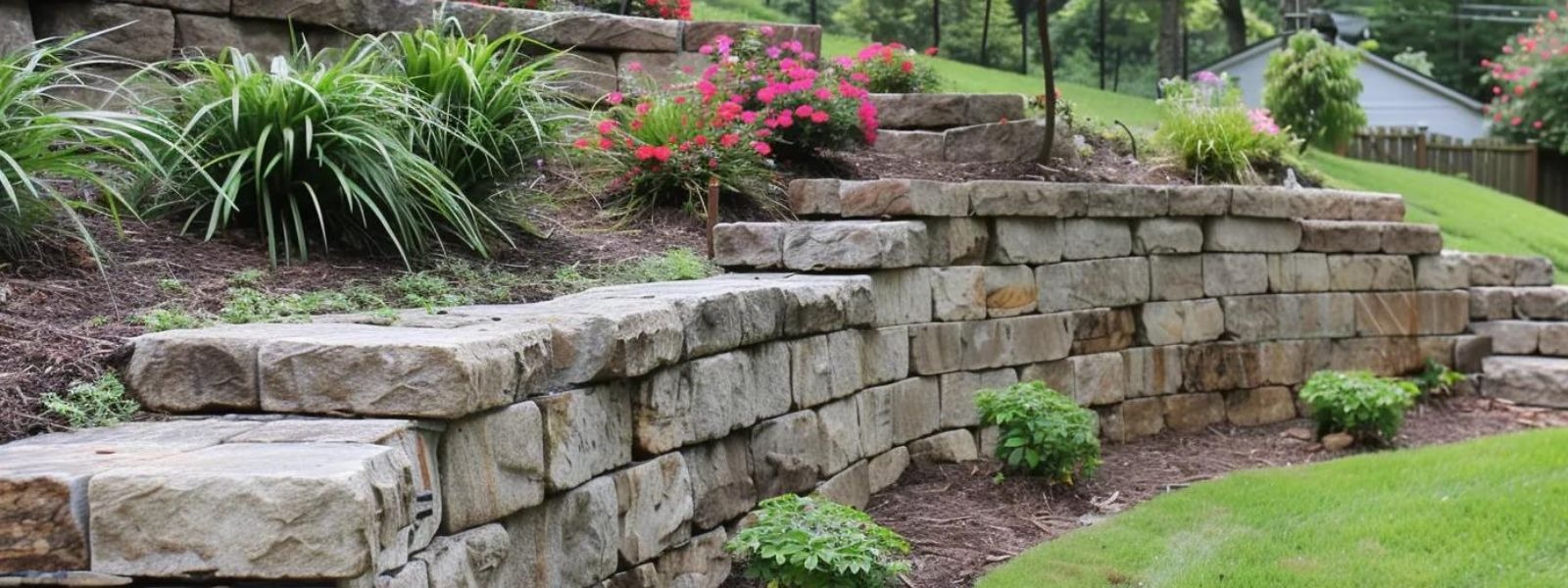
The depth of a footing for a retaining wall depends on the wall height, soil type, and local frost line. A common rule of thumb is that the base depth should be one-eighth to one-quarter of the wall height, according to Pittsburgh Retaining Wall Contractors. For example, a 4-foot wall needs a base trench 6 to 12 inches deep.
For taller walls that require poured concrete footings, the footing thickness should be at least twice the wall thickness according to Punchlist Zero. So a wall that is 8 inches thick needs a footing at least 16 inches thick. The footing width should extend at least 6 inches beyond the wall face on each side.
In Huntsville and Madison, Alabama, the frost line is relatively shallow compared to northern states, so extreme footing depths are not usually required. However, the dense clay soil across North Alabama makes proper compaction of the base layer critical. Without firm, compacted gravel under the first course of blocks, the wall can settle unevenly and begin to lean within the first few years.
What Is the 45 Degree Footing Rule?
The 45 degree footing rule states that any structure, building, or heavy load placed near a retaining wall must be set back far enough that an imaginary 45-degree line drawn upward from the top of the wall's footing does not intersect the structure's foundation. This invisible line defines the "zone of influence" for the retaining wall.
According to the City of Cincinnati's Retaining Wall Standards, the zone of influence is the area behind the retaining wall to a line rising at 45 degrees from the top edge of the footing. Any building, driveway, or heavy equipment within this zone adds surcharge load to the wall, increasing the risk of failure.
This rule is important for homeowners in Huntsville who want to build a patio, shed, or driveway near a retaining wall. If the new structure falls within the 45-degree zone, the retaining wall must be engineered to handle the extra weight. Ignoring this rule can lead to wall collapse, which is both dangerous and expensive to repair.
What Is the Strongest Type of Retaining Wall?
The strongest type of retaining wall is a reinforced poured concrete wall, also called a cantilever wall. These walls use a concrete base (footing) and a vertical stem reinforced with steel rebar to resist the lateral pressure of the soil. According to HomeAdvisor, poured concrete walls cost $30 to $50 per square foot but can last 50 to 100 years.
For residential use, segmental concrete block walls with geo-grid reinforcement are the most practical strong option. Geo-grid is a geosynthetic material that extends horizontally into the soil behind the wall, tying the wall and the soil together into one reinforced mass. According to industry sources, many retaining wall failures occur because walls that need geo-grid are built without it, often due to contractor inexperience.
Stone retaining walls are also extremely strong and can last up to 200 years according to HomeAdvisor. For homeowners in the Huntsville area who want a wall that combines strength with natural beauty, hardscaping with natural stone or segmental block is the best balance of durability, appearance, and cost.
What Is the Most Common Retaining Wall Failure?
The most common retaining wall failure is caused by inadequate drainage leading to hydrostatic pressure buildup. When water saturates the soil behind a retaining wall and has no way to escape, it increases the lateral pressure on the wall far beyond what it was designed to handle. According to AZTA Engineering, hydrostatic pressure is the single most common cause of retaining wall failure.
According to My Landscape Contractor, citing the American Society of Civil Engineers, bad design or poor maintenance of retaining walls leads to thousands of property damage cases every year, totaling around $200 million in damages. Roughly 30% of retaining walls fail within a few years of construction. The good news is that most of these failures are preventable with proper drainage, quality materials, and professional installation.
The second most common failure is building on an inadequate foundation. Walls that are not buried deep enough, do not have compacted base material, or sit on unstable soil will settle, lean, and eventually collapse. For homeowners across Huntsville and Madison who sit on expansive clay soil, both drainage and foundation preparation are non-negotiable for a wall that lasts.
Do You Have to Backfill a Retaining Wall?
Yes, you have to backfill a retaining wall. The backfill material is just as important as the wall itself. Proper backfill consists of free-draining gravel or crushed stone placed directly behind the wall to a minimum depth of 12 inches. This gravel layer allows water to flow down to the drain pipe at the base instead of building up behind the wall.
According to multiple building codes and retaining wall standards, granular backfill should extend from finished grade at the face of the wall to within 8 inches of the top. The top 8 inches is then filled with topsoil to support grass or plantings. Using clay or regular topsoil for the full backfill is a critical mistake because it traps water and creates the hydrostatic pressure that causes walls to fail.
Homeowners in Huntsville should be aware that the clay soil across North Alabama is especially poor as a backfill material. It swells when wet and shrinks when dry, creating constant push-and-pull pressure on the wall. Replacing the native clay with clean gravel behind the wall is one of the most important steps in building a retaining wall that lasts for decades in this region.
How Far Apart Should Posts Be on a Retaining Wall?
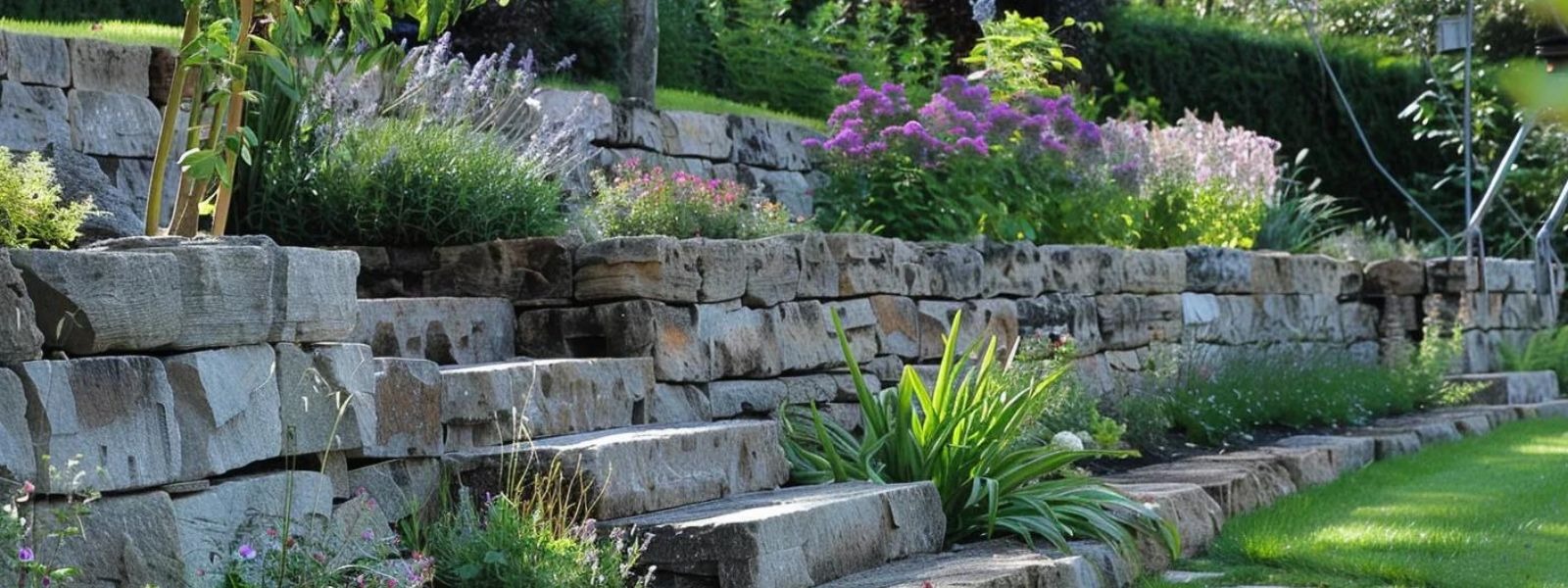
Posts on a timber retaining wall should be spaced 4 to 6 feet apart for walls under 3 feet tall, and 3 to 4 feet apart for taller walls. The taller the wall and the heavier the soil load, the closer together the posts need to be. Posts are typically buried to a depth equal to one-third to one-half of the total post length.
For segmental block walls, there are no posts. Instead, stability comes from the weight of the blocks, the interlocking design, the compacted gravel base, and geo-grid reinforcement for taller walls. This is one of the main advantages of block systems over timber: they distribute the load evenly along the entire length of the wall rather than concentrating it at post locations.
Many homeowners in Madison, Alabama who are considering a retaining wall for their sloped yard choose segmental block for this reason. Block walls provide a cleaner look, last far longer than timber, and do not rely on individual posts that can rot or shift in the clay soil common across North Alabama.
How Long Will a 6x6 Retaining Wall Last?
A 6x6 treated timber retaining wall will last approximately 10 to 20 years with proper installation and drainage. According to HomeAdvisor, wood retaining walls have a lifespan of 5 to 20 years depending on the quality of the lumber, the treatment method, and how well water is managed behind the wall.
The biggest threat to timber walls is moisture. Constant contact with wet soil causes even pressure-treated wood to rot from the inside out over time. In Alabama's humid climate, where annual rainfall hits 55 inches and summer humidity regularly exceeds 80%, wood walls deteriorate faster than they would in drier climates.
If you choose a timber wall for a short-term or budget-friendly solution, make sure the wood is rated for ground contact (UC4A or UC4B treatment), the posts are buried deep enough, and the backfill is gravel rather than clay. Even with these precautions, plan to replace the wall within 15 to 20 years. For a longer-lasting solution, concrete block or stone walls offer 50 to 200 years of service life.
Should I Pour a Footer for a Retaining Wall?
Whether you should pour a footer for a retaining wall depends on the wall's height, material, and load. For short segmental block walls under 3 feet on stable ground, a 6-inch compacted gravel base is sufficient and a poured concrete footer is not required. For walls over 4 feet tall, poured concrete walls, or walls near structures, a poured concrete footing is recommended or required.
According to Punchlist Zero, solid masonry retaining walls made of brick, cinder block, or poured concrete need a concrete footing. Many building codes require this footing to include steel rebar reinforcement for added strength. The footing should be at least twice the thickness of the wall and extend beyond the wall face on both sides.
For homeowners in Huntsville building a retaining wall on a slope with clay soil, a poured footer provides extra insurance against settling and shifting. The cost of a concrete footing is a small percentage of the total project but can mean the difference between a wall that stands for 50 years and one that starts leaning within 5. When working with landscape installation professionals, they will assess your specific site conditions and recommend the right foundation type.
Frequently Asked Questions
Do I Need a Permit to Build a Retaining Wall in Huntsville, Alabama?
You likely need a permit to build a retaining wall in Huntsville if the wall is over 4 feet tall. According to Angi, most municipalities require permits for walls taller than 3 to 4 feet. Permits typically cost $50 to $450. Check with the City of Huntsville Building Department before starting any project, as unpermitted walls can create liability issues and problems when selling your home.
How Long Does It Take to Build a Retaining Wall in Madison, AL?
A typical residential retaining wall takes 3 to 7 days for professional installation, with total project timelines of 2 to 3 weeks when you include site preparation, material delivery, and permitting. Larger or terraced walls on steep slopes take longer. In Madison and Huntsville, scheduling the project during dry weather in fall or early spring avoids rain delays common in April and May.
Can a Retaining Wall Prevent Foundation Damage?
Yes, a retaining wall can prevent foundation damage by redirecting soil and water pressure away from your home. Saturated soil pushing against a foundation creates the same hydrostatic pressure that damages retaining walls. According to AZTA Engineering, proper drainage combined with a well-built retaining wall is one of the most effective ways to protect a home on a sloped lot.
What Type of Retaining Wall Is Best for Clay Soil in North Alabama?
The best retaining wall for clay soil in North Alabama is a segmental concrete block wall with extensive gravel backfill and a perforated drain pipe. Clay soil swells when wet and shrinks when dry, creating ongoing pressure cycles. According to Foundation Systems Engineering, expansive soils exert varying pressures that can lead to wall movement and failure without proper drainage.
How Much Value Does a Retaining Wall Add to a Home in Huntsville?
A retaining wall can add significant value to a home in Huntsville. According to HomeAdvisor, home appraisers estimate a 100% to 200% return on investment for well-designed retaining walls. LawnStarter reports that retaining walls can increase home value by up to 15%. The added usable yard space and improved curb appeal are especially valuable in the competitive Huntsville real estate market.
What Happens If a Retaining Wall Does Not Have Drainage?
If a retaining wall does not have drainage, water accumulates behind it and creates hydrostatic pressure that pushes the wall outward. According to Foundation Systems Engineering, this added pressure causes the wall to bulge, crack, or collapse. Water weighs 8.34 pounds per gallon, and saturated soil behind a wall can more than double the lateral force the wall must resist.
Is a Retaining Wall or French Drain Better for a Sloped Yard?
A retaining wall and a French drain serve different purposes, and many sloped yards need both. A retaining wall holds back soil and creates flat space, while a French drain redirects water. According to HomeGuide, every retaining wall needs a drainage system to prevent failure. The two systems work together, making them complementary rather than competing solutions. Many homeowners in Huntsville who address standing water problems combine both for maximum protection.
Final Thoughts
Retaining wall construction for sloped yards is one of the most valuable and practical investments a homeowner in Huntsville or Madison, Alabama can make. The right wall stops erosion, creates usable outdoor space, protects your foundation, and delivers a 100% to 200% return on investment according to home appraisers. With 55 inches of annual rainfall and dense clay soil that pushes hard against any structure, getting the drainage, foundation, and materials right the first time is not optional.
The data speaks for itself. About 30% of retaining walls fail within a few years, according to the American Society of Civil Engineers, and the leading cause is inadequate drainage. Hydrostatic pressure from trapped water is responsible for more wall collapses than any other factor. But with proper gravel backfill, a perforated drain pipe, and a solid compacted base, a well-built retaining wall can last 50 to 200 years depending on the material.
If your sloped yard is causing erosion, standing water, or wasted space, do not wait for the next big storm to make it worse. Call White Shovel Landscapes today at 256-612-4439 or request a free estimate online. The team at White Shovel builds retaining walls and hardscaping solutions designed for North Alabama's unique terrain, soil, and rainfall conditions. Every project comes with a 10-year warranty, premium materials, and the craftsmanship your property deserves. Take the first step toward a yard you can actually use.



You May Also Like

Sep 12, 2026
3 min
How to Keep Landscape Edging Straight
Sep 11, 2026
3 min
How to Decorate a Patio: Ideas for 2025 and 2026
Sep 9, 2026
3 min
How to Trim Around Landscape Edging
Sep 7, 2026
3 min
What Does a Lawn Look Like After Aeration
Stay Connected and Inspired
Get the latest landscaping tips, seasonal care guides, and exclusive offers delivered straight to your inbox. Don’t miss out on expert advice and ideas to transform your outdoor spaces.
Sign Up for Our Newsletter Today!





Transforming Huntsville & Madison yards since 2010 with expert landscape design, garden makeovers, mulching, and top-quality installations.


