Providing Best Services in Huntsville & Madison, AL


Follow us on Social.





May 18, 2026

3 Min

Landscape Design
Walkway Design for Homes
Walkway design for homes involves choosing the right materials, width, pattern, and layout to create a safe, attractive path that boosts curb appeal and connects your outdoor spaces.
Walkway design for homes is the process of planning and building a path that connects your front door, driveway, backyard, or garden areas in a way that is safe, attractive, and built to last. A well-designed walkway does more than give people a place to walk. It shapes the entire look of your property and creates a welcoming first impression that visitors notice before they ever step inside.
In this guide, we cover the best walkway materials, how wide your path should be, which design patterns work for different home styles, and why a strong walkway is one of the smartest investments you can make in your home. A study published in The Journal of Real Estate Finance and Economics by researchers at the University of Texas at Arlington found that homes with strong curb appeal sell for an average of 7% more than comparable homes in the same neighborhood. Your walkway is at the center of that curb appeal.
What Makes a Good Walkway Design for Homes?
A good walkway design for homes balances three things: function, appearance, and durability. The walkway needs to take people where they want to go without puddles, cracks, or tripping hazards. It needs to look like it belongs with your home and your landscape. And it needs to hold up against weather, foot traffic, and time.
The National Association of Realtors' 2023 Remodeling Impact Report defined a standard yard upgrade as adding a natural flagstone walkway, stone planters, flowering shrubs, a deciduous tree, and mulch. That upgrade was expected to recover 100% of its cost at resale. A walkway is not just decoration. It is a functional part of your property that adds real, measurable value.
Good walkway design starts with a plan. You need to know how wide the path should be, what material fits your budget and style, how the walkway connects to your driveway and front door, and whether the ground beneath it drains properly. Skipping any of these steps leads to problems like cracking, settling, pooling water, or a path that simply does not look right with the rest of your landscape design.
How Do You Plan a Walkway Layout?
You plan a walkway layout by mapping the route people naturally take across your yard, deciding on the width and shape, and making sure the ground beneath the path drains water away from your home. Most homeowners make the mistake of drawing a straight line from the driveway to the front door without thinking about how people actually move through the space.
Start by watching where foot traffic naturally goes. If there is a worn path in the grass, that is usually the best route for your walkway. A slight curve adds visual interest and makes the approach to your home feel more inviting. Straight walkways work well for modern or minimalist home styles, while curved paths suit traditional and cottage-style homes.
The ideal front walkway width is 4 to 6 feet, which allows two people to walk side by side comfortably. Secondary paths, like those leading to a garden or side yard, can be narrower at 2 to 3 feet. According to the U.S. Access Board, the minimum clear width for an accessible pedestrian route is 4 feet, with 5 feet recommended. Even for residential paths, building to these standards makes your walkway safer and more usable for everyone.
Proper grading is just as important as the surface material. Water should always flow away from your home's foundation, not toward it. If your yard slopes toward the house, you may need to address drainage before or during walkway installation to prevent long-term water damage.
What Are the Best Walkway Materials for Homes?
The best walkway materials for homes include pavers, natural stone, brick, poured concrete, and gravel. Each material has different strengths in durability, appearance, and maintenance. The right choice depends on your budget, your home's style, and how much upkeep you want to do.
Pavers are the most popular choice for residential walkways. According to industry data from Angi, concrete pavers last 25 to 50 years with proper care, while brick pavers last 25 to 100 years. Natural stone like granite, bluestone, or flagstone can last 50 to over 100 years. These same materials work beautifully for outdoor patios as well. Pavers also have a key advantage over poured concrete: if one section cracks or settles, you can replace individual pieces without tearing out the entire walkway.
Here is a closer look at the most common options:
Is It Cheaper to Lay Pavers or Concrete?
It is generally cheaper to lay poured concrete than pavers for the initial installation. Basic poured concrete is usually cheaper per square foot installed than interlocking pavers, which vary with material and pattern. However, pavers often cost less over time because damaged sections can be replaced individually, while cracked concrete usually requires a full slab replacement.
Poured concrete is a solid choice for homeowners who want a clean, simple look at a lower upfront cost. Stamped or stained concrete can mimic the look of stone or brick at a fraction of the price. The downside is that poured concrete is more likely to crack over time, especially in areas with clay soil that expands and contracts with moisture changes.
Pavers give you more design flexibility. You can mix colors, create herringbone or basket-weave patterns, and adjust the layout to follow curves. Interlocking pavers also handle ground movement better than solid concrete because each piece can shift slightly without breaking. For homeowners in the Southeast, where clay soil is common, that flexibility is a big advantage.
Does a Walkway Add Value to Your Home?
Yes, a walkway adds value to your home by improving curb appeal, safety, and the overall look of your property. The University of Texas at Arlington study found that curb appeal alone accounts for about 7% of a home's sale price. In slower real estate markets, that premium jumps to 10% to 11%. A clean, well-built walkway is one of the most visible parts of your home's exterior, and buyers notice it immediately.
According to a 2023 survey by Thumbtack and Nextdoor, more than half of homeowners believe a beautiful landscape and exterior can increase their home's resale value by at least $20,000. A walkway is the backbone of that exterior. It connects the street to your door and ties together your lawn, garden beds, and hardscaping features into one cohesive look.
Walkways also ranked as the most-liked curb appeal feature at 88% approval among homeowners in a survey cited by Stone Escapes Landscape and Design. That number tells you something important: people care about walkways more than almost any other exterior feature.
What Are Some Creative Walkway Ideas?
Some creative walkway ideas include mixed-material paths, stepping stones set in gravel or groundcover, curved paver designs with planted borders, and walkways with built-in landscape lighting. The best walkway designs go beyond just laying a flat path. They create a visual journey from the street to your front door.
Mixing materials is one of the biggest trends in walkway design. Combining natural stone slabs with pea gravel between them adds texture and natural drainage. Pairing brick borders with a concrete or flagstone center creates contrast and visual interest. According to Techo-Bloc, a leading paver manufacturer, interlocking pavers in hexagonal, herringbone, and modular patterns are trending in 2025 and 2026.
Landscape lighting along your walkway is another upgrade that pays off in both safety and appearance. The National Association of Realtors found that landscape lighting provides a solid 59% return on investment while improving security and curb appeal. Solar-powered path lights, recessed LEDs, and low-voltage uplights are all popular options. Choosing the right fixtures and placement follows the same principles as any landscape lighting project.
Planting low-growing shrubs, ornamental grasses, or flowering perennials along both sides of the walkway softens the edges and connects the path to the rest of your landscape installation. In the South, heat-tolerant plants like liriope, dwarf mondo grass, and lantana work well as walkway border plants.
How Wide Should a Front Walkway Be?
A front walkway should be 4 to 6 feet wide. This width allows two people to walk side by side and creates a sense of openness and welcome as guests approach your front door. A walkway that is too narrow feels cramped and uninviting. A walkway that is too wide can look out of proportion with smaller homes.
For main entry paths, 4 feet is the minimum recommended width, and 5 feet is the standard most landscape professionals use. According to the U.S. Access Board's guidelines for pedestrian access routes, a minimum of 4 feet of clear width is required, with 5 feet recommended to allow passing. Even though residential walkways are not required to meet ADA standards, following these guidelines creates a more comfortable and accessible path for everyone, including visitors with strollers, wheelchairs, or mobility aids.
Secondary walkways leading to side yards, gardens, or backyard features can be narrower, typically 2 to 3 feet wide. These paths serve a more casual function and do not need the same grand scale as your main entry walkway.
Walkway Material Comparison: Lifespan, Maintenance, and Style
MaterialAverage LifespanMaintenance LevelBest ForConcrete Pavers25 to 50 yearsLow to moderate (reseal every 3-5 years)Modern homes, custom patternsBrick Pavers25 to 100 yearsLow (natural color holds without sealing)Traditional and colonial homesNatural Stone (Flagstone, Granite)50 to 100+ yearsLow (occasional cleaning)Upscale and rustic designsPoured Concrete20 to 40 yearsLow (but hard to repair cracks)Budget-friendly, minimalist styleGravelOngoing (needs refreshing)Moderate (raking, weed control)Informal paths, gardens, budget projects
Sources: Angi, Aspire Pavers, Peacock Pavers, Clean My Pavers, Great Lakes Landscape Design
Do You Need Gravel Under a Walkway?
Yes, you need gravel under a walkway in most cases. A proper gravel base, typically 4 to 6 inches of compacted crushed stone, provides drainage, prevents settling, and gives the walkway a stable foundation that lasts for decades. Without a gravel base, pavers and stone can shift, sink, and crack as the ground beneath them moves with moisture and temperature changes.
According to Peacock Pavers, proper base preparation is the most critical factor in walkway longevity. For walkways, they recommend 6 inches of compacted crushed stone as the standard. For driveways and heavier-use areas, that base may need to go up to 12 inches.
Skipping the base or cutting corners on compaction is the single most common reason walkways fail prematurely. Even expensive materials will crack and settle if the ground beneath them is not properly prepared. This is one area where professional installation makes a measurable difference in how long your walkway lasts.
Can You Pour Concrete Directly Onto Dirt?
You can pour concrete directly onto compacted dirt, but it is not recommended for walkways that need to last. Bare soil shifts, settles, and holds moisture in ways that cause concrete to crack and sink over time. A compacted gravel base between the soil and the concrete slab absorbs ground movement and allows water to drain away from the slab.
If your soil is sandy and naturally well-draining, pouring directly on compacted ground can work for light-use paths. But in areas with clay soil, which is common across Alabama and the Southeast, the ground expands when wet and shrinks when dry. That movement puts tremendous stress on a concrete slab sitting directly on top of it. A 4- to 6-inch gravel base absorbs that movement and protects your investment.
We always recommend proper soil preparation before any walkway project. Testing your soil and building the right base saves you from expensive repairs down the road.
What Is a Cheaper Alternative to Concrete Sidewalks?
A cheaper alternative to concrete sidewalks is a gravel path, stepping stones, or mulch walkway. Gravel paths are the most budget-friendly option for homeowners who want a defined path without a large investment. Stepping stones set into grass or gravel are another affordable option that adds character without a high price tag.
Mulch paths work well in garden areas and informal backyard settings. They are easy to install, inexpensive, and can be refreshed each season with a new layer. The trade-off is that mulch paths need more frequent maintenance than hard surfaces and are not ideal for high-traffic areas or formal front entries.
Permeable pavers are another option gaining popularity. These pavers allow rainwater to filter through the surface instead of running off, which helps with drainage and erosion control. While permeable pavers cost more than basic gravel, they are less expensive than natural stone and offer environmental benefits that traditional concrete does not.
What Are the Common Mistakes When Building a Walkway?
The common mistakes when building a walkway are skipping the gravel base, making the path too narrow, ignoring drainage, choosing materials that do not match the home's style, and not edging the walkway properly. Each of these mistakes leads to a path that looks wrong, feels wrong, or falls apart within a few years.
According to BobVila.com, the biggest landscaping mistake homeowners make is not having a coherent plan. That applies directly to walkways. A walkway that does not connect logically to your driveway, porch, or garden feels awkward and unfinished. Avoiding common design mistakes starts with mapping out your full yard before committing to a single path.
Edge restraints are another detail that many DIY builders overlook. Without proper edging, pavers spread apart over time as the joint sand washes out and the ground shifts. Metal, plastic, or stone edging holds everything in place and gives the walkway a clean, finished look. Think of edging as the frame around a picture. Without it, the whole thing falls apart. Professional hardscaping crews build edge restraints into every project as standard practice.
How Do You Match a Walkway to Your Home's Style?
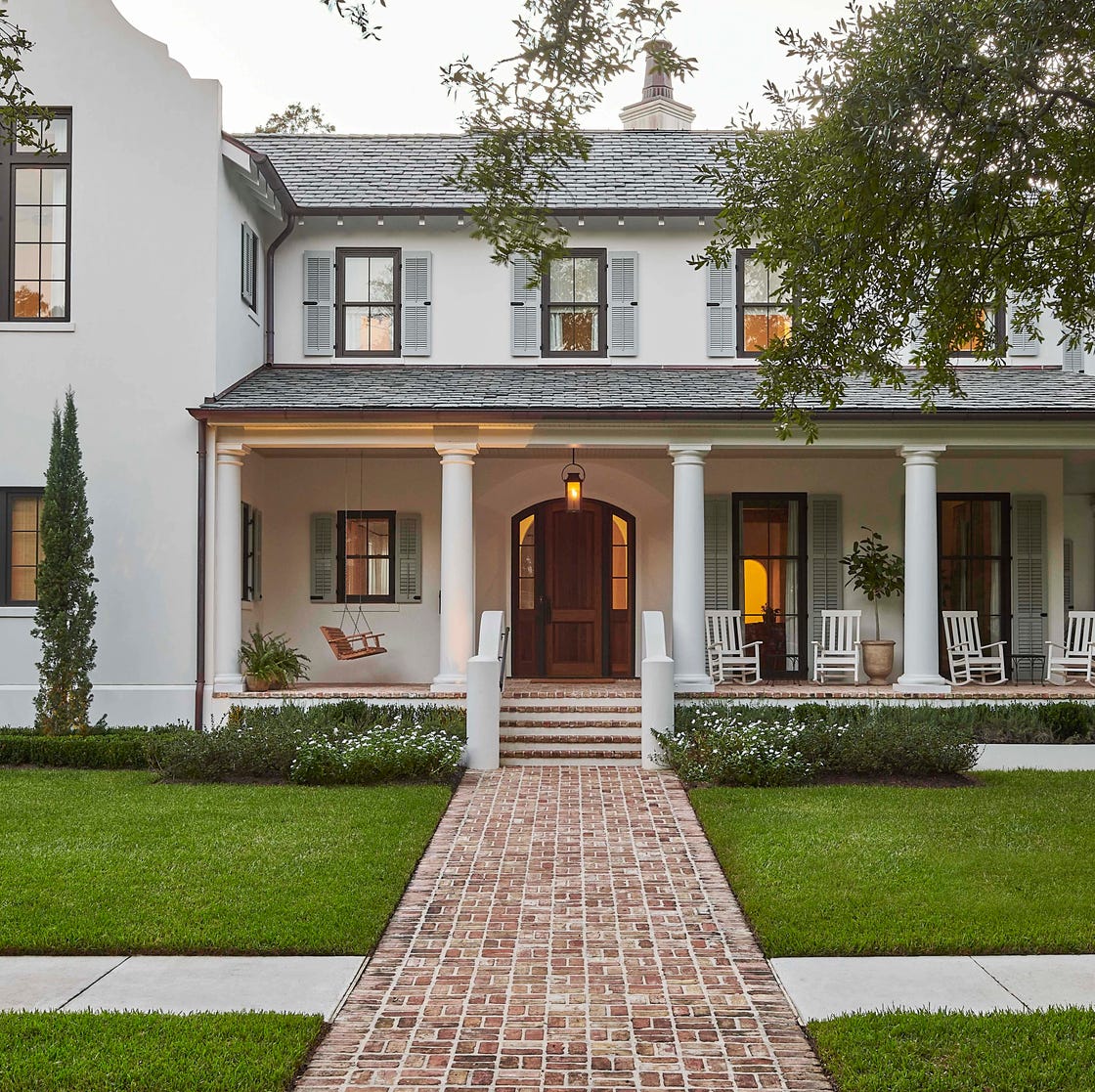
You match a walkway to your home's style by choosing materials, colors, and patterns that complement your architecture and existing landscape. A modern home looks best with large rectangular concrete pavers in neutral tones like gray or charcoal, laid in straight lines with narrow joints. A traditional or colonial home pairs well with brick in a herringbone or running bond pattern. A rustic or farmhouse-style home suits natural flagstone or irregular stone with planted joints.
Color matters too. The walkway should connect visually to your home's exterior. If your home has warm brick or stone accents, choose walkway materials in similar warm tones. Color in landscape design plays a bigger role than most people realize. If your home has a cool gray or white exterior, lean toward bluestone, slate, or gray concrete pavers.
Design sophistication is the number one factor that affects perceived home value according to research from Virginia Tech. That research found that a sophisticated, well-planned landscape design adds more value than simply planting larger plants or spending more money. A walkway that coordinates with your home's architecture and your landscape is exactly the kind of design sophistication that drives value.
How Do You Design a Walkway on a Slope?
You design a walkway on a slope by incorporating steps, terraces, or a gently winding path that follows the natural grade of the land. A straight walkway on a steep slope is uncomfortable to walk on and can become slippery when wet. Breaking the slope into sections with landing areas every few feet makes the path safer and more attractive.
For gentle slopes, a winding path that zigzags across the hillside reduces the grade without needing steps. For steeper slopes, stone or paver steps with flat landings between them are the safest option. Well-built hardscape features like retaining walls or low seat walls along the path can hold the soil in place and add visual interest at the same time.
Drainage is critical on sloped walkways. Water runs downhill, and if your walkway channels it toward your home or a low spot in the yard, you will end up with standing water problems. Building in cross-drainage channels or directing runoff into nearby garden beds prevents this.
How Long Does It Take to Build a Walkway?
It takes 1 to 5 days to build a walkway, depending on the size, complexity, and materials. A simple 30-foot concrete walkway can be poured and finished in a single day. A paver walkway with curves, patterns, and lighting may take 3 to 5 days from excavation to completion.
The design phase adds additional time. Professional landscape designers typically need 3 to 4 weeks to create a custom design, select materials, and prepare a plan. If permits are required in your area, factor in extra time for processing. Most residential walkway projects in North Alabama do not require permits, but larger projects that involve grading or retaining walls may.
Weather can also affect the timeline. In the South, fall and early spring are the best seasons for walkway installation. Summer heat makes the work harder on crews, and winter rain can delay excavation. Planning your project for October through April gives you the best combination of comfortable working conditions and dry weather.
Frequently Asked Questions
What Is the Best Concrete Mix for Sidewalks?
The best concrete mix for sidewalks is a standard 4,000 PSI mix, which provides the strength needed for residential foot traffic while remaining workable during installation. Most ready-mix suppliers carry this as their default sidewalk and walkway mix. For added durability, fiber-reinforced concrete reduces cracking and is a smart upgrade for areas with expansive clay soil.
How Long Does 2 Inches of Concrete Take to Set?
Two inches of concrete takes about 24 to 48 hours to set enough for light foot traffic and roughly 7 days to reach most of its strength. Full curing takes approximately 28 days. Temperature and humidity affect curing time. In hot southern summers, concrete sets faster but can also crack if it dries too quickly without proper moisture control.
What Is Similar to Concrete but Cheaper?
Gravel, decomposed granite, and crushed stone are similar to concrete in function but cheaper to install. Gravel paths cost much less than poured concrete. Stepping stones set in gravel or grass are another affordable alternative that gives you a solid walking surface without the expense of a full slab.
What Is the Cheapest Way to Make a Walkway?
The cheapest way to make a walkway is to lay a gravel or mulch path with simple landscape edging. Gravel paths are among the cheapest to install, and mulch paths cost even less. For a more permanent but still budget-friendly option, concrete stepping stones placed in grass or gravel create a functional path at a fraction of the cost of a full paver walkway.
How Do You Plan a Walkway Layout for a Small Yard?
You plan a walkway layout for a small yard by keeping the path simple and proportional to the space. A 3-foot-wide path is usually enough for small front yards. Use curves sparingly, as too many turns in a tight space can feel cluttered. Choose lighter-colored materials to make the area feel more open, and avoid oversized pavers that overwhelm a small footprint.
Does Dry Pouring Concrete Really Work?
Dry pouring concrete, where dry mix is placed and then wetted with a hose, can work for small projects like setting fence posts or filling gaps. It is not recommended for walkways because the mix does not compact or cure evenly. The result is a weaker surface that is prone to crumbling and cracking under foot traffic. For any walkway project, properly mixed and poured concrete is the better choice.
How Many Bags of Concrete Does It Take to Pour a 10x10 Area?
A 10x10-foot walkway or slab poured 4 inches thick requires approximately 1.23 cubic yards of concrete, which equals about 56 standard 80-pound bags of premixed concrete. For projects this size, ordering ready-mix concrete delivered by truck is usually more cost-effective and gives a better result than mixing bags by hand.
The Takeaway
A well-designed walkway is one of the most impactful upgrades you can make to your home's exterior. It improves safety, boosts curb appeal, and adds measurable value to your property. The key is choosing the right materials for your home style, building on a proper base, and making sure the path connects your outdoor spaces in a way that feels natural and inviting.
Whether you are planning a simple gravel path or a custom paver walkway with lighting and planted borders, the investment pays off in how your home looks, feels, and performs on the market. At White Shovel Landscapes, we design and install walkways, patios, and outdoor living spaces across North Alabama. Give us a call at 256-612-4439 to start planning your project.



You May Also Like

Sep 12, 2026
3 min
How to Keep Landscape Edging Straight
Sep 11, 2026
3 min
How to Decorate a Patio: Ideas for 2025 and 2026
Sep 9, 2026
3 min
How to Trim Around Landscape Edging
Sep 7, 2026
3 min
What Does a Lawn Look Like After Aeration
Have a Project in Mind?
If this post sounds like your yard, tell us about it. Request an estimate online or give us a call, and we’ll talk through what your property needs.





Transforming Huntsville & Madison yards since 2011 with expert landscape design, garden makeovers, mulching, and top-quality installations.


