Providing Best Services in Huntsville & Madison, AL


Follow us on Social.





May 18, 2026

3 Min

Landscape Design
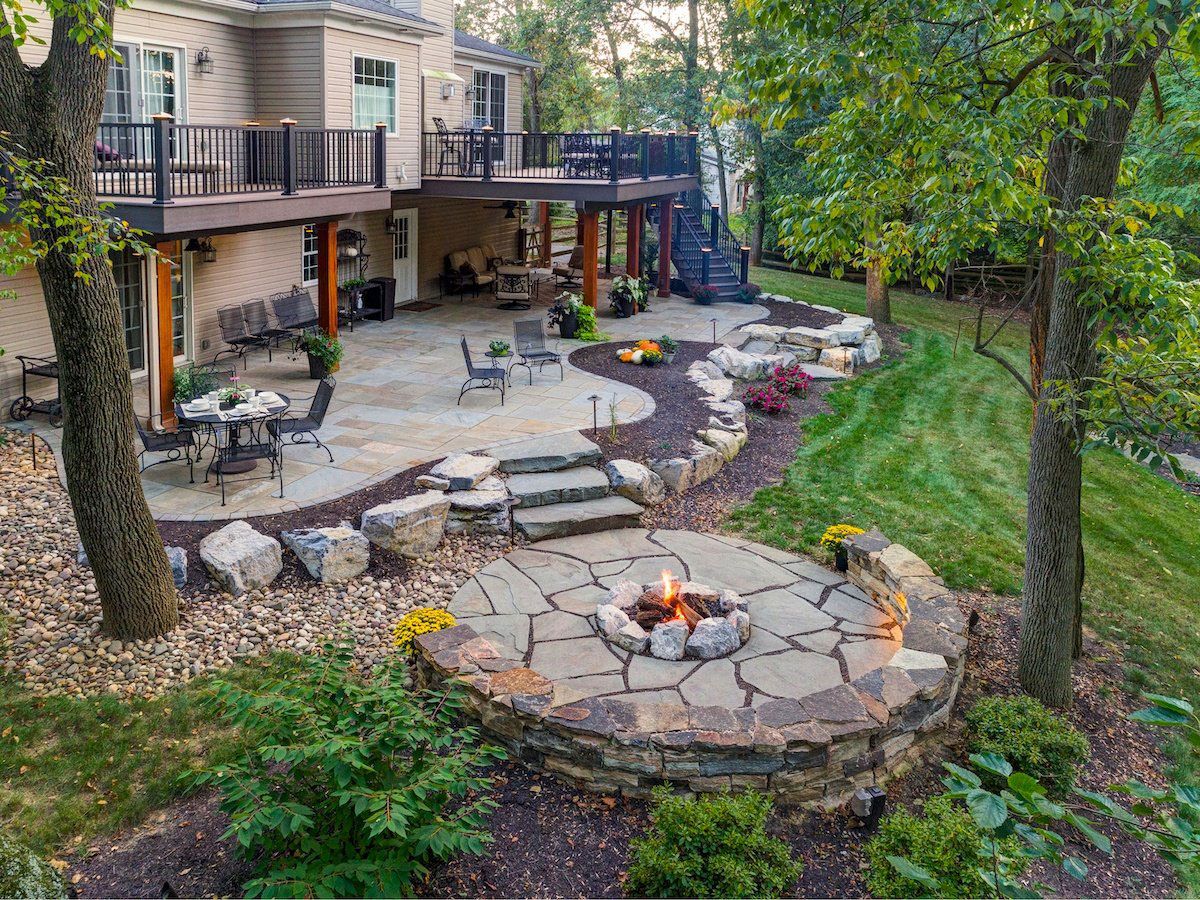
Multi-Level Hardscape Design for Uneven Yards
Multi-level hardscape design for uneven yards uses retaining walls, terraced patios, stone steps, and proper drainage to turn sloped or bumpy terrain into functional, beautiful outdoor living spaces.
Multi-level hardscape design for uneven yards is the process of building retaining walls, terraced patios, stone steps, and structured outdoor spaces that turn sloped, bumpy, or uneven ground into usable areas for living, entertaining, and gardening. An uneven yard does not have to be a problem. With the right design, it becomes an advantage that adds depth, visual interest, and real value to your property.
In this guide, we cover how to landscape an uneven yard, the best hardscape materials for slopes, how retaining walls and terraces work together, why drainage is the foundation of every sloped yard project, and how multi-level design increases your home's value. According to research published in The Journal of Real Estate Finance and Economics by the University of Texas at Arlington, homes with strong curb appeal sell for an average of 7% more than comparable homes. A well-designed multi-level yard takes that curb appeal to another level entirely.
How Multi-Level Hardscape Design Transforms Uneven Yards
Multi-level hardscape design transforms uneven yards by breaking a slope into a series of flat, usable areas connected by steps, walkways, and retaining walls. Instead of fighting the grade of your land, this approach works with it. Each level becomes its own outdoor room with a specific purpose, whether that is a dining patio, a fire pit area, a garden bed, or a quiet seating spot.
The U.S. landscaping services industry reached $184.1 billion in revenue in 2025, growing at a 6.0% compound annual growth rate over the past five years according to IBISWorld. A big part of that growth comes from homeowners investing in outdoor living spaces. Multi-level hardscaping is one of the most effective ways to create those spaces on properties where the ground is not flat.
A flat yard gives you one plane to work with. A sloped yard gives you several. Terraced levels create natural separation between different activities. You can have a patio for cooking and dining on one level, a sunken seating area around a fire pit on another, and raised garden beds on a third. Each space feels distinct but connected, like rooms in a house.
How Do You Landscape an Uneven Yard?
You landscape an uneven yard by first evaluating the slope, identifying drainage patterns, and then building a design that creates flat areas at different elevations connected by steps or pathways. The goal is to turn unusable slope into functional space while controlling water flow and preventing erosion.
Start by determining the grade of your yard. A gentle slope of 5% or less can often be handled with simple grading and plantings. Moderate slopes of 5% to 15% typically need retaining walls, terracing, or both. Steep slopes above 15% require engineered retaining wall systems and professional installation to stay structurally sound over time.
The USDA Natural Resources Conservation Service recommends terracing as a primary method for controlling erosion on sloped land. Research compiled by the Iowa Nutrient Reduction Strategy found that terraces reduce soil losses by as much as 50% and cut phosphorus runoff by an average of 77%. Those numbers come from agricultural settings, but the same principles apply to residential yards. Breaking a long slope into shorter, flatter sections slows water down and gives it time to soak into the soil instead of washing everything away.
Once you know the grade and drainage patterns, you can start planning where each level will go, how high the retaining walls need to be, and where steps and pathways connect everything. This is where professional landscape design makes the biggest difference. A trained designer sees opportunities in a slope that most homeowners would miss.
How Do You Landscape a Slightly Sloped Yard?
You landscape a slightly sloped yard by using gentle grading, low retaining walls, and strategic plantings to create visual interest and manage water flow. A slight slope, generally anything under 5%, does not require heavy terracing or tall retaining walls. Simple solutions work well here.
Low stone walls, 1 to 2 feet tall, can carve a gentle slope into two or three usable levels. These walls do not need deep footings or engineering, and they add a clean, finished look to the yard. Planting groundcovers like creeping juniper, liriope, or mondo grass on the slope between levels holds the soil in place and reduces the need for mowing on uneven ground.
A dry creek bed running along the base of the slope is another effective solution. It captures runoff during rain and channels it to a safe outlet, all while looking like a natural landscape feature. We see a lot of slightly sloped yards in the North Alabama area that benefit from this kind of approach. The slope is mild enough that heavy construction is not needed, but ignoring it leads to yard erosion and drainage problems over time.
What Is the Cheapest Way to Landscape a Slope?
The cheapest way to landscape a slope is to plant deep-rooted groundcovers, add a layer of mulch for erosion control, and install simple edging or low boulder walls to define the areas. This approach uses natural materials and plants instead of expensive retaining wall systems.
Native groundcovers are especially cost-effective because they adapt to local soil and weather conditions without needing extra watering or fertilizing once established. According to the EPA's WaterSense program, using native or climate-adapted plants can reduce outdoor water use by 20% to 50%. On a slope, that water savings adds up fast because slopes tend to dry out quicker than flat ground.
Another budget-friendly option is terracing with stacked natural stone or landscape timber. These materials cost less than engineered block walls and work well for slopes under 3 feet in height. Adding 2 to 3 inches of organic mulch between planting areas reduces evaporation and prevents topsoil from washing away during heavy rain. Research published in the journal Soil and Tillage Research found that mulch can reduce soil evaporation by 28% to 58%.
For homeowners who want to start small and build over time, a phased approach works well. Start with erosion control and basic planting, then add retaining walls, patios, and other hardscape features as budget allows.
How Do Retaining Walls Work in Multi-Level Design?
Retaining walls work in multi-level design by holding back soil at the edge of each level, creating flat platforms where there was once a slope. The wall bears the lateral pressure of the soil behind it, keeping each terrace stable and level. Without retaining walls, gravity pulls soil downhill, and your flat areas slowly disappear.
The most common retaining wall materials for residential yards are interlocking concrete blocks, natural stone, poured concrete, and timber. According to McLeod Landscaping, a well-designed retaining wall can increase a home's value by up to 15%. Concrete retaining walls have a typical lifespan of 50 to 100 years when properly installed with adequate drainage behind them.
Drainage behind the wall is the most critical detail. Every retaining wall needs a French drain or gravel backfill system to relieve water pressure. Many walls fail because builders skip drainage. Wet soil behind a wall creates hydrostatic pressure that pushes the wall outward, causing it to lean, crack, or collapse over time. We always install drainage systems behind every retaining wall we build. It is not optional.
Walls under 4 feet tall are generally straightforward to build. Walls taller than 4 feet typically require engineering, permits, and reinforcement such as geogrid fabric tied into the soil behind the wall. For multi-level designs, using several shorter walls instead of one tall wall often looks better and costs less while providing the same total height change.
How to Fix a Bumpy, Uneven Yard
You fix a bumpy, uneven yard by identifying the cause of the bumps, regrading the surface, improving drainage, and either filling low spots or cutting down high spots to create a smoother surface. Most bumpy yards are caused by settling soil, tree roots, poor drainage, or years of uneven mowing and compaction.
For minor bumps and dips, topdressing with a sand and compost mix and rolling the area can smooth things out over one or two growing seasons. For more serious unevenness, regrading with a skid steer or mini excavator is the faster solution. The key is to regrade in a way that moves water away from your home and toward a safe drainage point.
If tree roots are causing the bumps, you have two choices: remove the tree or work around the roots. Cutting major roots can kill a healthy tree, so it is usually better to build raised beds or hardscape features over the root zone instead of trying to flatten it. A professional assessment of your soil conditions can identify whether compaction, poor drainage, or buried debris is the root cause of the problem.
What Are the Best Materials for Hardscaping a Sloped Yard?
The best materials for hardscaping a sloped yard are interlocking concrete block, natural stone, flagstone, and poured concrete. Each material has different strengths depending on the height of the walls, the look you want, and your budget.
MaterialBest ForLifespanMaintenanceInterlocking Concrete BlockRetaining walls up to 6 ft, terraces50 to 100 yearsLow (occasional joint sand top-up)Natural Stone (Fieldstone, Granite)Low walls, garden terraces, rustic designs100+ yearsVery lowPoured ConcreteTall engineered walls, modern designs50 to 100 yearsLow (hard to repair if cracked)FlagstoneTerraced patios, steps, walkways on slopes50 to 100+ yearsLow (occasional releveling)Landscape TimberBudget walls under 3 ft, garden beds10 to 20 yearsModerate (rot and pest risk)
Sources: MAS Landscaping, Builds and Buys, GreenOp Landscape, National Concrete Masonry Association
Interlocking concrete block is the most popular choice for residential retaining walls because it combines strength, design flexibility, and reasonable cost. These blocks stack without mortar and lock together with pins or lips, making them faster to install than poured concrete. They come in a wide range of colors and textures that complement most home styles.
What Is an Asymmetrical Landscape?
An asymmetrical landscape is a design where the elements on each side of a central point are different but still feel visually balanced. Instead of placing identical plantings, walls, or features on both sides of a walkway or patio, an asymmetrical design uses different sizes, shapes, and materials that carry equal visual weight.
Multi-level yards naturally lend themselves to asymmetrical design because the terrain is not even. A tall retaining wall on one side might be balanced by a cascading planting bed on the other. A large patio on one level can be balanced by a smaller seating nook with a prominent tree on the level below. The Virginia Tech research on landscape value found that design sophistication is the number one factor that increases perceived home value, and asymmetrical designs read as more sophisticated than perfectly symmetrical layouts.
Asymmetry also feels more natural. Nature rarely creates perfect mirror images, so a yard designed with intentional asymmetry looks like it belongs on the land rather than being forced onto it. This is especially important on sloped properties, where the terrain itself is already uneven.
What Are Some Common Mistakes to Avoid in Garden Plans on Slopes?
Some common mistakes to avoid in garden plans on slopes are ignoring drainage, building retaining walls without proper backfill, choosing plants that cannot handle the grade, making terraces too narrow to be useful, and trying to force a flat-yard design onto sloped terrain.
The biggest mistake by far is ignoring drainage. Water is the number one enemy of any structure built on a slope. Without French drains, gravel backfill, and proper grading, water builds up behind walls and under patios, causing them to shift, crack, and fail. According to the USDA's NRCS terracing standards, drainage design should be the first consideration in any sloped landscape project, not an afterthought.
Another common mistake is building terraces that are too narrow. A terrace needs to be wide enough to actually use. A 3-foot-wide terrace might look fine on paper, but you cannot fit a table, chairs, or even a comfortable walking path in that space. For seating areas, plan for at least 10 to 12 feet of depth. For garden beds, 4 to 6 feet gives you enough room to plant and maintain without reaching too far.
Choosing the wrong plants is another issue we see often. Plants on slopes face different conditions than plants on flat ground. The top of a slope dries out faster because water runs downhill. The bottom of a slope stays wetter because water collects there. Matching plant choices to these conditions is part of good landscape design.
How Does Drainage Affect Multi-Level Hardscape Design?
Drainage affects multi-level hardscape design in every possible way. Water flows downhill, and on a multi-level yard, each terrace, wall, and patio is in the path of that water. If the design does not account for where water goes at every level, you end up with standing water, saturated soil, failed walls, and damaged surfaces.
Every retaining wall needs a drainage system behind it. The standard approach is a 12-inch layer of clean gravel behind the wall with a perforated pipe at the base that carries water to a safe outlet. This prevents hydrostatic pressure from building up and pushing the wall forward. On multi-level designs with several walls stacked above each other, each wall needs its own drainage system. Water from the upper levels flows down and accumulates at each successive wall, so the lower walls face more water pressure than the upper ones.
Surface drainage matters too. Each terrace should be graded with a slight slope, usually 1% to 2%, that directs water toward a collection point like a catch basin, dry creek bed, or French drain. Without this grading, water pools on the flat terrace surfaces and seeps into the base of the walls below.
How Does Multi-Level Design Increase Property Value?
Multi-level design increases property value by converting unusable slope into functional outdoor living space, improving curb appeal, solving erosion and drainage problems, and creating a landscape that stands out from flat-yard neighbors. Each of these factors contributes to a higher home value.
According to the National Association of Realtors, landscape maintenance returns an average of 104% on investment, and hardscaping upgrades like retaining walls and patios can deliver an ROI of 100% to 200%. A report from Builds and Buys estimates that retaining walls specifically return 60% to 80% ROI on primary residences, with even higher returns when they create usable space that did not exist before.
The value comes from solving problems and adding function at the same time. A sloped yard that erodes, floods, and cannot be used is a liability. A terraced yard with level patios, clean retaining walls, and proper drainage is an asset. The difference between those two scenarios can be thousands of dollars in perceived and appraised home value.
Research from Virginia Tech found that upgrading a home's landscape from average to excellent adds 10% to 12% to the property's value. On a $300,000 home, that is $30,000 to $36,000 in added value. Multi-level hardscape design is exactly the kind of sophisticated, high-impact improvement that drives those numbers.
What Are the Five Basic Landscaping Design Principles?
The five basic landscaping design principles are unity, balance, proportion, focalization, and rhythm. These principles guide every successful landscape project, and they are especially important on sloped and multi-level yards where the terrain adds complexity.
Unity means all the elements in your yard look like they belong together. On a multi-level yard, using the same stone material for walls, steps, and patios across all levels creates unity even though the spaces are at different heights. Balance means visual weight is distributed evenly, whether through symmetrical or asymmetrical arrangements. Proportion means each element is sized correctly for the space. A 6-foot retaining wall next to a tiny garden bed looks out of proportion. Focalization means creating a visual anchor that draws the eye, like a specimen tree, a water feature, or a fire pit. Rhythm means repeating elements like plant groupings or stone patterns to create a sense of flow across the landscape.
On uneven terrain, these principles help bring order to what can feel chaotic. A well-designed landscape installation on a slope uses all five principles to make the yard feel intentional and cohesive rather than random.
What Is the 70/30 Rule in Gardening?
The 70/30 rule in gardening means that approximately 70% of your landscape should be softscape (plants, grass, mulch, and soil) and 30% should be hardscape (stone, concrete, pavers, and built structures). This ratio keeps a yard feeling natural and alive rather than heavy and industrial.
On multi-level yards, it is easy to tip the balance too far toward hardscape because of all the retaining walls, steps, and patio surfaces needed to manage the slope. The solution is to soften every hard surface with plantings. Cascading plants over the top of retaining walls, ground cover between stepping stones, and ornamental grasses along stairways all add the green element that keeps the 70/30 balance in check.
This ratio is a guideline, not a strict rule. Some yards, especially small urban lots or heavily used entertaining spaces, might lean closer to 50/50 and still look great. The important thing is that hardscape and softscape complement each other rather than one dominating the entire space.
Frequently Asked Questions
How to Design Asymmetry in a Landscape?
You design asymmetry in a landscape by placing different elements on each side of a focal point that carry similar visual weight without being identical. For example, a large boulder on one side of a walkway can be balanced by a cluster of three smaller shrubs on the other side. On multi-level yards, the natural unevenness of the terrain gives you a head start on asymmetry. Work with the existing grade rather than against it.
How to Design an Uneven Garden?
You design an uneven garden by dividing the space into zones based on elevation, placing taller plants on upper levels where they get more sun, and using low-growing or cascading plants on slopes and wall edges. Raised beds built into the terraces make planting and maintenance easier because you can work at a comfortable height instead of bending over on a hillside.
What Are the Six Rules of Landscape Design?
The six rules of landscape design are unity, balance, proportion, focalization, rhythm, and transition. Transition refers to the gradual change from one area to another, which is especially important in multi-level yards where you move from one terrace to the next. Smooth transitions between levels through steps, gently curved paths, or graded plantings make the yard feel connected instead of chopped up.
What Are the Four Types of Landscape?
The four types of landscape are naturalistic, formal, woodland, and desert/xeriscape. Naturalistic landscapes mimic the look of untouched nature with flowing curves and native plants. Formal landscapes use straight lines, geometric shapes, and symmetrical layouts. Woodland landscapes emphasize shade trees and layered understory plantings. Desert or xeriscape landscapes focus on drought-tolerant plants and minimal water use.
What Is the 3-5-7 Rule for Decorating a Landscape?
The 3-5-7 rule for decorating a landscape means grouping plants and decorative elements in odd numbers, specifically groups of 3, 5, or 7. Odd-numbered groupings look more natural and visually interesting than even numbers. This rule applies to everything from shrub clusters and flower plantings to stone groupings and container arrangements. On a multi-level yard, repeating odd-number groupings across different terraces creates rhythm and cohesion.
What Is the Rule of 3 in Landscaping?
The rule of 3 in landscaping means designing with three layers of height: tall, medium, and short. Tall elements like trees and large shrubs go in the back or center. Medium elements like ornamental grasses and mid-size perennials fill the middle. Short elements like groundcovers and low flowers go in front. This layered approach creates depth and fullness in every planting bed, and it works especially well on multi-level designs where each terrace can feature its own three-layer planting scheme.
What Are the Seven Principles of Landscaping?
The seven principles of landscaping are unity, balance, proportion, focalization, rhythm, transition, and line. Line refers to the visual flow created by the edges of beds, walkways, walls, and hardscape features. On a sloped yard, strong horizontal lines from retaining walls and terrace edges counterbalance the downhill pull of the slope, making the yard feel stable and grounded.
Putting It All Together
An uneven yard is not a setback. It is an opportunity to build a landscape with more depth, more character, and more usable space than any flat lot could offer. Multi-level hardscape design takes the challenges of slope, drainage, and erosion and turns them into features that add beauty, function, and value to your home.
The keys to a successful project are proper drainage planning, the right retaining wall materials, good plant selection for each elevation, and a design that respects both the natural terrain and the principles of landscape architecture. With those elements in place, a sloped yard becomes one of the most interesting and valuable outdoor spaces on the block.
At White Shovel Landscapes, we specialize in turning challenging terrain into stunning outdoor spaces across North Alabama. If your yard has slopes, bumps, or drainage issues, give us a call at 256-612-4439 to schedule a free estimate.



You May Also Like

Sep 12, 2026
3 min
How to Keep Landscape Edging Straight
Sep 11, 2026
3 min
How to Decorate a Patio: Ideas for 2025 and 2026
Sep 9, 2026
3 min
How to Trim Around Landscape Edging
Sep 7, 2026
3 min
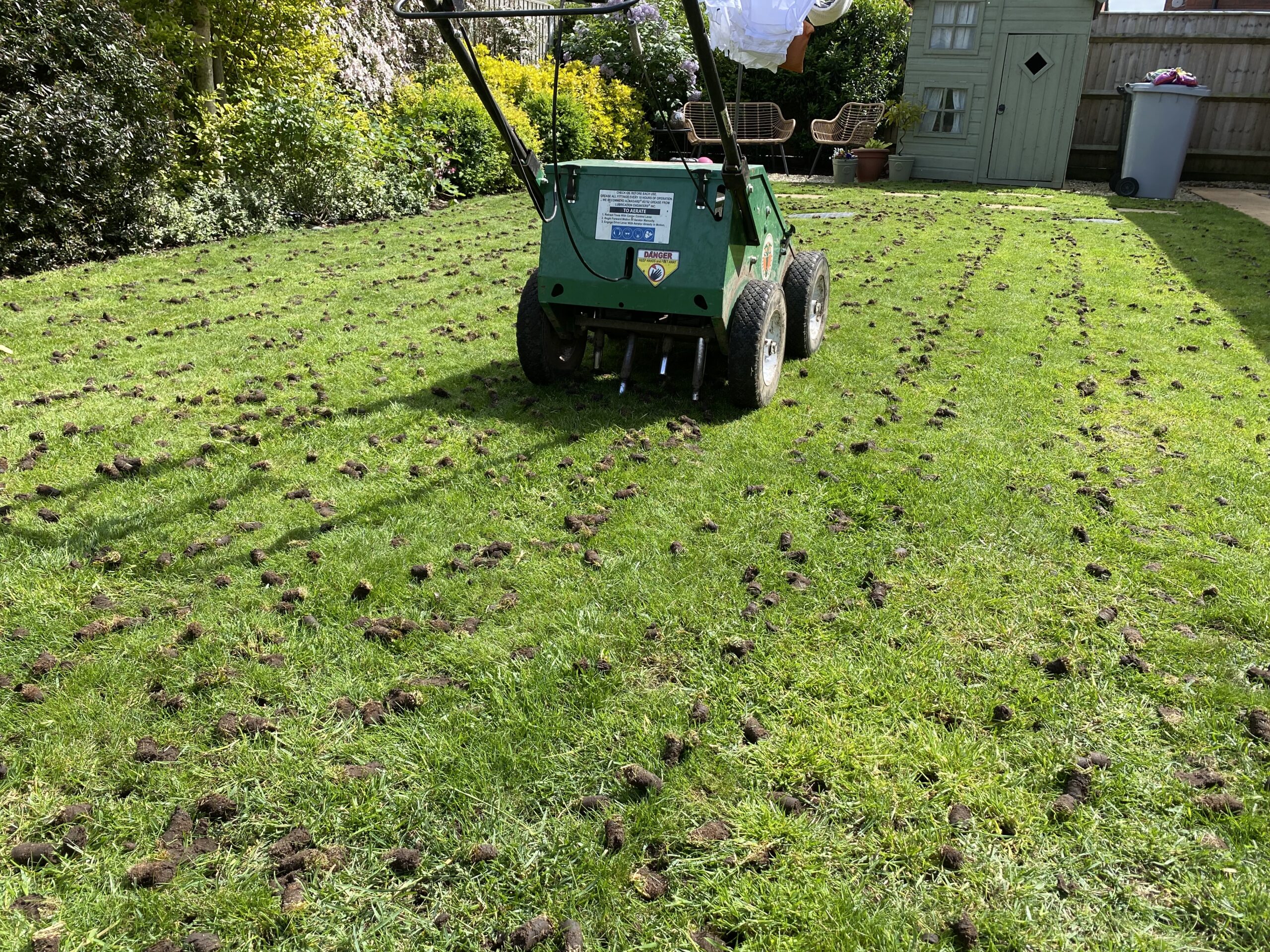
What Does a Lawn Look Like After Aeration
Have a Project in Mind?
If this post sounds like your yard, tell us about it. Request an estimate online or give us a call, and we’ll talk through what your property needs.





Transforming Huntsville & Madison yards since 2011 with expert landscape design, garden makeovers, mulching, and top-quality installations.


