Providing Best Services in Huntsville & Madison, AL


Follow us on Social.





May 18, 2026

3 Min

Landscaping
Fixing Muddy Yard Conditions with Drainage Systems
Fixing muddy yard conditions requires proper drainage systems that redirect excess water away from low spots, compacted soil, and your home's foundation. French drains, dry creek beds, regrading, and catch basins are the most effective solutions for eliminating standing water and restoring a usable, healthy lawn.
Fixing muddy yard conditions starts with identifying where the water is coming from and installing the right drainage system to move it away. Mud forms when the soil holds more water than it can absorb, which is usually caused by poor grading, compacted ground, clay-heavy soil, or clogged gutters dumping water into low spots. According to Oklahoma State University Extension, drainage problems are tied to a combination of hydrology, soil properties, grading, slope, vegetation, and mulch. The good news is that every one of these issues has a proven fix. In this article, we cover the main causes of muddy yards, the best drainage systems for residential properties, and how to choose the right solution for your situation.
How to Fix Mud in a Yard That Does Not Drain Well
To fix mud in a yard that does not drain well, you need to find out why the water is not moving and then install a system that gives it a path to follow. The most common causes are compacted soil that water cannot penetrate, low spots that trap water, a flat or negative grade that sends water toward the house instead of away from it, and downspouts that dump roof runoff directly into problem areas.
Start by walking your property after a heavy rain. Note where water pools, where it flows, and where the ground stays soggy long after the rain stops. According to Family Handyman, before you start digging a trench or taking drastic action, step back and check whether the problem is as simple as a downspout or sump pump discharge draining into a low area. Redirecting the downspout or running the discharge pipe to a different location might be all you need.
If the problem is bigger than a misplaced downspout, you likely need one or more of these solutions: regrading the yard to create proper slope, installing a French drain to intercept and redirect water underground, building a dry creek bed or swale to channel surface runoff, or adding a catch basin to collect water from a large area. We evaluate every property individually through our drainage solutions service to determine exactly which combination works best.
How to Fix a Swampy Area in a Yard Without Drainage
To fix a swampy area in a yard without drainage, you need to create a drainage path where none currently exists. The most effective options are installing a French drain, regrading the area to slope water toward a lower point, or building a rain garden that absorbs excess moisture in a controlled, attractive way.
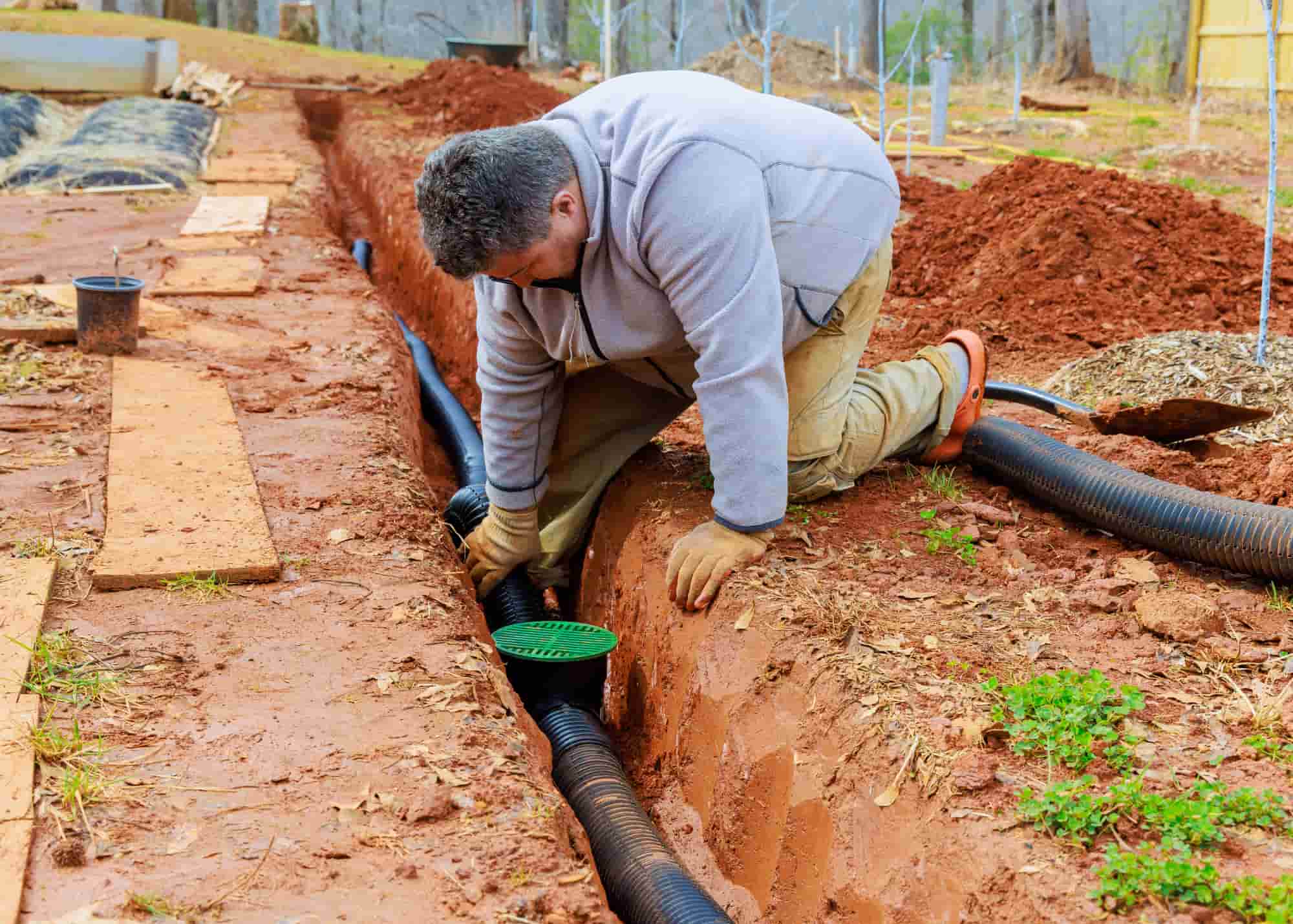
A French drain is often the best first step. It consists of a perforated pipe buried in a gravel-filled trench that collects water underground and carries it to a discharge point. According to Bob Vila, a proper French drain can last 20-plus years and prevents damage while keeping yards usable. The drain should slope at least 1 inch for every 10 feet of pipe to keep water moving by gravity alone.
For areas where installing underground pipe is not practical, a dry creek bed works well as a surface drainage channel. It looks like a natural stream bed filled with river rock and gravel, and it guides water across the surface to a lower area of the yard. Both options have pros and cons, and choosing between French drains and dry creek beds depends on your property's specific conditions.
If the swampy area sits in heavy clay soil, the soil itself may be the problem. Clay compacts tightly and does not let water pass through. Adding organic matter like compost or sand to the top several inches loosens the structure and improves absorption. Professional soil amendment paired with a drainage system gives you the best long-term result.
What Is the Cheapest Way to Fix a Muddy Yard?
The cheapest way to fix a muddy yard is to extend your downspouts, fill low spots with topsoil, and aerate compacted ground. These three steps cost very little and can solve minor drainage problems without heavy equipment or professional installation.
Extending a downspout 5 to 10 feet away from the house costs under $20 in materials and takes about 30 minutes. According to one drainage expert cited by Abarent, a simple $20 downspout extension can prevent all of the problems that lead to $20,000 foundation repair bills. It is one of the most cost-effective fixes in home maintenance.
Filling low spots with a mix of topsoil and compost is another affordable solution. According to LawnStarter, you can mound organic material over low-lying areas to create a slight rise, then sow grass seed and cover it with straw. If the low spot returns, repeat the process until the area stabilizes.
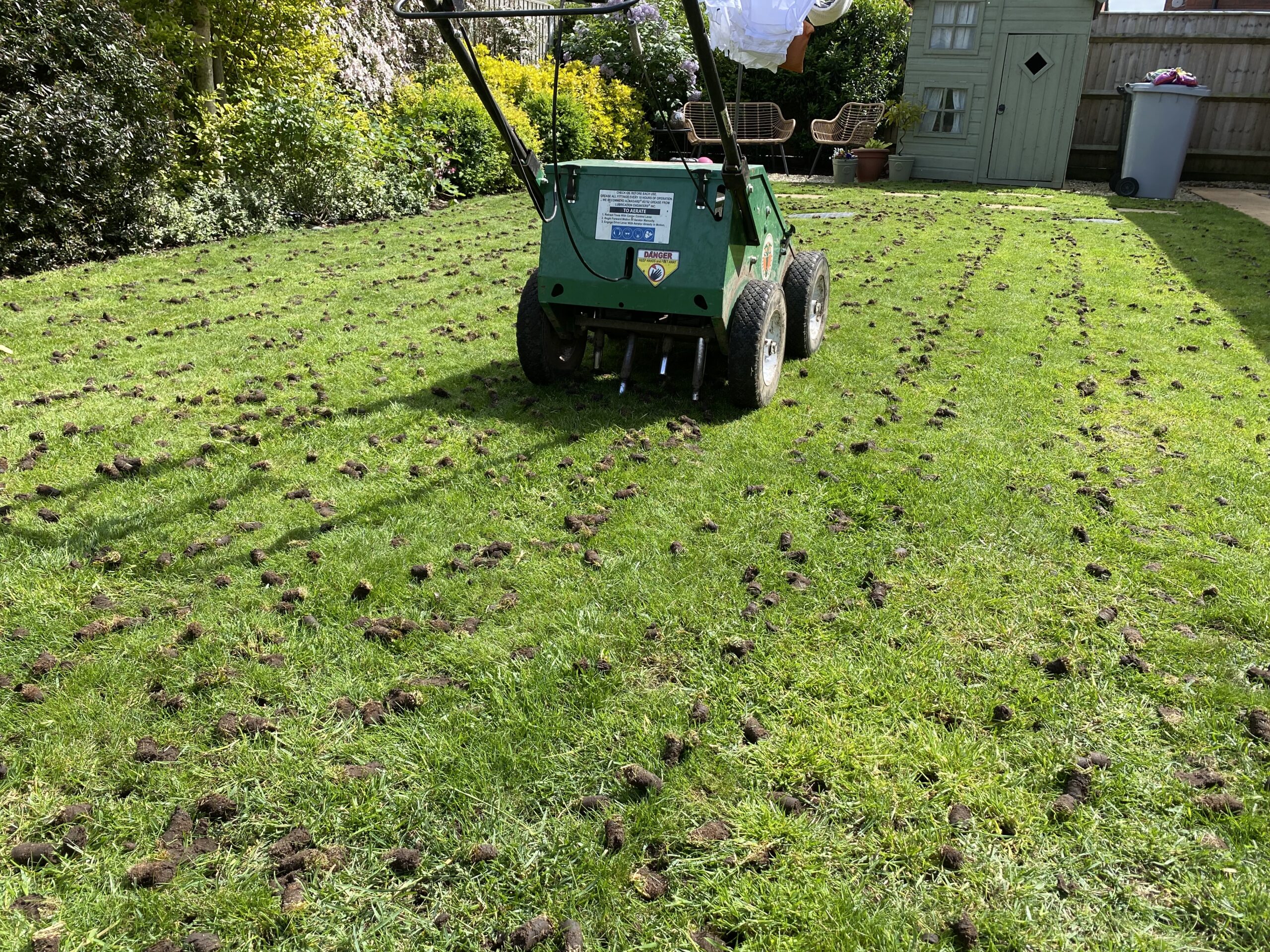
For compacted soil that repels water, a core aerator punches holes into the ground that let water, air, and nutrients reach the root zone. You can rent an aerator for about $75 to $100 per day. However, if your yard has serious grading issues, persistent flooding, or water flowing toward the foundation, these budget fixes will not be enough. Those problems need professional regrading or a full drainage system installation.
Do Landscapers Deal with Drainage Issues?
Yes, landscapers deal with drainage issues. In fact, drainage is one of the most important parts of any landscape project. A landscape that looks beautiful but does not drain properly will fail within a few years as water damages plants, erodes soil, and undermines structures. According to Bayscape, approximately 60 percent of building foundation problems stem from poor water management around the property perimeter.
Professional landscapers handle drainage through a combination of grading, French drain installation, catch basins, dry wells, swales, and downspout management. They use laser levels and transit levels to measure slope and design systems that move water efficiently without creating new problems downstream. At our company, we have installed over 500 drainage systems across the Huntsville and Madison area, and drainage evaluation is part of every landscape installation we do.
Not all landscapers have drainage expertise, though. Some focus only on planting and hardscaping. If your property has water problems, make sure the company you hire has specific experience with grading and drainage system design, not just the ability to lay sod and plant shrubs.
How to Fix Poor Drainage in a Garden
To fix poor drainage in a garden, raise the garden bed, amend the soil, and install a simple drainage layer underneath the planting area. Raised beds are one of the easiest fixes because they lift the root zone above the waterlogged soil and give you control over the soil mix inside the bed.
If raising the bed is not an option, work 2 to 4 inches of compost or coarse sand into the top 6 to 8 inches of existing soil. This breaks up heavy clay, increases pore space, and lets water move through instead of sitting on top. According to Oklahoma State University Extension, raising the soil surface with a sandy loam or loamy sand type soil is a practical solution for muddy areas, especially when the soil type is primarily clay.
For garden beds that sit at the bottom of a slope and collect runoff from above, a small gravel drainage trench uphill from the bed intercepts water before it reaches your plants. This keeps the bed drier without requiring you to dig up the entire garden.
Types of Drainage Systems That Fix Muddy Yards
There are several types of drainage systems that fix muddy yards, and the right one depends on the source and severity of the water problem. The most common residential options are French drains, dry creek beds, catch basins, dry wells, channel drains, and regrading.
French drains work best for intercepting subsurface water and redirecting it underground. They are invisible once installed and can handle both surface and groundwater. According to Simmons Landscape, French drains are particularly effective in areas with clay soil or poor natural drainage.
Dry creek beds handle surface runoff by channeling it along a visible, rock-lined path. They double as a landscape design feature and work well on sloped properties where water moves fast during heavy rain.
Catch basins collect water from a wide area through a surface grate and funnel it into an underground pipe. They work well in low spots, at the bottom of driveways, and near patios. Dry wells are large underground chambers filled with gravel that collect water and let it soak slowly into the surrounding soil. According to Family Handyman, a dry well should be large enough to collect the first 10 to 15 minutes of a large rainstorm.
Channel drains (also called trench drains) are linear grates installed flush with the ground, typically along driveways, patios, or hardscape edges where water sheets off a hard surface. Regrading is the foundation of all drainage work. It corrects the slope of the land so water naturally flows away from structures and toward designated drainage points.
Drainage SystemBest ForVisibilityLifespanFrench DrainSubsurface water, foundation protection, soggy lawnsHidden underground20+ yearsDry Creek BedSurface runoff on slopes, decorative drainageVisible (decorative)15+ yearsCatch BasinLow spots, driveways, large collection areasSurface grate visible20+ yearsDry WellCollecting roof runoff, areas with no outletHidden underground15-20 yearsChannel DrainDriveways, patios, hardscape edgesFlush-mount grate20+ yearsRegradingCorrecting slope, foundation drainage, full yardInvisible (natural slope)Permanent (with maintenance)
Sources: Bob Vila, Family Handyman, Simmons Landscape, Oklahoma State University Extension, NDS Pro, Delaware DNREC
Can a Drain Be Repaired Without Digging Up?
Yes, a drain can sometimes be repaired without digging up, depending on the type and severity of the problem. Camera inspection can locate blockages inside the pipe, and hydro jetting can flush out sediment, roots, and debris without excavation. For collapsed or cracked sections of pipe, trenchless relining inserts a new liner inside the old pipe to restore flow.
However, for residential yard drains like French drains, most repairs do require some digging. The most common issue with French drains is clogging from silt, dirt, and root intrusion over time. Landscape fabric wrapped around the pipe during installation helps prevent this, but if it was not installed or has degraded, sediment builds up and blocks the flow. In those cases, the section needs to be dug up, cleaned or replaced, and reburied with proper filter fabric.
If your existing drainage system is not keeping up with water flow, the problem may not be a blockage at all. It may be that the system was undersized for the property, the slope was not steep enough, or the yard's grading has changed since installation. A full drainage evaluation identifies the root cause before you spend money on repairs that may not fix the real issue.
Why Standing Water Creates Bigger Problems Than Mud
Standing water creates bigger problems than mud because it damages your home's foundation, kills grass and plants, breeds mosquitoes, and erodes topsoil. Mud is a symptom. Standing water is the cause. Fixing the water problem fixes the mud, but ignoring the water leads to escalating damage that gets more expensive every year.
According to the U.S. EPA, standing water in puddles, ditches, and temporary pools are prolific mosquito breeding sites. Mosquito eggs can hatch in as little as 48 hours in warm, still water, and a single female can lay hundreds of eggs in her lifetime. West Nile virus, the leading mosquito-borne disease in the continental United States according to the CDC, spreads through exactly these kinds of backyard breeding sites.
On the structural side, water that pools near your foundation exerts hydrostatic pressure against the walls. According to Bayscape, this pressure causes foundation cracks that cost $5,000 to $15,000 to repair, plus $3,000 to $10,000 for basement waterproofing. Property values can drop 10 to 15 percent when foundation issues are discovered during a sale. Poor drainage and foundation damage are directly connected, and the longer you wait, the worse it gets.
Standing water also suffocates plant roots by cutting off oxygen in the soil. Grass cannot survive prolonged flooding, and waterlogged soil promotes fungal diseases that spread through the landscape. Eliminating standing water is not just about making the yard look better. It protects your home, your health, and your landscape investment.
How Soil Type Affects Yard Drainage
Soil type has a direct impact on how well your yard drains. Clay soil holds water and drains slowly. Sandy soil drains fast but does not retain moisture. Loam soil, which is a mix of sand, silt, and clay, strikes the best balance between drainage and water retention. Most residential drainage problems in North Alabama trace back to heavy clay content in the soil.
According to French Drain Man, soil tests should be conducted before any drainage system is installed. These tests reveal the soil's composition and permeability, which influence decisions about the depth, placement, and overall design of the system. A French drain installed in clay soil needs different specifications than one installed in sandy ground.
Clay soil compacts easily under foot traffic, lawn mowers, and even heavy rain. Once compacted, it creates an almost waterproof layer that forces water to sit on the surface or flow wherever gravity takes it. Aerating clay soil helps temporarily, but the long-term fix is improving the soil structure with organic amendments and installing proper drainage underneath. We handle both sides of this through our soil repair and drainage services.
How to Prevent Muddy Yards Before They Start
The best way to prevent muddy yards is to address drainage during the initial landscape design and installation, before plants go in and sod gets laid. Correcting the grade, installing underground drainage, extending downspouts, and amending the soil are all dramatically easier and cheaper when the yard is being built or rebuilt from scratch.
Make sure the grade drops at least 6 inches within the first 10 feet from your foundation, as required by the International Residential Code. Direct all downspouts at least 5 to 10 feet away from the house. Install French drains or catch basins in any area where water naturally collects. Use permeable patio materials where possible so hardscape surfaces do not create additional runoff.
If you already have a finished landscape, annual maintenance keeps drainage problems from developing. Check gutters and downspouts at least twice a year. Aerate compacted areas every spring. Fill in low spots with topsoil as they appear. And watch how water moves across your yard during the next heavy rain. Catching problems early prevents the kind of damage that turns a simple fix into a major project.
Frequently Asked Questions
Who Should I Call to Fix Yard Drainage?
You should call a professional landscaper or drainage contractor who has specific experience with grading and drainage system design. Look for a company that offers site evaluation, grading, French drain installation, and catch basin work. General handymen and lawn care companies may not have the equipment or expertise to solve serious drainage problems correctly.
How Long Does It Take to Fix a Muddy Yard?
Fixing a muddy yard takes anywhere from a single day for minor regrading and downspout extensions to a full week or more for complex French drain installations, full-yard regrading, or multi-system drainage projects. The timeline depends on the size of the area, the severity of the problem, and the type of system being installed.
Will Gravel Fix a Muddy Yard?
Gravel can help fix a muddy yard in specific areas like pathways, dog runs, and high-traffic zones. It provides a stable surface that does not turn to mud and allows water to filter through to the soil below. However, gravel alone does not solve the underlying drainage problem. If water has nowhere to go, it will simply pool underneath the gravel layer. Gravel works best when combined with proper grading or a French drain underneath.
Does Aeration Help a Muddy Yard?
Yes, aeration helps a muddy yard by breaking up compacted soil so water can penetrate deeper into the ground instead of sitting on the surface. Core aeration pulls small plugs out of the soil, creating channels for water, air, and nutrients. It is most effective for mild drainage issues caused by compaction. For yards with serious grading problems or heavy clay soil, aeration alone is not enough.
Can I Install a French Drain Myself?
Yes, you can install a simple French drain yourself if the project is under 50 feet in length and does not involve work near your home's foundation. According to Bob Vila, a DIYer can handle 50 feet or less with the right materials and installation. For larger jobs, deeper systems, or drains located close to the foundation, hiring a drainage contractor is the safer and more effective choice.
How Do I Know If My Yard Has a Drainage Problem?
You know your yard has a drainage problem if water pools on the surface for more than 24 hours after rain, the ground feels spongy or soggy days after a storm, you see erosion channels forming, or you notice water stains on your home's foundation. According to LawnStarter, other signs include uneven grass growth, exposed tree roots, and soil that stays consistently muddy or compacted even during dry periods.
Wrapping It Up
A muddy yard is never just a cosmetic problem. It is a warning sign that water is going where it should not. Left alone, that water damages your foundation, kills your lawn, breeds pests, and erodes the soil your landscape depends on. The fix depends on the cause: regrading for slope problems, French drains for subsurface water, catch basins for large collection areas, and soil amendment for clay-heavy ground. Most yards benefit from a combination of these solutions working together.
If your yard stays muddy after rain, White Shovel Landscapes can diagnose the problem and install a drainage system that solves it for good. Call us at 256-612-4439 to schedule a free estimate.



You May Also Like

Sep 12, 2026
3 min
How to Keep Landscape Edging Straight

Sep 11, 2026
3 min
How to Decorate a Patio: Ideas for 2025 and 2026
Sep 9, 2026
3 min
How to Trim Around Landscape Edging
Sep 7, 2026
3 min
What Does a Lawn Look Like After Aeration
Have a Project in Mind?
If this post sounds like your yard, tell us about it. Request an estimate online or give us a call, and we’ll talk through what your property needs.




Transforming Huntsville & Madison yards since 2011 with expert landscape design, garden makeovers, mulching, and top-quality installations.


