Providing Best Services in Huntsville & Madison, AL


Follow us on Social.





May 18, 2026

3 Min

Lawn Care
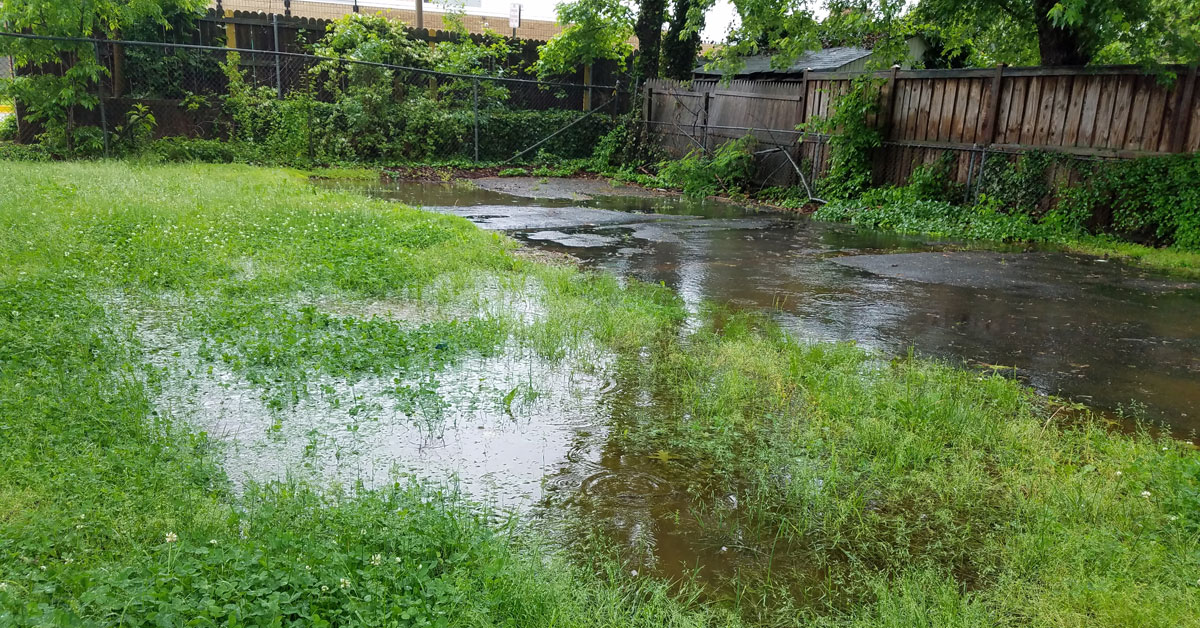
Standing Water Removal Strategies for Residential Yards
Standing water removal strategies for residential yards include French drains, yard regrading, soil aeration, dry wells, rain gardens, and downspout corrections that fix the root cause and keep your lawn dry permanently.
Standing water removal strategies for residential yards fix the root cause of pooling, not just the puddle. The most effective approaches include French drains, yard regrading, soil aeration, dry wells, and rain gardens. Each one addresses a different reason water collects, from compacted soil and poor grading to clogged gutters and high water tables. The right strategy depends on why the water is sitting there in the first place.
This article covers how to identify the cause of standing water in your yard, the best short-term and long-term removal strategies, how to prevent it from coming back, and when it is time to call a professional. We also address common questions about neighbor drainage, berms, and the health risks of stagnant water.
Why Standing Water in Your Yard Is a Serious Problem
Standing water is more than an eyesore. It damages your lawn, threatens your home's foundation, and creates real health risks for your family. The EPA and the CDC both identify standing water as a primary breeding ground for mosquitoes, including species that carry West Nile virus and other diseases. According to the EPA, mosquitoes can complete their entire larval development cycle in as little as 4 to 14 days in standing water. A single puddle that sticks around for a week can produce hundreds of mosquitoes.
Stagnant water also kills grass by suffocating the roots. Grass roots need oxygen to survive, and when the soil is completely saturated, water pushes the oxygen out of the pore spaces between soil particles. The USDA NRCS explains that healthy soil is about 50 percent solid particles and 50 percent pore space. When standing water fills all of that pore space, the roots drown.
Foundation damage is another major concern. Water that pools near or against your home's foundation seeps into the surrounding soil, creates hydrostatic pressure, and can cause cracks, settling, and expensive structural repairs. FEMA data shows that flooding has impacted 99 percent of U.S. counties between 1996 and 2019, and nearly one-third of flood insurance claims come from properties outside high-risk zones. Standing water problems deserve immediate attention.
How to Get Rid of Standing Water in a Yard Quickly
To get rid of standing water in a yard quickly, start with the immediate fixes and then move to permanent solutions.
Immediate Fixes
If you have a large puddle right now, a submersible pump or wet/dry vacuum can remove the water in minutes. For smaller areas, use a garden hose as a siphon by filling it with water, capping both ends, placing one end in the puddle and the other at a lower point in the yard, then uncapping both ends. Gravity does the rest.
For quick absorption, spread a thin layer of coarse sand or pea gravel over soggy areas. This helps surface water filter down through compacted topsoil. Raking up thatch, which is the layer of dead grass and organic debris that sits on top of the soil, also improves absorption by removing the barrier that keeps water from reaching the ground.
Short-Term Improvements
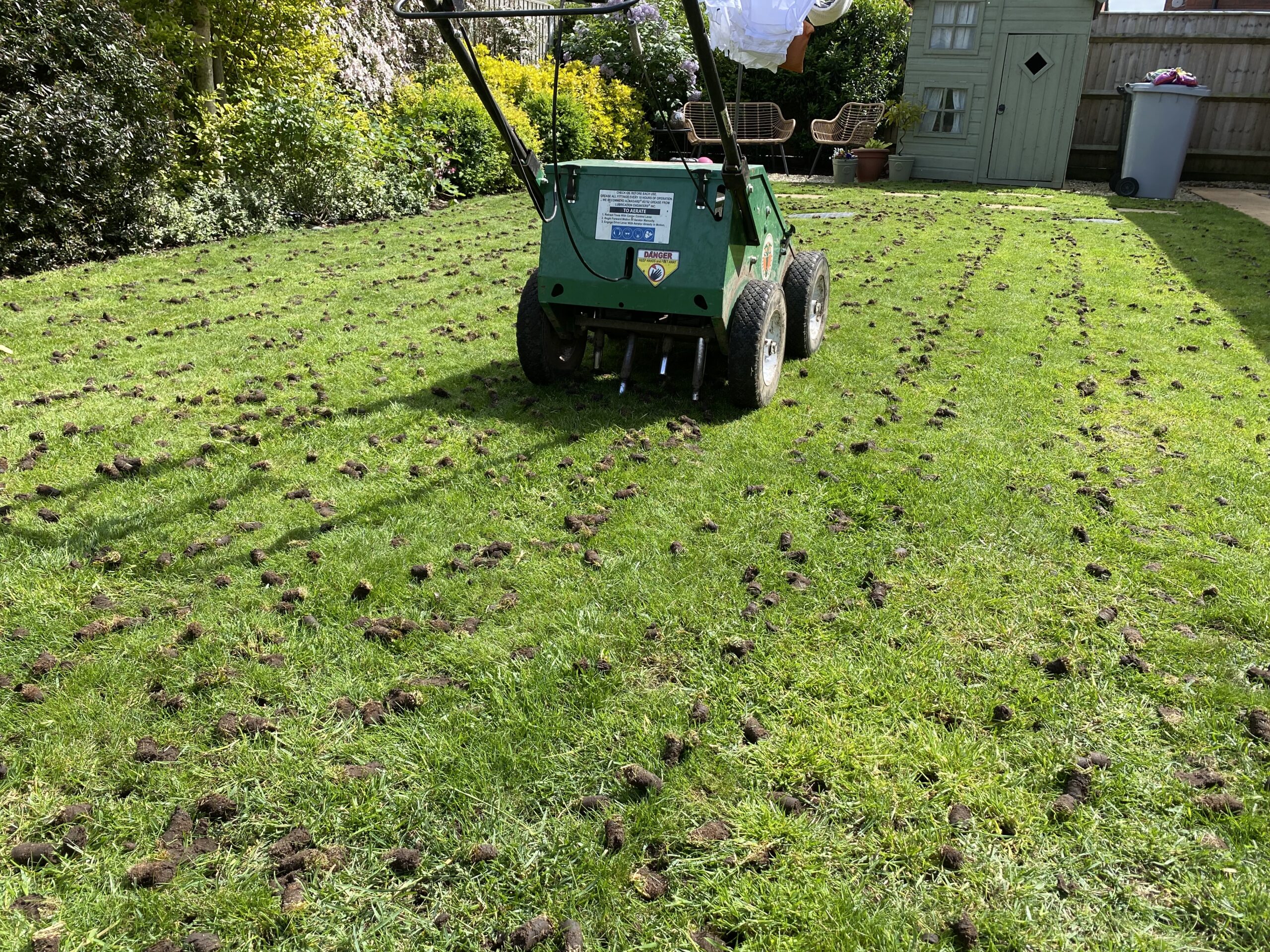
Core aeration is one of the fastest ways to improve a yard's ability to absorb water. An aerator pulls small plugs of soil out of the ground, creating channels for air, water, and nutrients to reach the roots. Iowa State University Extension recommends 20 to 40 holes per square foot for the best results. Aeration is especially effective on lawns with compacted clay soil, which is very common in our area.
Extending your downspouts is another quick fix that makes a big difference. Downspouts that dump water right at the foundation are one of the most common causes of standing water near a house. Foundation experts recommend extending them at least 6 to 10 feet from the base of your home so the water discharges away from the structure and onto a surface that can absorb it.
What Will Soak Up Standing Water in the Yard?
What will soak up standing water in the yard depends on the cause. If the soil is compacted, aeration opens it up so water can penetrate. If the soil is clay-heavy, adding organic matter like compost improves its structure and absorption capacity. If there is a low spot, filling it with quality topsoil and regrading the area eliminates the basin that collects water.
For areas that consistently stay wet, a rain garden is one of the smartest solutions. Rain gardens absorb 30 to 40 percent more water than a conventional lawn, according to the EPA. They work by capturing runoff in a planted depression where deep-rooted native plants soak up the moisture and filter out pollutants before the water reaches the groundwater supply.
Adding organic matter to the soil also makes a significant difference. Compost, aged manure, and other organic amendments create stable soil aggregates that improve pore structure and water absorption. Research published in Frontiers in Sustainable Food Systems found that biochar, a charcoal-like amendment, can improve water retention by up to 30 percent. A professional soil amendment program builds the kind of soil that handles water on its own.
French Drains: The Most Reliable Long-Term Fix
A French drain is the most reliable long-term solution for removing standing water from a residential yard. It consists of a gravel-filled trench with a perforated pipe that collects excess water underground and carries it to a safe discharge point. French drains handle both surface water and subsurface water, which makes them effective against the two most common causes of pooling.
A properly installed French drain can capture and redirect roughly 80 percent of the water in its path. It works quietly underground, out of sight, and requires very little maintenance beyond occasional inspection. The key to a French drain that lasts is proper slope on the pipe (at least 1 percent grade), clean gravel that does not clog, and a discharge point that moves the water completely off the problem area.
We have installed over 500 drainage systems and French drains are part of nearly every one. They work on flat yards, sloped properties, around foundations, and in garden beds. For homeowners with chronic standing water, a French drain is almost always part of the solution.
Yard Regrading: Fixing the Root Cause
If your yard pools water because the ground is flat or slopes toward the house, regrading is the most direct fix. Regrading means reshaping the surface of the land so water flows away from your home and toward planned drainage outlets like storm drains, swales, or dry wells.
The standard recommendation is a 3 to 5 percent slope for the first 10 feet around your foundation. That means the ground should drop about 6 inches over that distance. Low spots elsewhere in the yard should be filled with quality topsoil and tamped down to create an even surface that drains consistently.
Regrading is one of the most effective standing water fixes because it addresses the cause rather than the symptom. Once the grade is correct, water moves by gravity to where you want it. Combining regrading with a drainage solution at the collection point gives you a complete system that handles even heavy rain events.
How to Stop Water From a Neighbor's Yard
Stopping water from a neighbor's yard requires intercepting it at or near your property line and redirecting it before it reaches your vulnerable areas. The most effective method is a French drain or curtain drain installed along the boundary where the water enters your property. This trench catches the runoff underground and pipes it to a safe outlet.
A berm, which is a raised mound of soil running along the property line, can also deflect surface water. Berms work best when they are 12 to 18 inches tall and planted with grass or ground covers to hold the soil in place. They redirect sheet flow away from your yard without creating a dam that causes flooding on either side.
A swale, or shallow ditch, is another option. It catches water along the property line and channels it to a planned discharge point. Line the swale with grass or stone to prevent erosion inside the channel.
Keep in mind that in most states, you cannot legally redirect water onto your neighbor's property in a way that causes damage. If your neighbor's grading or construction is sending excessive water your way, start with a conversation. If that does not resolve it, a professional site assessment can document the drainage patterns and recommend solutions that protect both properties. Proper landscape design accounts for water flow from all directions, including neighboring lots.
How to Build a Berm to Divert Water
To build a berm to divert water, you need to create a raised ridge of compacted soil that redirects surface flow away from the area you want to protect. A residential berm is typically 12 to 18 inches tall, 4 to 6 feet wide at the base, and runs perpendicular to the direction of water flow.
Start by marking the path of the berm with stakes and string. Strip the existing grass from the area. Build the berm using a mix of quality topsoil and clay, layering 4 to 6 inches at a time and compacting each layer with a hand tamper. Shape the top into a gentle rounded crown so water rolls off both sides evenly instead of cutting a channel across the top.
After shaping, cover the berm with grass seed or sod immediately to prevent erosion on the new soil. The grass roots will anchor the berm and keep it stable long-term. Water the new planting consistently until it establishes.
Berms work well for redirecting sheet flow on relatively flat ground. They are less effective against heavy concentrated flow, like water pouring from a downspout or a neighbor's drainage pipe. For those situations, a French drain or dry creek bed handles the volume better.
What Is the Best Material to Divert Water Away From a House?
The best material to divert water away from a house depends on whether the water is on the surface or underground. For surface water, properly graded soil is the most effective material because it directs flow by gravity with no moving parts or maintenance. Compacted topsoil sloped away from the foundation at 3 to 5 percent handles normal rainfall without any additional systems.
For heavier runoff, a combination of gravel, perforated pipe, and landscape fabric forms the core of a French drain system. The gravel allows water to flow freely to the pipe, the pipe carries it to a discharge point, and the fabric keeps soil from clogging the system. River rock and riprap are excellent for armoring discharge areas where concentrated water exits the system.
For foundation protection specifically, concrete splash blocks and downspout extensions move roof water away from the base of the house. Underground discharge lines connected to downspouts carry the water to a dry creek bed or dry well for permanent, invisible drainage.
Dry Wells: Underground Water Storage
A dry well is an underground chamber filled with gravel or a prefabricated perforated tank that collects excess water and slowly releases it into the surrounding soil. Most residential dry wells are about 4 feet wide by 4 feet deep. They are buried at a low point in the yard where water naturally collects, and they receive water from French drains, downspout lines, or surface runoff.
Dry wells are especially useful when there is no convenient place to discharge drainage water at the surface. Instead of piping the water to a storm drain or a ditch, a dry well disperses it underground over time. They work best in soil that has at least moderate permeability. In heavy clay soils, they may fill up faster than they can drain, so a soil assessment is important before installation.
Comparison: Standing Water Removal Strategies
Standing Water Removal Methods ComparedStrategyHow It WorksBest ForPermanenceCore AerationPulls soil plugs to reduce compactionLawns with compacted soilRepeat annuallyFrench DrainCollects and pipes water undergroundChronic pooling, foundation protectionPermanent (lifetime warranty available)Yard RegradingReshapes ground to direct water flowFlat yards, water flowing toward housePermanentRain GardenAbsorbs runoff in planted depressionLow spots, downspout discharge areasPermanent once establishedDry WellStores water underground, disperses slowlyNo surface outlet availablePermanent in permeable soilBermRaised soil ridge deflects surface flowNeighbor runoff, sheet flow on flat groundLong-term with vegetationDownspout ExtensionMoves roof water away from foundationPooling near house caused by roof runoffPermanent
Sources: Iowa State University Extension, EPA, USDA NRCS, Penn State Extension.
How Standing Water Damages Your Home's Foundation
Standing water near a foundation is one of the most expensive problems a homeowner can ignore. When water saturates the soil around the base of your house, it creates hydrostatic pressure that pushes against the foundation walls. Over time, this pressure causes cracks, bowing, and shifting. In extreme cases, it can compromise the structural integrity of the entire home.
Water that sits against a foundation also seeps into the concrete through tiny pores and cracks, leading to basement moisture, mold growth, and interior water damage. Foundation repair costs can range from a few thousand dollars for minor crack injection to tens of thousands for major structural work. Addressing the drainage issue that causes standing water is always cheaper than repairing the damage it creates.
The fix starts with proper grading and drainage around the foundation. Downspouts should discharge at least 6 to 10 feet from the house. A perimeter French drain collects any water that reaches the foundation and moves it away before it can do damage. Dense plantings around the base of the house, combined with mulch, hold the soil in place and absorb surface moisture.
Preventing Standing Water From Coming Back
Removing standing water once is not enough if the underlying cause is still there. Prevention requires ongoing attention to a few key areas.
Keep gutters clean and downspouts clear. A single clogged gutter can dump hundreds of gallons of water against your foundation during a storm. Clean gutters at least twice a year, in spring and fall, and after any major storm that drops leaves or debris.
Aerate your lawn annually. Soil compaction builds up over time from foot traffic, mowing, and natural settling. Annual aeration keeps the soil porous enough to absorb rainfall instead of letting it pool on the surface.
Maintain your drainage systems. French drains, surface drains, and dry wells all need periodic inspection to make sure they are flowing freely. Check discharge points after heavy rain to confirm water is moving through the system. Standing water that returns after a fix usually means something in the system needs attention.
Watch for changes in water patterns. New construction on neighboring properties, changes to your roof or driveway, and even mature trees growing larger root systems can alter how water moves across your yard. If you notice new pooling areas or muddy patches, address them before they become chronic problems. A standing water problem caught early is much simpler and less expensive to fix than one that has been developing for years.
Frequently Asked Questions
Can You Legally Send Rain Water From Your Property Onto Your Neighbors?
You generally cannot legally send rainwater from your property onto your neighbors in a way that causes damage. Most states follow the "reasonable use" rule, which means you can manage water on your property as long as your actions do not create a nuisance or damage someone else's land. Redirecting concentrated flow, like piping your French drain directly onto a neighbor's yard, could create legal liability. If you have a drainage dispute with a neighbor, consult your local codes and consider a professional site assessment that documents water flow patterns before making changes.
What Are the Disadvantages of Berms?
The disadvantages of berms are that they take up space in your yard, they can redirect water to areas you did not intend if poorly designed, they require vegetation to stay stable, and they do not handle large volumes of concentrated water flow very well. A berm that is too small will be overtopped during heavy rain. A berm that is too large can create a dam effect that traps water on the wrong side. For best results, combine a berm with a swale or drain on the downstream side to catch whatever flows over it.
Can a Neighbor Putting a Fence In Cause Drainage Issues?
Yes, a neighbor putting a fence in can cause drainage issues if the fence posts or the ground disturbance from installation disrupts the natural flow of water. A solid fence panel near the ground can also act like a small dam, blocking sheet flow and causing water to pool on one side. If you suspect a new fence has changed your yard's drainage, observe how water moves during rain and compare it to the pattern before the fence was installed. If the change is significant, a drainage professional can recommend solutions.
What Is the 100 Year Flood Rule?
The 100 year flood rule refers to a flood event that has a 1 percent chance of occurring in any given year. FEMA uses this concept to define high-risk flood zones on flood maps. A property in a 100-year flood zone has a 1 in 4 chance of flooding at least once during a 30-year mortgage. Being outside a designated flood zone does not mean you are safe from water problems. Nearly one-third of NFIP flood claims come from outside high-risk areas. Residential standing water issues can happen anywhere, regardless of flood zone designation.
What Are the Most Common Landscaping Mistakes to Avoid?
The most common landscaping mistakes to avoid are ignoring drainage when designing a yard, grading the soil toward the house instead of away from it, piling mulch against tree trunks and plant stems, planting large trees too close to the foundation, overwatering the lawn, and failing to address compacted soil with regular aeration. Each of these mistakes either creates standing water or makes existing drainage problems worse.
How to Pump Standing Water Out of a Yard?
To pump standing water out of a yard, place a submersible utility pump in the deepest part of the puddle and run the discharge hose to a safe area at least 10 feet from your foundation and away from neighboring properties. Most utility pumps move 25 to 50 gallons per minute and can clear a typical yard puddle in under an hour. After pumping, address the cause of the pooling so the water does not come back.
What It All Comes Down To
Standing water in a residential yard always has a cause, and it always has a fix. The key is identifying why the water is there, whether it is poor grading, compacted soil, inadequate drainage, or runoff from neighboring properties, and then applying the right combination of strategies to remove it permanently. Quick fixes like pumping and aeration help in the short term, but lasting results come from professional drainage systems, regrading, and soil improvement.
North Alabama receives an average of 56 inches of rain per year, and the heaviest months fall between November and April. That is a lot of water to manage.
If you are tired of dealing with puddles, soggy ground, or water pooling near your foundation, White Shovel Landscapes can assess your property and design a permanent solution. Call us at 256-612-4439 to schedule a free site assessment.



You May Also Like

Sep 12, 2026
3 min
How to Keep Landscape Edging Straight

Sep 11, 2026
3 min
How to Decorate a Patio: Ideas for 2025 and 2026
Sep 9, 2026
3 min
How to Trim Around Landscape Edging
Sep 7, 2026
3 min
What Does a Lawn Look Like After Aeration
Stay Connected and Inspired
Get the latest landscaping tips, seasonal care guides, and exclusive offers delivered straight to your inbox. Don’t miss out on expert advice and ideas to transform your outdoor spaces.
Sign Up for Our Newsletter Today!





Transforming Huntsville & Madison yards since 2010 with expert landscape design, garden makeovers, mulching, and top-quality installations.


