Providing Best Services in Huntsville & Madison, AL


Follow us on Social.





May 18, 2026

3 Min

Landscaping
Water Flow Management for Erosion Prevention in Yards
Water flow management for erosion prevention uses French drains, grading, swales, rain gardens, ground covers, and retaining walls to control runoff, protect soil, and keep residential yards stable during heavy rain.
Water flow management for erosion prevention is the practice of controlling where water goes in your yard so it does not wash away soil, damage your foundation, or destroy your landscaping. Water is the most powerful agent of erosion on Earth, according to National Geographic. In a residential yard, uncontrolled water flow from rain, downspouts, and runoff from neighboring properties strips away topsoil, creates gullies, and exposes roots. The fix is to slow it down, redirect it, and give it somewhere to go.
This article covers the most effective water flow management techniques for residential erosion prevention, from proper yard grading and French drains to rain gardens, swales, and strategic plantings. We explain how each method controls water, when to use it, and how to combine them into a system that protects your entire property.
How Water Flow Causes Erosion in Residential Yards
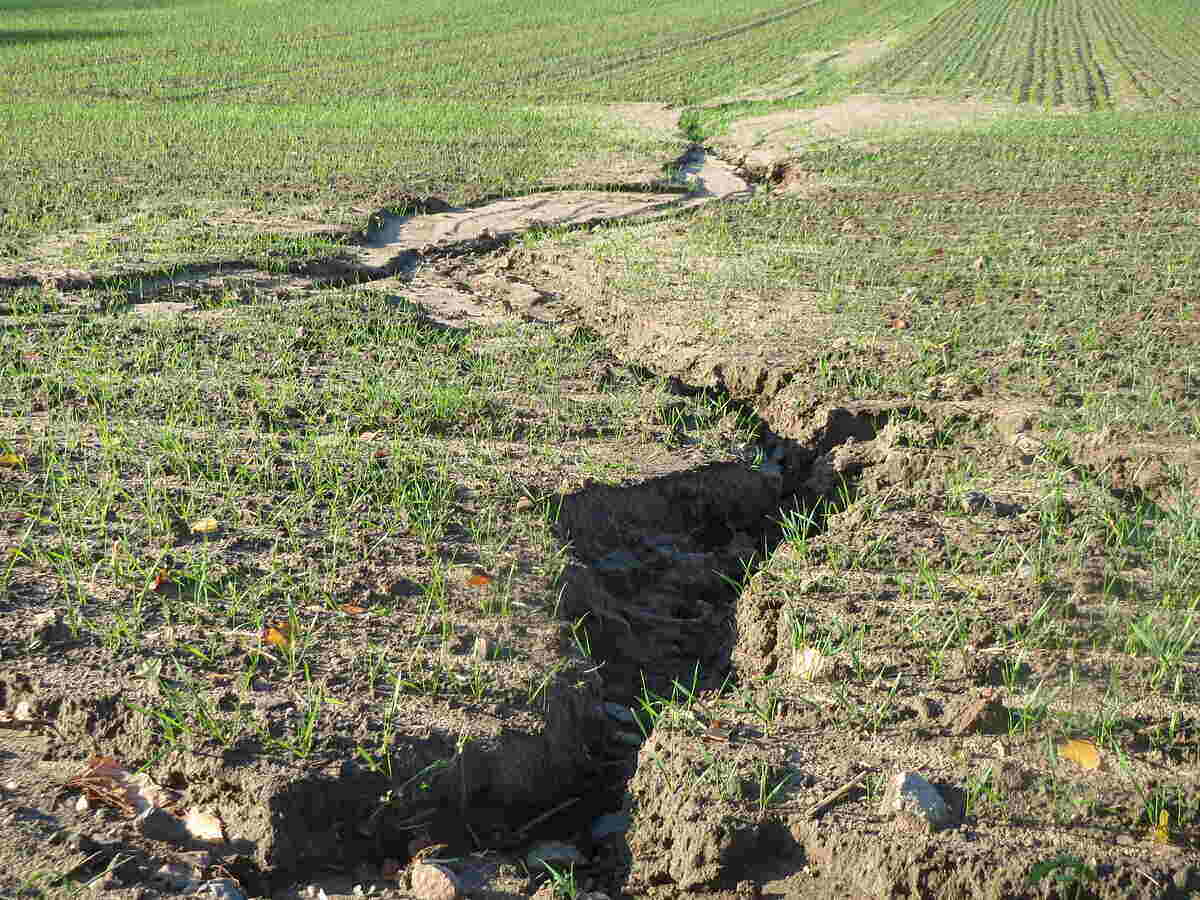
Water causes erosion in four stages: splash, sheet, rill, and gully. It starts with individual raindrops hitting bare soil, which is called splash erosion. A single raindrop can scatter soil particles up to two feet, according to National Geographic. When raindrops hit faster than the soil can absorb the water, a thin sheet of water forms on the surface and starts moving downhill. This is sheet erosion, and it strips away the finest, most nutrient-rich particles first.
If that sheet flow continues without anything to slow it down, it concentrates into small channels called rills. Rills become gullies over time, and gullies can grow deep enough to undermine fences, sidewalks, and even home foundations. The USDA Agricultural Research Service explains that soil often erodes so slowly that the damage is not obvious until years later, by which point significant topsoil has been lost.
The key takeaway is that erosion does not start with a flood. It starts with unmanaged water flow across unprotected surfaces. Even a normal rainstorm can move soil if the water has nowhere to go and nothing to slow it down.
How to Stop Water Erosion in a Yard
To stop water erosion in a yard, you need to manage how water enters, moves across, and exits your property. Every effective erosion prevention plan addresses three things: where the water comes from, how fast it moves, and where it ends up.
Start by watching your yard during a rainstorm. Look for areas where water pools, spots where soil is bare or thinning, paths where water carves small channels, and places where mulch or soil has been carried to a new location. Those are your problem zones.
Once you know where the water flows, you can apply the right combination of grading, drainage, vegetation, and surface protection to bring it under control. The most effective solutions always address the root cause, which is uncontrolled water flow, rather than just treating the symptoms.
What Is the Best Form of Erosion Control?
The best form of erosion control is a system that combines drainage management with vegetation and soil protection. No single method stops erosion on its own. Plants hold the soil. Drainage moves the water. Mulch protects the surface. And proper grading directs everything in the right direction.
Research from Oklahoma State University Extension found that vegetated areas produce only 10 to 20 percent water runoff, while bare soil produces 60 to 70 percent runoff from the same rain event. A global meta-analysis published in the journal Geoderma found that mulch alone reduces soil loss by an average of 76.2 percent. Combining both methods gives you protection from above and below.
For residential yards, the strongest erosion control systems layer these techniques together. First fix the grading and install drainage. Then plant ground covers and native vegetation to anchor the soil. Finally, mulch any remaining bare ground. That layered approach is what separates a yard that holds together from one that washes away season after season.
Can Erosion Be Reversed?
Yes, erosion can be reversed, but it takes time and the right approach. Soil that has washed away cannot be put back exactly as it was. However, you can rebuild the topsoil, restore vegetation, and install systems that stop further loss and allow the ground to recover.
For minor erosion, adding topsoil or compost, reseeding bare areas, and mulching is often enough to get things moving in the right direction. For severe erosion with deep gullies, exposed roots, or soil pulling away from a foundation, you need structural solutions like retaining walls, regrading, and professional drainage installation.
The USDA NRCS reports that the United States loses approximately 1.70 billion tons of soil per year to erosion. But conservation practices have made a real difference. USDA data shows that soil erosion on cultivated cropland declined by 45 percent between 1982 and 2012 thanks to improved management. The same principles apply to residential yards. Once you control the water flow, the soil stays put and the landscape heals.
French Drains: The Foundation of Water Flow Management
A French drain is one of the most versatile and effective tools for managing water flow in a residential yard. It consists of a gravel-filled trench with a perforated pipe that collects subsurface water and redirects it to a safe discharge point. French drains handle the water you cannot see, the water that saturates the soil underground and weakens it from within.
French drains work well along foundation perimeters, at the base of slopes, in low areas that stay soggy after rain, and alongside driveways or patios where runoff concentrates. A properly installed French drain can capture and redirect roughly 80 percent of surface water in its path, dramatically reducing soil displacement.
We have installed over 500 drainage systems across the region. The key to a French drain that works long-term is proper slope on the pipe, the right gravel size, and a discharge point that does not create new problems downstream. A drain that empties onto a neighbor's property or into an already saturated area just moves the problem instead of solving it.
How Proper Yard Grading Prevents Erosion
Proper yard grading is the foundation of every water flow management plan. Grading means shaping the surface of the land so water flows where you want it instead of where gravity takes it. For residential properties, that means directing water away from the house, away from garden beds, and toward safe drainage outlets.
The standard recommendation from foundation experts is a 3 to 5 percent slope for the first 10 feet around a house. That translates to about 6 inches of drop over 10 feet. If the grade is flat or slopes toward the foundation, every rainstorm pushes water against the walls and saturates the soil underneath.
Poor grading is one of the most common causes of both erosion and foundation problems. According to Penn State Extension, average soil erosion rates across the United States reach 4.63 tons per acre per year. Much of that is driven by water flowing across improperly managed surfaces. A professional grading assessment identifies where water enters your property, where it collects, and where it needs to exit.
After regrading, the improvement is often dramatic. Water that used to pool against the house or carve channels across the lawn now flows gently away to a planned discharge area. Combining proper grading with a rain garden or dry well at the discharge point completes the system.
Rain Gardens as Natural Erosion Control
A rain garden is a shallow, planted depression that catches stormwater runoff, holds it briefly, and lets it soak into the ground. Rain gardens are one of the most effective and attractive ways to manage water flow in a residential yard. According to the EPA, rain gardens can absorb 30 to 40 percent more water than a standard lawn. The University of California Cooperative Extension confirms that a single rain garden allows approximately 30 percent more water to infiltrate into the ground compared to conventional turf.
Rain gardens work by giving water a planned place to go. Instead of running across your yard and taking soil with it, runoff is directed into the garden where deep-rooted native plants absorb it and filter out pollutants before the water reaches the groundwater supply. Research from Stephen F. Austin State University found that rain gardens can reduce pollutant concentrations by over 50 percent and remove specific contaminants like nitrate by 52 percent and lead by up to 80 percent.
The best location for a rain garden is at least 10 feet from your home's foundation, in a low spot where water naturally collects or where you can direct downspout runoff. Native plants like black-eyed Susans, swamp milkweed, and blue flag iris thrive in rain gardens because they tolerate both wet and dry conditions. Once established, a rain garden needs very little maintenance and provides year-round erosion protection.
Swales and Dry Creek Beds for Directing Water
Swales and dry creek beds are two of the most effective tools for directing surface water flow across a property without creating erosion.
A swale is a shallow, broad channel cut along the contour of the land. It catches runoff and slows it down, giving the water time to soak into the soil instead of racing across the surface. Swales can be planted with grass or ground covers that filter sediment and absorb moisture. They work especially well along property lines, at the base of slopes, and between sections of a yard that drain at different rates.
A dry creek bed is a rock-lined channel that looks like a natural stream. It handles heavier water flow than a swale and doubles as a landscape feature. During rain, it guides water safely to a discharge point. Between storms, it adds visual interest with its stones, boulders, and plantings along the edges. A dry creek bed is especially useful where concentrated runoff from driveways, patios, or downspouts enters the yard.
Both methods work by giving water a planned route. Erosion happens when water makes its own path. By designing that path with a swale or creek bed, you control the speed, direction, and volume of flow.
What Is the Most Powerful Erosion Agent?
The most powerful erosion agent is water. National Geographic identifies liquid water as the principal agent of erosion on Earth, responsible for more landscape change than wind, ice, or gravity combined. Water erosion reshapes everything from the Grand Canyon to the gully forming in your backyard.
In residential settings, water erosion takes several forms. Splash erosion from raindrops hitting bare soil is the first stage. Sheet erosion carries thin layers of topsoil across the surface. Rill erosion concentrates flow into small channels. And gully erosion carves deep cuts that can undermine structures and destroy landscaping.
The EPA reports that heavy rainstorm precipitation in the Southeast has increased by 27 percent since 1958. That trend makes water flow management more important than ever for homeowners. Every additional inch of rain that falls on your property is another inch of water that needs to be controlled.
The good news is that water erosion is also the most manageable form of erosion. With the right drainage, grading, vegetation, and surface protection, you can control where water goes and how fast it gets there. That is the entire purpose of yard erosion prevention.
Ground Cover Plants That Slow Water Flow
Ground cover plants are one of the most effective long-term solutions for slowing water flow and preventing erosion. Their leaves break the force of raindrops, their stems slow surface runoff, and their roots anchor the soil from below. According to the FAO, achieving just 50 percent plant cover reduces soil loss by about 70 percent compared to bare ground.
The best ground covers for erosion control in the Southeast include liriope, creeping juniper, daylilies, ajuga, and native grasses like muhly grass and switchgrass. These plants spread aggressively, tolerate a range of soil conditions, and need very little care once they fill in. For shady areas, pachysandra, ferns, and hostas work well.
Plant spacing matters on slopes. Place plants closer together than you would on flat ground so they fill in faster and create a continuous root mat. During the establishment period, cover bare soil between plants with mulch or erosion control blankets to prevent washout before the roots take hold. We often combine erosion control plants with mulch and drainage to create a complete system that works from day one.
How Mulch Protects Soil From Water Erosion
Mulch is one of the simplest and most cost-effective ways to protect soil from water erosion. It works by absorbing the impact of raindrops before they hit the soil surface, slowing the speed of surface runoff, retaining moisture in the ground, and adding organic matter as it breaks down.
A global meta-analysis published in Geoderma, covering 90 studies worldwide, found that mulching reduces runoff by an average of 47.4 percent and soil loss by 76.2 percent. Straw and wood-based mulches perform significantly better than rock mulch for erosion control. The researchers recommend at least 60 percent mulch coverage, which can reduce soil loss by approximately 80 percent.
For residential yards, a 2 to 3 inch layer of shredded hardwood mulch is the best all-around choice. Shredded bark interlocks and stays in place better than lightweight options like pine straw. Apply it to all bare soil in garden beds, around trees, along foundation plantings, and on any slopes where grass is thin or absent.
Mulch alone is a good start, but it works best as part of a larger system. Pair it with proper drainage, vegetation, and soil improvement for complete protection.
Comparison: Water Flow Management Methods for Erosion Prevention
Water Flow Management Methods ComparedMethodHow It Controls WaterErosion ReductionBest ApplicationFrench DrainCollects and redirects subsurface water~80% surface water captureFoundation perimeters, soggy areas, base of slopesProper GradingDirects surface flow away from structuresPrevents pooling entirelyAround foundations, low spots, entire yardRain GardenAbsorbs and filters runoff in planted depression30-40% more absorption than lawn (EPA)Downspout outlets, low areas, 10+ feet from houseSwaleChannels runoff along a broad, shallow pathSlows flow and promotes infiltrationProperty lines, base of slopes, between yard zonesDry Creek BedGuides surface flow through rock-lined channelHigh for concentrated runoffDriveway edges, downspout areas, natural drainage pathsMulchingAbsorbs raindrop impact, slows surface flow76.2% soil loss reduction (Geoderma)Garden beds, bare soil, slopes, foundation areasGround Cover PlantsRoots anchor soil, leaves break rain energy50-70% (USDA, FAO)Slopes, bare areas, under trees, borders
Sources: EPA, Geoderma (global meta-analysis of 90 studies), Oklahoma State University Extension, USDA NRCS, FAO, National Geographic.
Why Downspout Placement Matters for Erosion
Downspouts are one of the biggest overlooked causes of erosion in residential yards. A single downspout can discharge hundreds of gallons of water during a heavy rainstorm. If that water dumps right at the base of your house, it saturates the soil against the foundation, carves channels in garden beds, and washes mulch across the lawn.
Foundation experts recommend extending downspouts at least 6 to 10 feet from the house. The discharge point should be on a slope that carries water away from the foundation, not toward a low spot where it pools. Splash blocks, downspout extensions, and underground discharge lines all help move the water to a safe location.
An even better approach is to connect downspouts to a drainage system that carries the water underground to a dry well, rain garden, or storm drain. This eliminates surface erosion from roof runoff entirely and keeps the area around your foundation dry and stable.
How Standing Water and Erosion Are Connected
Standing water and erosion are two sides of the same problem: uncontrolled water flow. When water pools in your yard, it means the soil cannot absorb it fast enough or the grade is not moving it away. That pooled water saturates the ground, softens the soil structure, and sets the stage for erosion the next time runoff hits the area.
Standing water also damages grass roots by cutting off oxygen, creates breeding grounds for mosquitoes, and can seep toward your foundation. FEMA reports that flooding has impacted 99 percent of U.S. counties between 1996 and 2019, and nearly one-third of flood insurance claims come from properties outside high-risk flood zones. Even modest standing water problems deserve attention before they become expensive fixes.
The solution is the same as for erosion: fix the grading, install drainage, and improve the soil's ability to absorb water. Addressing standing water and erosion together produces the best results because you are solving both symptoms and the root cause at the same time.
Frequently Asked Questions
What Is the Cheapest Way to Prevent Erosion?
The cheapest way to prevent erosion is to cover bare soil with a 2 to 3 inch layer of shredded hardwood mulch and plant fast-spreading ground covers. Mulch costs very little, can be applied by hand, and reduces soil loss by over 76 percent according to a global meta-analysis published in Geoderma. Once ground covers establish their root systems, they provide long-term erosion protection with no ongoing material costs.
What Is the Best Ground Cover to Stop Erosion?
The best ground cover to stop erosion is a fast-spreading, deep-rooted plant suited to your local climate and soil. In the Southeast, top choices include creeping juniper, liriope, daylilies, ajuga, and native grasses like switchgrass. These plants spread by rhizomes or stolons, which creates a dense root mat that holds soil firmly in place even during heavy rain.
How to Stop Erosion on a Sloped Yard DIY?
To stop erosion on a sloped yard as a DIY project, start by mulching all bare areas with 2 to 3 inches of shredded hardwood bark. Then plant ground covers and native grasses suited to your slope's sun exposure. Add simple stone or timber barriers placed horizontally across the slope to slow runoff. For steep slopes with deep gullies or structural concerns, call a professional to assess drainage and grading needs.
What Are the Disadvantages of Using an Erosion Control Blanket?
The disadvantages of using an erosion control blanket are that it is a temporary solution, it can shift or detach during very heavy rainfall if not properly staked, and it does not address the underlying cause of erosion like poor drainage or improper grading. Erosion control blankets work best as a short-term measure to protect bare soil while new plants get established. Once vegetation fills in, the blanket biodegrades and the roots take over.
What Do Landscapers Use to Keep Weeds Out of Flower Beds?
Landscapers use a combination of 2 to 3 inches of mulch, pre-emergent herbicides applied in early spring, and dense plantings that shade the soil surface to keep weeds out of flower beds. Landscape fabric is sometimes used under mulch, but it can trap moisture and degrade over time. The most effective long-term weed control comes from thick, healthy plantings that leave no room for weeds to get established.
Is October Too Late to Spray for Weeds?
October is not too late to spray for weeds in most of the Southeast. Fall is actually a good time to target perennial weeds like dandelions and clover because they are actively pulling nutrients down into their root systems before winter. A post-emergent herbicide applied in October reaches the roots more effectively than a spring application when the plant is pushing energy upward. For annual weeds, a pre-emergent in late winter or early spring prevents them from germinating the following season.
The Bottom Line
Water flow management is the single most important factor in preventing erosion in residential yards. Every erosion problem starts with water that has no plan. By grading your yard correctly, installing the right drainage, planting ground covers, and mulching bare soil, you give that water a plan. The result is a yard that stays stable, looks great, and protects your home through every storm season.
North Alabama gets an average of 56 inches of rainfall per year, and the heaviest months hit between November and April. That is a lot of water to manage.
If your yard has erosion problems, standing water, or drainage concerns, White Shovel Landscapes can design a custom water management plan that solves the problem at its source. Call us at 256-612-4439 to schedule a free site assessment.



You May Also Like

Sep 12, 2026
3 min
How to Keep Landscape Edging Straight

Sep 11, 2026
3 min
How to Decorate a Patio: Ideas for 2025 and 2026
Sep 9, 2026
3 min
How to Trim Around Landscape Edging
Sep 7, 2026
3 min
What Does a Lawn Look Like After Aeration
Stay Connected and Inspired
Get the latest landscaping tips, seasonal care guides, and exclusive offers delivered straight to your inbox. Don’t miss out on expert advice and ideas to transform your outdoor spaces.
Sign Up for Our Newsletter Today!




Transforming Huntsville & Madison yards since 2010 with expert landscape design, garden makeovers, mulching, and top-quality installations.


