Providing Best Services in Huntsville & Madison, AL


Follow us on Social.





May 18, 2026


Landscaping
Dry Creek Bed Installation for Yard Drainage
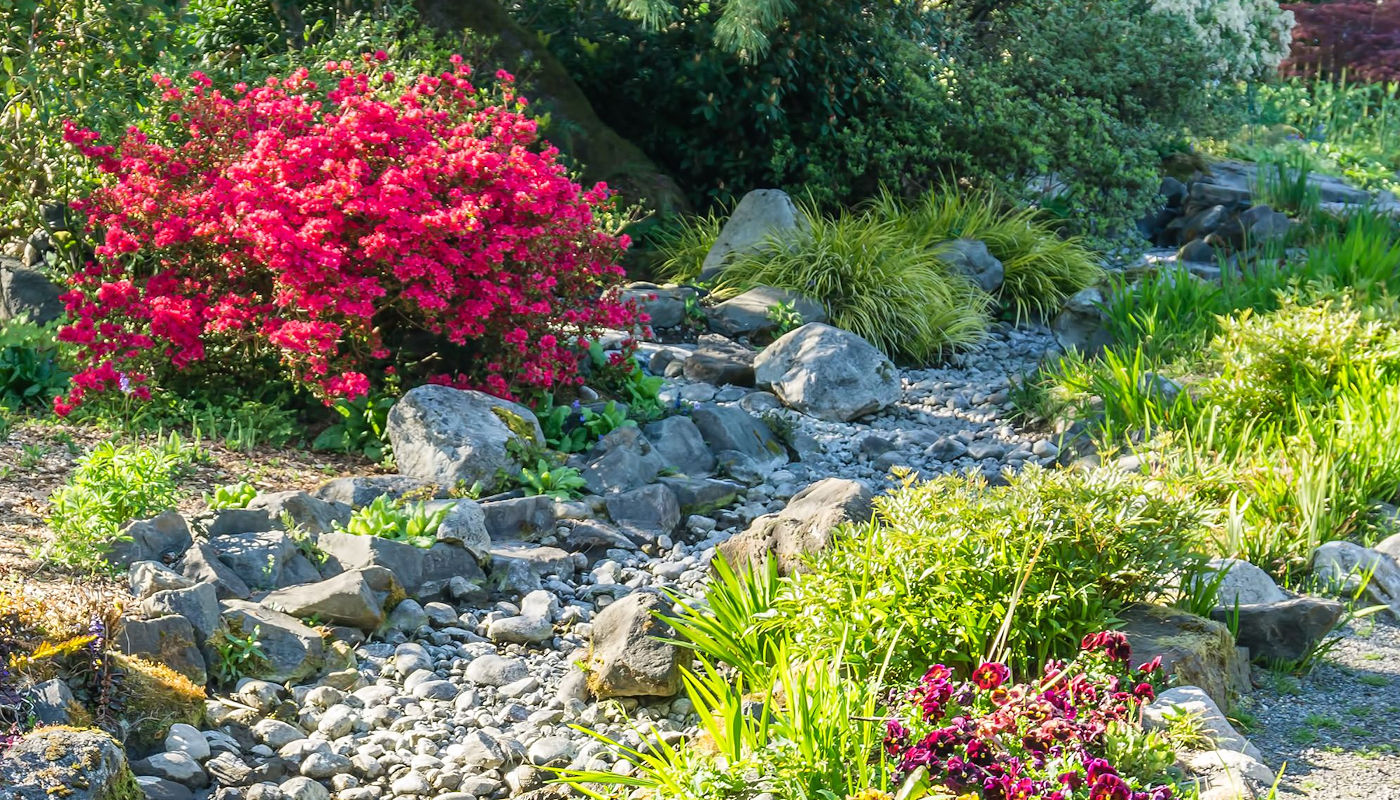
A dry creek bed is a shallow, rock-lined trench that channels surface water away from your home and yard during rainstorms, then sits as an attractive landscape feature when it is dry. Dry creek bed installation solves drainage problems, prevents erosion, and adds curb appeal at the same time. In this article, we cover how dry creek beds work, how they are installed, how they compare to French drains, what materials to use, and how to keep them working for decades.
How Dry Creek Bed Installation Improves Yard Drainage
Dry creek bed installation improves yard drainage by giving surface water a clear, controlled path to follow across your property. Instead of water pooling in low spots or cutting channels through your lawn, the creek bed catches runoff and guides it toward a safe discharge point like a rain garden, dry well, or storm drain.
The rocks inside the creek bed slow the water down as it flows. This is important because fast-moving water strips topsoil, carves ruts, and damages plant roots. Slowing the flow gives the water more time to soak into the ground beneath the rocks, which reduces the total volume of runoff leaving your property.
According to data compiled by iPropertyManagement, water damage affects roughly 14,000 people in the United States every day, and the average insurance payout for a water damage claim is $13,954. A properly installed dry creek bed helps prevent that kind of damage by moving water away from foundations, walkways, and garden beds before it causes problems.
We see dry creek beds work especially well on properties with slopes, natural swales, or areas where roof downspouts dump water into the yard. They are one of the most versatile drainage solutions available because they handle surface water while also looking like a natural part of the landscape.
Do Dry Creek Beds Help With Drainage?
Yes, dry creek beds help with drainage by collecting surface water runoff and channeling it along a rock-lined path to a designated outlet. They are effective at managing water from roof downspouts, driveways, slopes, and any area where water flows across the surface during rain.
Dry creek beds handle surface drainage, not subsurface groundwater. That is an important distinction. If water is seeping up from below ground or pushing against your basement walls, a dry creek bed alone will not fix it. For those situations, a French drain or catch basin works better because those systems collect water underground.
But for the majority of residential drainage problems, which involve water running across the top of the soil, a dry creek bed is one of the simplest and most affordable fixes. According to landscape industry data, dry creek beds typically range from $5 to $7 per linear foot for materials, compared to $20 to $30 per linear foot for French drains. That makes dry creek beds roughly 60 to 75 percent less expensive per foot.
When Is a Dry Creek Bed the Wrong Fix?
A dry creek bed moves surface water. It is the wrong tool when the water isn't on the surface, or when there is nowhere downhill for it to go.
- The yard is flat. A creek bed needs fall from start to finish. On flat ground the water just spreads out in the rock, so regrading, a catch basin or an underground drain does the job instead.
- The water comes up from below. Ground that stays soggy days after rain, or water seeping into a crawl space, is a subsurface problem. That calls for a French drain, which collects water underground; a creek bed on top won't touch it.
- The water is heading for the house. Runoff against the foundation needs to be caught and carried away, usually in pipe, before it gets there.
- There is no safe outlet. The water has to end somewhere it can spread out or soak in without flooding a neighbor or the street.
Clay soil is the other thing to check. Dig a hole about a foot deep in the creek's path, fill it with water, and look again the next day. If water is still standing, the soil is too tight for a creek bed alone, and a perforated pipe under the rock or a different fix will be needed.
If you are weighing the two, our comparison of French drains and dry creek beds goes through where each works. For a yard that needs both, see our drainage solutions.
How to Install a Dry Creek Bed for Drainage
Installing a dry creek bed starts with watching how water moves across your yard during a heavy rain. You need to know where it enters, where it pools, and where you want it to end up. The creek bed follows that path. Here in the Huntsville area, seasonal downpours and clay-heavy soil make this observation step especially important.
Step 1: Map the Path
Use a garden hose or spray paint to mark the route the creek bed will take. Follow the natural slope of your land. Gentle curves look more natural and slow the water down, which helps prevent erosion. Avoid sharp turns that could cause water to overflow the banks during heavy rain.
Step 2: Dig the Trench
Excavate the marked path to a depth of 12 to 18 inches. The standard rule is a 2:1 width-to-depth ratio, so a creek bed that is 12 inches deep should be about 24 inches wide. For areas with heavier water flow, go wider. According to professional landscapers, beds handling significant runoff should be at least three feet wide.
Tamp the bottom of the trench flat and angle the sides so they slope gently inward. Mound the excavated soil along the banks for a natural look, or use it to fill low spots elsewhere in your yard.
Step 3: Lay Landscape Fabric
Line the entire trench with heavy-duty, porous landscape fabric. Overlap the seams by at least six inches. This fabric stops weeds from growing up through the rocks while still letting water pass through to the soil below. Commercial-grade geotextile fabric lasts 15 to 20 years, while basic woven plastic may only hold up for 3 to 5 years.
Step 4: Add a Base Layer of Gravel
Spread a half-inch to one-inch layer of crushed pea gravel over the fabric. The angular edges of crushed gravel interlock and stay in place better than round stones. This base layer stabilizes the creek bed, adds drainage capacity, and keeps larger rocks from sinking through the fabric over time.
Step 5: Place Boulders and Large Rocks
Set the largest rocks first. Place boulders along the edges and at bends in the creek bed to define the banks and direct water flow. Partially bury them so they look like they have been there for years. This is where the creek bed starts to look natural. Varying the sizes and shapes adds visual depth. The rock work is a form of hardscaping that serves both a practical and decorative purpose.
Step 6: Fill With River Rock
Fill the remaining space with smaller river rocks in a mix of sizes. The center of the channel gets the smallest stones, while slightly larger ones go along the sides. This mimics how a real stream works, where fast water washes small stones to the middle and larger ones settle at the edges.
Step 7: Plant the Banks
Add native plants, ornamental grasses, or ground cover along the edges to soften the transition between the creek bed and the surrounding landscape. Plant roots also stabilize the banks and prevent erosion where the water enters and exits the creek bed.
How Deep Should a Dry Creek Bed Be?
A dry creek bed should be 12 to 18 inches deep for most residential drainage applications. The exact depth depends on how much water the creek bed needs to handle. A small bed that catches downspout runoff can be on the shallower end. A longer channel managing runoff from a large slope or driveway needs to be deeper and wider.
The 2:1 width-to-depth ratio is the standard guideline. A bed that is 12 inches deep should be about 24 inches wide. A bed that is 18 inches deep should be about 36 inches wide. This ratio gives the creek bed enough capacity to handle heavy rain without water overflowing the banks, and it looks proportional and natural.
For properties with very heavy water flow, some professionals recommend going even wider. A three-foot-wide channel handles significantly more volume than a two-foot channel and gives the water more surface area to slow down and soak in.
Is a Dry Creek Bed Cheaper Than a French Drain?
Yes, a dry creek bed is cheaper than a French drain in most cases. Dry creek beds cost roughly $5 to $7 per linear foot for materials, while French drains run $20 to $30 per linear foot, according to multiple landscape industry sources. A dry creek bed usually costs less than a French drain, because it needs less digging and no buried pipe.
The cost difference comes down to materials and labor. A French drain requires a perforated pipe, filter fabric, washed gravel, and careful slope calculation underground. A dry creek bed uses rocks, landscape fabric, and gravel arranged in an open trench, which takes less time and fewer specialized steps.
That said, the two systems solve different problems. A dry creek bed handles surface water. A French drain handles subsurface water and groundwater. If your problem is water seeping into a basement or saturating soil around a foundation, a French drain is worth the higher cost. For surface runoff and erosion, a dry creek bed gives you more value per dollar.
Dry Creek Bed vs French Drain Comparison
FeatureDry Creek BedFrench DrainWater TypeSurface runoffSubsurface and groundwaterVisibilityVisible, adds curb appealHidden undergroundCost Per Linear Foot$5 to $7 (materials)$20 to $30 (installed)Total Project Cost$1,500 to $5,000$3,000 to $8,000Best ForSlopes, downspout runoff, erosion controlWet basements, saturated soil, foundation protectionLifespan20+ years (indefinite with stone)30 to 40 years with quality pipeMaintenanceSeasonal debris removal, occasional rock adjustmentPeriodic inspection for pipe clogsFoundation Water Pressure ReductionMinimal (surface only)Up to 85% (American Society of Civil Engineers)
Sources: O'Neill Landscape Group, Landscape Unite, Mile High Lifescape, American Society of Civil Engineers, Ganshert Landscapes
What to Put Under a Dry Creek Bed
Under a dry creek bed, you should put landscape fabric and a base layer of crushed gravel. The landscape fabric prevents weeds and keeps the rocks from sinking into the soil. The gravel layer provides extra drainage and creates a stable foundation for the larger stones on top.
For areas with heavy water flow or serious standing water problems, you can bury a perforated pipe beneath the gravel to create a hybrid system. This combines the surface drainage of a dry creek bed with the underground collection of a French drain. It is one of the most effective drainage setups available and handles both surface and subsurface water at the same time.
Skip the plastic sheeting. Some homeowners line the trench with solid plastic to "keep water out of the soil," but that defeats the purpose. You want water to slow down and soak in gradually. Landscape fabric lets that happen while still blocking weeds.
Should You Line a Dry Creek Bed?
Yes, you should line a dry creek bed with landscape fabric. The fabric serves two critical jobs. First, it blocks weeds from growing up through the rocks, which would clog the channel and reduce water flow over time. Second, it keeps the rock and gravel from gradually sinking into the soil beneath them.
Without a fabric liner, your creek bed will need much more maintenance. Rocks settle into soft ground within a year or two, weeds push through the gaps, and the whole feature starts looking neglected. With quality geotextile fabric, the bed stays clean and functional for 15 to 20 years with minimal upkeep.
The fabric must be porous. Water needs to pass through it and into the soil below. Non-porous barriers like plastic sheeting trap water in the trench and create a different set of problems, including mosquito breeding and overflow during storms.
What Is a Better Solution Than a French Drain?
A better solution than a French drain depends on what drainage problem you are trying to solve. For surface water, erosion control, and curb appeal, a dry creek bed is often the better choice because it costs less, requires less labor to install, and doubles as a landscape feature.
For subsurface drainage and foundation protection, nothing outperforms a properly installed French drain. According to research cited by the American Society of Civil Engineers, French drains reduce foundation water pressure by up to 85 percent. No surface-level solution can match that.
The best approach for many properties is a combination. A dry creek bed on the surface handles runoff and erosion, while a French drain buried underneath collects groundwater. This hybrid system covers all the bases and gives you both function and beauty.
We install both types of drainage systems and often recommend a combined approach for properties with multiple water issues.
According to FEMA, 98 percent of basements in the United States experience some form of water damage during their lifetime. Whether you choose a dry creek bed, a French drain, or both, addressing drainage before water reaches your home is always the smarter and cheaper option.
What Is the Alternative to a Dry Creek Bed?
Alternatives to a dry creek bed include French drains, catch basins, dry wells, swales, and rain gardens. Each one handles water differently and fits different situations.
A grassed swale is a shallow, vegetated ditch that works like a slower version of a dry creek bed. It is less visually dramatic but blends into the lawn better. A rain garden is a planted depression that collects runoff and lets it soak in gradually. According to a report from the National Oceanic and Atmospheric Administration, rain gardens absorb 30 to 40 percent more water than a standard lawn.
Catch basins and dry wells are point-specific solutions. A catch basin collects water at one spot through a grate and pipes it away. A dry well is an underground pit filled with gravel that holds water and lets it seep out slowly. Both work well for isolated puddles but do not handle water flowing across a large area the way a creek bed or swale does.
What Is the Cheapest Drainage Method?
The cheapest drainage method is extending your downspouts away from the house. A vinyl or flexible extension pipe costs very little and moves hundreds of gallons of roof water away from the foundation with zero digging required. After that, regrading small sections of your yard with topsoil is the next most affordable option.
Among installed drainage systems, dry creek beds are typically the least expensive, followed by grassed swales, catch basins, dry wells, and then French drains at the top of the cost range. The right choice is not always the cheapest one, though. A low-cost fix that does not solve the actual problem costs you more in the long run when you have to redo it.
According to the National Association of Realtors, homeowners see a 104 percent return on investment for landscape maintenance. Investing in proper drainage protects your home, your yard, and your property value all at once.
How to Maintain a Dry Creek Bed
Maintaining a dry creek bed takes very little effort compared to most yard features. Check it a few times a year and after major storms. Here is what to look for.
Remove leaves, sticks, and debris that collect in the rocks. Too much buildup blocks water flow and encourages weed growth. A leaf blower works well for this, or a soft-tined rake for stubborn material.
Inspect the rocks for shifting. Heavy storms can push smaller stones out of place or wash sediment into the channel. Reset any rocks that have moved and add more gravel to areas that look thin. Check the edges for erosion where water enters and exits the bed.
Pull weeds when they appear. If landscape fabric was installed properly, weeds will be minimal. Any that show up are usually growing in sediment that collected on top of the rocks, not pushing through from below. Removing the sediment eliminates the problem.
Professional installations with quality materials last 20 years or more with this basic level of care. According to White Shovel's own project data, many dry creek bed installations from years ago are still performing well, looking more natural with every passing season as plants fill in around the edges.
How Dry Creek Beds Protect Property Value
A well-built dry creek bed does two things for your property value. It solves a drainage problem that would scare away buyers, and it adds a landscape feature that draws attention for the right reasons.
According to a Virginia Tech study, homes with quality landscaping sell for 5.5 to 12.7 percent more than homes with no landscaping. On a $300,000 home, that is $16,500 to $38,100 in added value. A dry creek bed falls squarely in the category of quality landscaping that adds value.
On the other side, research from the Journal of Environmental Horticulture shows that poor landscaping, including visible drainage problems and erosion, can drop a home's value by 8 to 10 percent. A muddy yard with standing water is one of the fastest ways to lower your curb appeal and push buyers away.
Frequently Asked Questions
Do You Need a Permit for a Dry Creek Bed?
Most residential dry creek bed installations do not require a permit. However, rules vary by city and county. If your creek bed connects to a municipal storm drain, crosses a property line, or involves significant grading work, you may need to check with your local building department. It is always a good idea to call 811 before digging to have underground utility lines marked.
Can I Install a Yard Drain Myself?
Yes, you can install a basic dry creek bed yourself if you are comfortable with digging and moving heavy rocks. Small, straightforward projects are manageable for most homeowners. Larger installations with heavy water flow, significant slopes, or connections to other drainage systems benefit from professional help to get the grading, depth, and outlet right the first time.
What Size Gravel Is Best for a French Drain?
The best gravel size for a French drain is three-quarter inch washed stone. This size is large enough to create open space around the perforated pipe for water to flow freely, but small enough to stay in place and not clog the pipe holes. Avoid crushed limestone with fine dust, as the fines can clog the pipe and reduce drainage over time.
What Tool to Use for Digging a Dry Creek Bed?
A round-point shovel is the primary tool for digging a dry creek bed. Use a square-point shovel for shaping clean edges. A wheelbarrow helps move excavated soil and rock. For larger projects, renting a small excavator for a day speeds up the digging dramatically. A garden rake smooths the trench bottom, and a tamper compacts the base before laying fabric.
What Is the Rule of 3 in Landscaping?
The rule of 3 in landscaping means grouping plants, rocks, or other elements in odd numbers, especially threes, because odd groupings look more natural and visually pleasing than even ones. When placing boulders along a dry creek bed, setting them in clusters of three at varying heights and angles creates a more authentic, stream-like appearance.
Why Should You Not Put Salt on a Gravel Driveway?
You should not put salt on a gravel driveway because salt dissolves into the gravel and can wash into nearby landscaping, soil, and drainage features. Salt damages plant roots, degrades soil structure, and can corrode any metal components in drainage systems. If your dry creek bed is near a gravel driveway, salt runoff can also discolor the rocks and harm any plants along the banks.
The Bottom Line
A dry creek bed is one of the smartest drainage investments you can make. It solves real water problems, prevents erosion, lasts for decades, and turns a trouble spot into one of the most attractive features in your yard. Whether you use it on its own or combine it with a French drain for full coverage, the result is a property that handles rain the way it should.
If your yard has water pooling, soil washing away, or runoff heading toward your foundation, White Shovel Landscapes can design and install a dry creek bed that fits your property and solves the problem. Give us a call at 256-612-4439 to schedule a free site assessment.



You May Also Like

Sep 12, 2026
3 min
How to Keep Landscape Edging Straight

Sep 11, 2026
3 min
How to Decorate a Patio: Ideas for 2025 and 2026
Sep 9, 2026
3 min
How to Trim Around Landscape Edging
Sep 7, 2026
3 min
What Does a Lawn Look Like After Aeration
Stay Connected and Inspired
Get the latest landscaping tips, seasonal care guides, and exclusive offers delivered straight to your inbox. Don’t miss out on expert advice and ideas to transform your outdoor spaces.
Sign Up for Our Newsletter Today!





Transforming Huntsville & Madison yards since 2010 with expert landscape design, garden makeovers, mulching, and top-quality installations.


