Providing Best Services in Huntsville & Madison, AL


Follow us on Social.





May 12, 2026


Landscaping
Yard Drainage Adjustments for Low-Lying Areas
Yard drainage adjustments for low-lying areas include regrading the soil, installing French drains, adding catch basins, building dry wells, and creating swales that move water away from your home and yard. These fixes stop standing water, prevent erosion, and keep your foundation safe from long-term damage. In this article, we cover why low-lying areas collect water, the most common signs of poor drainage, the best solutions to fix it, and how to keep your system working for years to come.
Why Low-Lying Areas in Your Yard Need Drainage Adjustments
Low-lying areas in your yard need drainage adjustments because water flows downhill and collects in the lowest spots. Without a clear path to drain, that water just sits there. It drowns your grass, turns soil into mud, and slowly creeps toward your home's foundation.
According to the Insurance Information Institute, about 1 in 60 insured homes in the United States files a water damage claim every year. That adds up to roughly 14,000 people affected by water damage every single day, according to data compiled by iPropertyManagement. A lot of that damage starts with something simple, like a yard that does not drain.
When your property sits in a low spot, or even if just one section of your yard dips lower than the rest, gravity works against you. Every rainstorm sends water rushing into that depression. Over time, the soil gets waterlogged, plant roots suffocate, and the ground stays soft and spongy for days.
Here in North Alabama, our mix of clay-heavy soil and seasonal downpours makes this problem even worse. Clay soil does not absorb water well. It holds moisture near the surface and makes puddles last much longer than they should.
How to Drain Water From Low-Lying Areas
To drain water from low-lying areas, you need to give the water somewhere to go. That means creating a path, either above ground or below ground, that carries water away from the trouble spot and toward a safe discharge point like a storm drain, dry well, or lower section of your property.
The first step is figuring out where the water comes from. Walk your yard after a heavy rain. Watch how the water moves. Look for the lowest points where puddles form. Check whether your gutters and downspouts are dumping water too close to the house. According to the University of New Hampshire Extension, raised beds and regraded slopes are two of the most effective ways to redirect water in residential settings.
Once you know where water enters and collects, you can pick the right fix. A minor low spot may only need some extra topsoil and reseeding. A bigger problem might call for a drainage system like a French drain or catch basin.
Can I Just Use Topsoil to Level a Low Spot in My Yard?
Yes, you can use topsoil to level a low spot in your yard if the depression is shallow and the drainage problem is minor. Add a mix of topsoil and compost to the low area, build it up slightly above the surrounding ground, and let it settle. Once it firms up, seed it with grass.
This works for dips that are only a few inches deep. For anything deeper or for spots where water pools after every rain, topsoil alone will not solve the problem. The water still needs somewhere to drain. Without a slope or pipe to carry it away, the puddle will come right back.
Does Forking a Lawn Help Drainage?
Yes, forking a lawn helps drainage by breaking up compacted soil so water can soak in instead of pooling on the surface. Pushing a garden fork into the ground creates small channels that let air and water reach deeper into the soil.
Compacted soil is one of the top causes of poor yard drainage. According to the USDA Natural Resources Conservation Service, soil compaction reduces the number of pore spaces in the ground, which limits how fast water can move through it. Heavy foot traffic, parked vehicles, and construction equipment all press the soil particles tighter together. Forking or aerating loosens that soil back up. It is a good short-term fix, but for a yard with serious pooling, you will still need a drainage solution that moves the water off-site.
How Do I Fix Poor Drainage in My Yard?
You fix poor drainage in your yard by identifying the source of the water, correcting the slope of the land, and installing the right drainage system for your property. Most drainage problems come down to one or more of these issues: bad grading, compacted soil, clogged gutters, or a missing drainage system.
A properly graded yard should slope away from your home by at least 2 to 3 percent. That means for every 10 feet of distance from your foundation, the ground should drop about 2 to 3 inches. If your yard slopes toward the house instead of away from it, water pools right where it does the most damage.
We see this all the time on properties where the original grading has settled over the years. Soil repair and regrading can fix the slope and redirect water flow without tearing up your entire landscape.
What Soaks Up Water in a Yard Without Drainage?
What soaks up water in a yard without drainage is organic matter, deep-rooted plants, and amended soil. Adding compost to your soil improves its structure and helps it absorb more water. Planting deep-rooted native grasses and perennials gives water a path to move down into the ground instead of sitting on top.
Rain gardens are another option. According to a report from the National Oceanic and Atmospheric Administration, rain gardens absorb 30 to 40 percent more water than a standard lawn. They work by collecting runoff in a shallow, planted depression where the soil and roots filter and absorb the water within 24 to 48 hours.
The U.S. Environmental Protection Agency also notes that urban areas produce five times more stormwater runoff than natural landscapes. So if your yard sits near a driveway, sidewalk, or patio, that extra hard surface is pushing more water into your low spots than the soil can handle on its own.
What Is the Best Thing to Fill Low Spots in Your Yard With?
The best thing to fill low spots in your yard with is a mix of topsoil and compost. This blend gives you good drainage, healthy nutrients for grass growth, and enough weight to stay in place once it settles. Avoid using pure sand, which shifts too easily, or heavy clay, which holds water and makes the problem worse.
For shallow dips, spread the topsoil-compost mix about half an inch at a time if grass is already growing. Let the grass grow through each layer before adding more. For bare or deeper spots, fill the area, compact it lightly, and then seed or sod over the top.
If the low spot keeps filling with water even after you add soil, the issue is not just the dip. It is a drainage problem. The water needs a system, like a French drain or dry creek bed, to carry it away before filling can do any lasting good.
Best Drainage Solutions for Low-Lying Yards
Low-lying yards need more than a quick patch. They need a system that moves water consistently and reliably. Here are the most effective options.
How Does a French Drain Help a Low-Lying Yard?
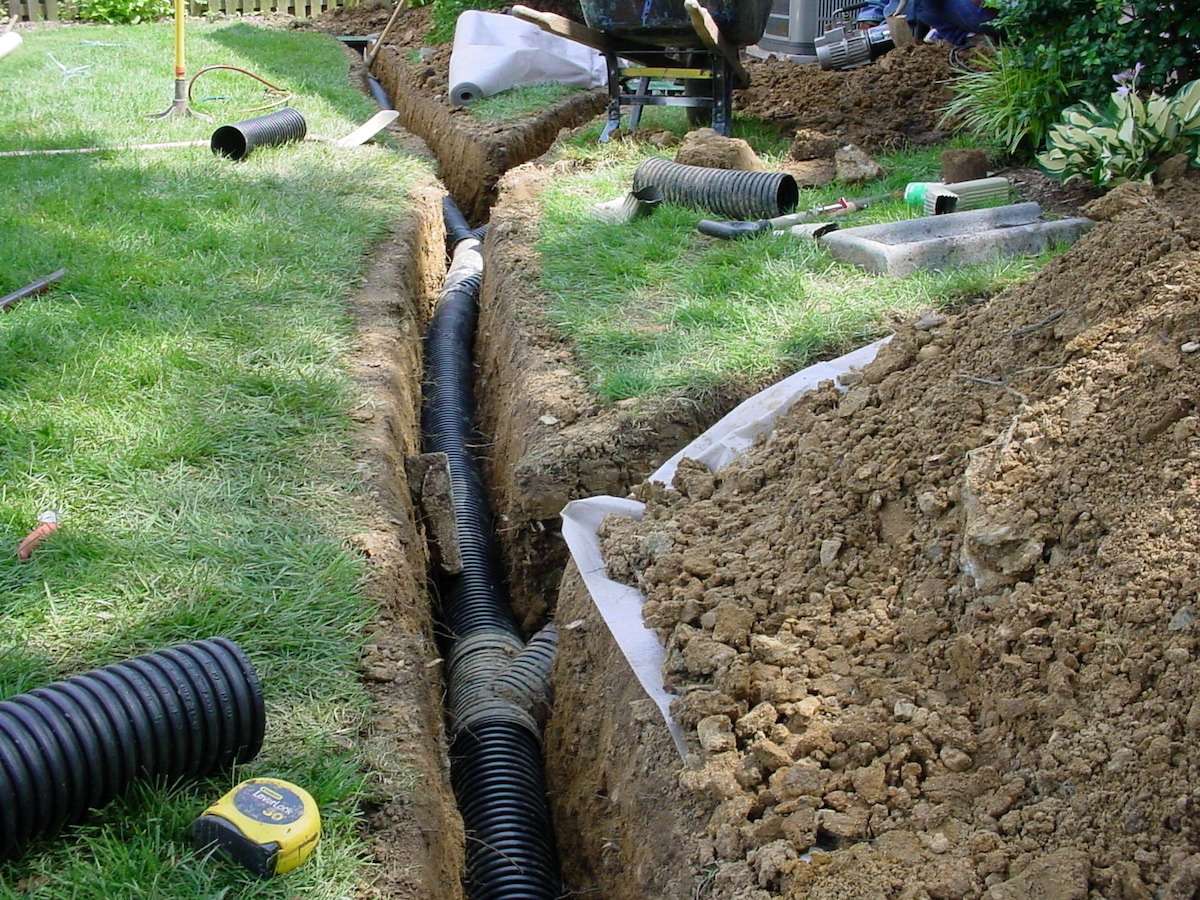
A French drain helps a low-lying yard by collecting water underground and redirecting it through a perforated pipe buried in a gravel-filled trench. The water seeps through the gravel, enters the pipe, and flows to a discharge point away from your property.
According to research cited by the American Society of Civil Engineers, a properly installed French drain can reduce foundation water pressure by up to 85 percent. That is a major difference for homeowners dealing with wet basements, cracking walls, or sinking foundations.
French drains work especially well for low-lying yards because they handle both surface water and subsurface groundwater. They sit below the soil line, so they do not interfere with your lawn or landscaping. Once installed, they require very little maintenance.
What Are Common French Drain Mistakes?
Common French drain mistakes include using the wrong type of pipe, skipping the gravel bed, installing without enough slope, and placing the drain too close to the foundation. Each of these errors reduces how well the drain works or causes it to fail completely within a few years.
The pipe needs to be perforated and wrapped in filter fabric to keep soil and sediment from clogging the holes. The trench must slope downhill at least 1 percent, or about one inch for every eight feet, to keep water moving. And the gravel around the pipe should be clean, washed stone, not fill dirt or crushed rock with too many fines.
We also see homeowners run into trouble when they do not plan a proper discharge point. The water has to go somewhere. If the pipe just dead-ends in a low corner of the yard, you are moving the puddle, not fixing it.
Can I Dig a Hole and Fill It With Gravel for Drainage?
Yes, you can dig a hole and fill it with gravel for drainage, and this is basically a simple dry well. A dry well collects water from a low spot and lets it slowly soak into the surrounding soil over time. It works best in areas where the native soil has decent permeability.
Dry wells are a good fit for small, isolated puddles. But if your soil is heavy clay or the water table is high, a dry well may fill up faster than it can drain out. In those cases, a piped system connected to a proper discharge point is a better long-term solution.
Yard Grading and Regrading for Better Water Flow
Yard grading is the process of shaping the ground so water flows in the direction you want. For most homes, the goal is a gentle slope away from the foundation in all directions. According to foundation repair experts, the general rule is a 5 percent slope, which equals about six inches of drop over 10 feet of distance from the house.
Regrading is one of the most effective drainage solutions because it addresses the root cause of most water problems. If the ground does not slope correctly, no amount of patching will keep water away long-term.
The process involves moving soil from higher areas to lower ones, or adding new fill material to build up the grade. It sounds simple, but getting the slope right across an entire yard takes careful measurement and experience. Too steep and you create erosion. Too flat and the water still pools.
How to Dry Out a Low Spot in a Yard
To dry out a low spot in a yard, you can aerate the soil, add topsoil to raise the grade, install a catch basin, or redirect water with a swale. The right approach depends on how deep the low spot is and how much water collects there.
For a shallow depression that only holds water for a few hours after rain, aerating and topdressing with a sand-compost mix often does the trick. For deeper spots that stay soggy for days, you need to physically move the water. A catch basin connected to a buried drainpipe can collect the standing water and pipe it to a better location.
According to data from the FEMA National Flood Insurance Program, just one inch of standing water in a home can cause up to $25,000 in damage. That statistic shows why it is so important to keep water moving away from your property, not sitting in a low spot just a few feet from your foundation.
How Poor Drainage in Low-Lying Areas Affects Your Home
Poor drainage does more than make your yard look bad. It puts your home at risk. When water sits near your foundation, the soil around it swells and shrinks with each wet-dry cycle. Over time, that movement causes cracks in your foundation walls, uneven floors, and doors that stick or will not close.
According to a 2025 report by Gitnux, water damage can decrease a home's value by up to 10 percent depending on how severe it is. And the Gitnux data also shows that 80 percent of water damage in homes is preventable with proper maintenance, which includes good drainage.
Beyond the foundation, standing water creates a breeding ground for mosquitoes. The CDC recommends removing all standing water around your home because mosquitoes can breed in as little as one teaspoon of stagnant water. According to Iowa State University Extension, it only takes 7 to 10 days of standing water for mosquitoes to develop from egg to biting adult.
Soggy soil also kills grass and plants. When roots sit in water for too long, they cannot get the oxygen they need. The grass turns yellow, thins out, and eventually dies. That leads to yard erosion, which washes away even more soil and makes the low spot deeper.
Drainage Solution Comparison for Low-Lying Areas
Drainage SolutionBest ForHow It WorksMaintenance LevelFrench DrainWidespread water in low areas, subsurface groundwaterPerforated pipe in gravel trench redirects water undergroundLowCatch BasinIsolated puddles, specific low spotsSurface grate collects water and pipes it to a discharge pointModerate (clean grate regularly)Dry WellSmall volume water collection in permeable soilUnderground reservoir lets water slowly seep into surrounding soilLowSwaleSurface water redirection across large yardsShallow, graded channel lined with grass or rock guides waterLow (mow and inspect seasonally)RegradingYards sloping toward the house or with no slopeReshaping soil to create proper grade away from structuresNone after completionRain GardenModerate runoff with eco-friendly goalsPlanted depression absorbs 30-40% more water than lawnModerate (seasonal plant care)
Sources: American Society of Civil Engineers, FEMA National Flood Insurance Program, National Oceanic and Atmospheric Administration, U.S. EPA Stormwater Management, Iowa State University Extension
What Is Better for Yard Drainage, Plugging or Aerating?
Aerating is better for yard drainage than plugging because it removes small cores of soil, which opens up space for water and air to move through the ground. Plugging, or spiking, just pokes holes in the soil without removing material. That can actually compact the soil around the holes and make drainage worse in some cases.
Core aeration pulls out plugs of soil about two to three inches deep. Those holes let water soak in faster and help break up the thatch layer that can block absorption at the surface. According to Today's Homeowner, healthy soil should drain at a rate of about 1 to 3 inches per hour for most plants. If your soil drains slower than one inch per hour, aeration paired with organic amendments can make a real difference.
Aeration works best as part of a bigger plan. It helps water get into the soil, but if there is nowhere for that water to go once it is underground, you still need a drainage system to carry it away.
How to Prevent Erosion in Low-Lying Yard Areas
Preventing erosion in low-lying yard areas starts with slowing down the water and giving it a place to go. Fast-moving water strips topsoil, carves channels, and exposes plant roots. The goal is to reduce the speed and volume of runoff before it reaches the low spot.
According to the USDA, erosion on U.S. land declined by about 45 percent between 1982 and 2012 thanks to better conservation practices. The same principles that work on farmland, controlling water flow, maintaining ground cover, and building healthy soil, work in your backyard.
Planting ground cover, adding mulch, and installing erosion control plants on slopes all help hold soil in place. For steeper areas, a retaining wall or terraced planting bed breaks the slope into smaller sections and slows water down.
Dry creek beds are another effective option. They give water a visible path to follow while protecting the soil underneath with a layer of river rock and landscape fabric. Water moves through the creek bed instead of cutting into your lawn.
How Downspouts and Gutters Contribute to Low-Lying Area Problems
Gutters and downspouts are supposed to carry roof water away from your home. But when downspouts dump water right next to the foundation, or when gutters clog and overflow, they send hundreds of gallons of water into the lowest parts of your yard.
A typical 1,000-square-foot roof section produces over 600 gallons of water during just one inch of rainfall. If that water lands within a few feet of your house, it saturates the soil around the foundation and feeds directly into any low-lying area nearby.
Extending downspouts at least 5 to 10 feet away from the house is one of the simplest and cheapest drainage fixes. Use a rigid or flexible extension pipe and point it toward a drainage-friendly area of your yard. For even better results, bury the extension pipe underground and connect it to a pop-up emitter in a safe discharge zone.
Signs Your Low-Lying Yard Needs Professional Drainage Work
Some drainage problems are too big for a bag of topsoil and a weekend project. If you notice any of these signs, it is time to call in a professional.
Water stays in your yard for more than 24 hours after a rain. Your basement or crawl space feels damp or smells musty. You see cracks forming in your foundation walls. Your grass stays soggy and spongy even during dry spells. Mud washes onto your driveway, patio, or sidewalk after every storm. You notice standing water in the same spots repeatedly.
According to the Gitnux 2025 report, the risk of water damage in homes increases by 47 percent when homeowners skip regular plumbing and drainage inspections. And the average insurance payout for water damage is $13,954, according to Insurance Information Institute data. Fixing drainage problems before they reach that point saves a lot of money and stress.
How Proper Drainage Protects Your Property Value
A well-drained yard does more than keep your feet dry. It protects your investment. According to a Virginia Tech study, well-landscaped homes sell for 5.5 to 12.7 percent more than homes with no landscaping. On a $300,000 home, that is an extra $16,500 to $38,100 in value.
On the flip side, a study published in the Journal of Environmental Horticulture found that poor landscaping, including visible drainage problems, can drop property values by 8 to 10 percent. Buyers notice muddy yards, eroded slopes, and puddles. Those are red flags that signal expensive repairs down the road.
The National Association of Realtors reports that homeowners see an average return of 104 percent on landscape maintenance investments. That means every dollar you put into keeping your drainage system working and your yard looking good comes back to you and then some when it is time to sell.
Frequently Asked Questions
Do You Put Topsoil Down After Aerating?
Yes, you can put topsoil down after aerating. Spreading a thin layer of topsoil or a sand-compost mix over freshly aerated soil helps fill the core holes and improves soil structure. This process, called topdressing, helps level minor low spots and adds nutrients that support healthier grass growth. Keep each application to about a quarter inch so you do not smother the existing turf.
What Is the Cheapest Way to Level Your Yard?
The cheapest way to level your yard is to fill small low spots with a topsoil-compost mix and spread it by hand with a rake. For larger areas, renting a lawn roller or hand tamper keeps costs low. This approach works for shallow dips, but deeper depressions or grading issues usually need professional equipment and expertise to get the slope right.
Can You Use Corrugated Pipe for a French Drain?
Yes, you can use corrugated pipe for a French drain, but smooth-wall PVC pipe is the better choice. Corrugated pipe is cheaper and more flexible, which makes it easier to install in tight spaces. However, the ridges inside corrugated pipe trap sediment over time and slow water flow. Smooth-wall pipe drains faster, resists clogging, and lasts longer, which makes it worth the extra cost for most installations.
Do the Holes Face Up or Down on a French Drain?
The holes on a French drain pipe should face down. When the holes face downward, the pipe collects water that rises up from the gravel bed beneath it. This allows the pipe to capture groundwater before it reaches the surface. Pointing holes upward can cause the pipe to fill with soil and debris, which clogs the system faster.
How Long Does a French Drain Last?
A French drain lasts 20 to 30 years or more when it is installed correctly with quality materials. Using washed gravel, filter fabric, and smooth-wall pipe extends the life of the system. Drains that use low-quality corrugated pipe without filter fabric may clog and fail in as few as 5 to 10 years. Periodic inspection and keeping the discharge point clear helps the drain perform for decades.
Will a Dry Creek Bed Help With Drainage?
Yes, a dry creek bed helps with drainage by giving surface water a clear, controlled path to follow across your yard. The rocks and gravel lining the creek bed slow the water down, reduce erosion, and guide runoff to a safe discharge area. Dry creek beds work well alongside other systems like French drains and catch basins for properties with multiple drainage issues.
How Do I Fix Poor Drainage in My Yard?
You fix poor drainage in your yard by first identifying where water pools and how it flows across your property. Then you correct the slope with regrading, improve soil absorption with aeration and amendments, and install a drainage system like a French drain, catch basin, or swale. According to data from FEMA, 98 percent of basements in the United States experience some form of water damage, so addressing yard drainage early prevents bigger problems inside the home.
Putting It All Together
Low-lying areas in your yard do not fix themselves. Water keeps finding those same spots after every rain, and the damage adds up quietly over months and years. The good news is that every drainage problem has a solution, whether it is a simple regrading project, a French drain, a catch basin, or a combination of all three.
The key is to act before a soggy yard turns into a cracked foundation or a flooded basement. A proper drainage plan starts with knowing how water moves across your property and ends with a system that keeps it moving in the right direction.
If you are dealing with standing water, erosion, or a yard that never seems to dry out, White Shovel Landscapes can help. Give us a call at 256-612-4439 to set up a free site assessment and find out exactly what your yard needs.



You May Also Like

Sep 12, 2026
3 min
How to Keep Landscape Edging Straight

Sep 11, 2026
3 min
How to Decorate a Patio: Ideas for 2025 and 2026
Sep 9, 2026
3 min
How to Trim Around Landscape Edging
Sep 7, 2026
3 min
What Does a Lawn Look Like After Aeration
Stay Connected and Inspired
Get the latest landscaping tips, seasonal care guides, and exclusive offers delivered straight to your inbox. Don’t miss out on expert advice and ideas to transform your outdoor spaces.
Sign Up for Our Newsletter Today!




Transforming Huntsville & Madison yards since 2010 with expert landscape design, garden makeovers, mulching, and top-quality installations.


