Providing Best Services in Huntsville & Madison, AL


Follow us on Social.





Jul 10, 2026


Landscaping
what is a rain garden
If rain from your roof or driveway runs across the lawn and sits in the same low spot every storm, a rain garden may be the simplest fix. A rain garden is a shallow, bowl-shaped bed planted with native plants that catches that runoff, holds it for a short while, and lets it soak into the ground instead of pooling, washing out mulch or heading toward the house. It is not a pond or a water feature: a working rain garden is dry most of the time and holds water only during and shortly after rain. This guide covers how rain gardens work, where to put one, what to plant, how to build it, and when a French drain or regrading is the better answer.
What Is a Rain Garden and How Does It Work?
A rain garden works through three connected processes: temporary water storage, soil filtration, and groundwater recharge. Stormwater flows off hard surfaces like roofs and driveways and enters the rain garden through a gentle slope or a redirected downspout. The shallow depression holds that water for 12 to 48 hours while native plant roots and specially prepared soil remove contaminants. Clean water then soaks into the ground and recharges the local water table.
The engineered soil inside a rain garden makes this filtration possible. A typical rain garden soil mix contains roughly 60% sand, 20% compost, and 20% topsoil, according to multiple university extension programs. Sand prevents the compaction that blocks water movement. Compost provides nutrients for plant growth. Topsoil supports microbial communities that break down pollutants at the biological level. This specific blend creates a growing medium that drains fast enough to prevent standing water while holding pollutants long enough for biological processing.
Native plant roots play a critical role in rain garden function. Deep root systems, some reaching 3 to 6 feet below the surface, create channels through the soil that water follows downward. Root channels increase the soil's ability to absorb water far beyond what bare ground can handle. Beneficial soil microbes that colonize these root zones break down nitrogen, phosphorus, and organic pollutants into harmless compounds. The process occurs naturally without pumps, filters, or energy inputs.
Rain gardens also function as part of a larger concept called green infrastructure, sometimes referred to as low-impact development (LID). The Alabama Cooperative Extension System describes green infrastructure as a set of practices that capture rain where it falls, using natural elements like soil and plants to turn rainfall into a resource instead of waste. A single rain garden handles the runoff from one roof or driveway. Multiple rain gardens spread across a neighborhood reduce flooding, protect streams, and restore the natural water cycle that pavement disrupts.
What Is the Purpose of a Rain Garden?
The purpose of a rain garden is to manage stormwater runoff at its source by collecting, filtering, and absorbing rainwater before it reaches storm drains, streams, or your home's foundation. Rain gardens solve a problem that gets worse every year as more land gets covered by roofs, driveways, and sidewalks. The U.S. EPA estimates that pollutants carried by rainwater runoff account for 70% of all water pollution in the United States.
Hard surfaces prevent rainwater from soaking into the ground the way it does in a forest or meadow. Urban and suburban areas generate five times more stormwater runoff than natural landscapes, according to the EPA. That runoff picks up fertilizer from lawns, oil from driveways, sediment from bare soil, and chemicals from treated surfaces. All of it flows directly into storm drains and then into local waterways without any treatment.
Rain gardens interrupt this cycle. They collect contaminated runoff in a planted basin where soil and roots filter out pollutants before water reaches the groundwater supply. Research from the University of Maryland found that rain gardens capture and biodegrade suspended solids, bacteria, metals, and petroleum products from stormwater. Properties with persistent standing water often benefit from rain gardens because the garden absorbs and infiltrates water that would otherwise pool on the lawn.
Beyond pollution control, rain gardens reduce flooding by slowing the rush of water off your property during storms. Professional drainage solutions often incorporate rain gardens as one component of a complete water management system. Rain gardens also recharge groundwater, support native wildlife, and add visual appeal to your yard with flowering plants that attract butterflies, songbirds, and beneficial pollinators.
What Does a Rain Garden Filter and Absorb?
A rain garden filters and absorbs fertilizer nutrients, heavy metals, petroleum products, sediment, bacteria, and chemical residues from stormwater runoff. The Massachusetts Department of Environmental Protection reports that rain gardens remove 90% of total suspended solids, 50% of nitrogen, and 90% of phosphorus from stormwater. A 2007 study published in Chemosphere found that between 88% and 97% of heavy metals, including copper, lead, cadmium, and zinc, were captured in rain garden soil media.
The filtration happens in layers. The mulch surface traps large debris and sediment particles before water reaches the soil. Mulch also provides a habitat for surface-level microbes that begin breaking down organic pollutants on contact. Below the mulch, the engineered soil mix acts as a physical and chemical filter. Sand particles trap fine sediments while organic matter in the compost binds to dissolved metals and nutrients.
Plant roots add a biological dimension to the filtration process. Root zones host dense colonies of beneficial bacteria that convert nitrogen compounds into harmless gas through a process called denitrification. Other microbes break down petroleum hydrocarbons from driveway runoff. Certain native plant species even absorb heavy metals directly into their tissues through a process called phytoremediation. This biological filtration continues improving as the rain garden matures and root systems deepen over time.
Properties dealing with yard erosion benefit from rain gardens because the garden traps the sediment that erosion carries. Sediment is the single largest pollutant by volume in stormwater runoff. A rain garden positioned between a bare slope and a low point catches eroded soil before it washes off the property.
How Deep Should a Rain Garden Be?
A rain garden should be 4 to 8 inches deep for most residential yards, with gently sloping sides rather than steep vertical walls. Depth depends on your soil's infiltration rate, the volume of runoff you need to manage, and the types of plants you plan to grow. Deeper gardens handle more water volume per storm but require more excavation and soil replacement. Shallow gardens work well for smaller drainage areas and lighter rainfall patterns.
The infiltration test determines your ideal depth. Dig a hole about 6 to 12 inches deep and 4 inches wide at your planned garden site. Fill it with water and let it drain completely to pre-wet the soil. Refill the hole, mark the water level, and measure how much the level drops in one hour. The Groundwater Foundation recommends a minimum infiltration rate of 0.5 inches per hour for basic rain garden function. If your soil drains one inch per hour, your rain garden can be up to 6 inches deep and still empty within 24 hours.
Below the visible depression, the prepared soil profile extends another 12 to 18 inches. Contractors remove the existing soil and replace it with the sand, compost, and topsoil blend that supports both drainage and plant growth. This total soil profile, the visible basin plus the prepared layer beneath, creates the full filtration zone where pollutant removal occurs.
How Big Should a Rain Garden Be?
A rain garden should equal approximately 20% of the total drainage area feeding into it. A 1,000-square-foot roof that drains into a single downspout needs a rain garden of about 200 square feet. A typical residential rain garden ranges from 100 to 400 square feet, according to the Groundwater Foundation. The Blue Thumb organization provides a simple formula: divide your drainage area by the depth of your rain garden in inches to get the garden's square footage for a 1-inch, 24-hour rain event.
Garden shape affects performance. Kidney-shaped or crescent designs positioned perpendicular to the slope of the land intercept more runoff than circular gardens of the same area. Longer gardens capture a wider band of surface flow. Multiple smaller rain gardens distributed across a property often perform better than one large installation because they handle varied drainage patterns from different roof sections and paved areas.
North Alabama receives an average of 56.88 inches of rainfall per year, according to the UAH Alabama Office of the State Climatologist. That generous rainfall means sizing matters. An undersized rain garden overflows frequently. A properly sized garden captures and infiltrates the first flush of stormwater from most storms, which carries the highest concentration of pollutants.
Can You Build a Rain Garden on a Slope?
Yes, you can build a rain garden on a slope, and sloped yards are actually ideal locations because gravity directs runoff naturally into the garden. The maximum recommended slope is 12%, according to the Groundwater Foundation. Steeper slopes require more excavation, larger berms, and professional design to prevent erosion within the garden itself.
Building on a slope uses a technique called cut and fill. Soil excavated from the uphill side of the garden gets used to build a berm on the downhill side. The berm holds water inside the garden and includes a weir, a low notch that allows overflow to exit safely during heavy storms. The Alabama Cooperative Extension System recommends a gentle slope of 3:1 or flatter for the sides leading into the basin to prevent erosion at the garden edges.
Where Should You Place a Rain Garden?
Rain gardens work best in naturally low areas that already collect some runoff, positioned at least 10 feet from building foundations, away from septic systems, and outside the drip line of large trees. Placement determines long-term performance more than any other single decision in the design process.
Start by observing your yard during a rainstorm. Watch where water flows off the roof, across the driveway, and through the lawn. Natural low spots where water already collects often make the best rain garden sites because they require minimal grading. Direct one or two downspouts toward the garden to concentrate roof runoff into the basin.
Sunlight matters for plant health. Most rain garden plants need 4 to 6 hours of direct sunlight per day. Full-shade locations limit your plant choices and slow evapotranspiration, the process by which plants release water through their leaves. Partial shade works with the right native species selection.
Before selecting a final location, call 811 to have underground utility lines marked. This free service prevents you from digging into gas, water, electric, or communication lines. The Alabama Cooperative Extension System requires this step as the first action before any rain garden excavation.
How Far Away Should a Rain Garden Be from a House?
A rain garden should be placed at least 10 feet away from any building foundation to prevent water from seeping toward the structure. Greater distances provide a wider safety margin, especially for homes with basements or crawl spaces. The overflow side of the garden should direct excess water away from the house, not toward it.
Foundation proximity is the most common placement mistake homeowners make. Water pooling near a foundation can cause cracking, settling, and basement moisture problems over time. Our blog on foundation issues explains how poor drainage damages structures. A rain garden placed correctly protects the foundation by pulling runoff away from the house and absorbing it in a controlled location.
Do Rain Gardens Work in Clay Soil?
Rain gardens can work in clay soil, but clay requires more preparation than sandy or loamy ground. Clay drains slowly, sometimes less than 0.25 inches per hour, which means water sits in the basin too long without soil replacement or an underdrain system. Alabama's red clay, common throughout North Alabama, presents this exact challenge for homeowners.
The solution is soil amendment. Remove the native clay from the rain garden basin and replace it entirely with the engineered sand, compost, and topsoil mix. For sites with especially dense clay, install an underdrain, a perforated pipe at the bottom of the garden that carries excess water to a safe discharge point. The Groundwater Foundation notes that clay soil sites may need rain gardens sized at 60% of the drainage area instead of the standard 20% if the native soil is not replaced.
What Plants Work Best in a Rain Garden?
Native plants work best in rain gardens because they tolerate both the wet conditions during storms and the dry periods between storms without fertilizer, pesticides, or regular watering after establishment. Deep-rooted native perennials, native grasses, and flowering shrubs provide the strongest combination of water filtration, soil stabilization, and wildlife habitat.
Plant selection follows the moisture zones inside the garden. The bottom of the basin stays wettest and needs plants that tolerate periodic standing water for up to 48 hours. The side slopes stay moderately moist. The outer edges and berm stay dry most of the time. Choosing species that match each zone prevents plant loss and ensures the garden performs at every level.
Root depth determines filtration performance. Plants with deep fibrous root systems create more soil channels for water movement than shallow-rooted species. Fibrous roots also provide better nutrient uptake and soil stabilization than single taproot systems. Native grasses like switchgrass and little bluestem send roots 4 to 6 feet deep, creating extensive infiltration networks.
Professional landscape design services match plant species to your specific site conditions, including soil type, sunlight exposure, and the visual style you want.
For properties dealing with slope instability, erosion control plants also work well in the upper zones of rain gardens where soil stabilization matters most.
Rain Garden vs French Drain: Which Solution Fits Your Yard?
Rain gardens and French drains both manage excess water, but they solve different problems in different ways. A rain garden stores and filters water on-site through soil and plants. A French drain moves water underground through a gravel-filled trench with a perforated pipe, redirecting it to a discharge point away from the property. Choosing the right solution depends on your drainage problem, yard layout, and goals.
FeatureRain GardenFrench DrainDry Creek BedPrimary functionStores and filters stormwater on-siteRedirects subsurface water away from structuresChannels surface water along a visible pathBest forRoof and driveway runoff, pollutant filtrationHigh water table, foundation drainage, subsurface waterDirecting water across open yards, aesthetic drainageTypical depth4 to 8 inches (basin) plus 12 to 18 inches (soil profile)18 to 24 inches below grade6 to 12 inchesPollutant filtrationRemoves up to 90% of nutrients and chemicalsMinimal; water bypasses biological filtrationMinimal; surface flow onlyPlant integrationRequired; plants drive the filtration processNone; fully undergroundOptional; decorative plantings along edgesWildlife habitatSupports pollinators, songbirds, butterfliesNo habitat valueLimited habitat along edgesGroundwater rechargeHigh; water soaks into the ground on-siteModerate; some infiltration through gravel bedModerate; depends on soil permeabilityMaintenanceSeasonal weeding and mulching; minimal after year onePeriodic flushing; inspect for clogsClear debris; replace displaced stoneVisual appealAttractive flowering gardenInvisible; buried undergroundDecorative stone channel
Sources: Groundwater Foundation, U.S. EPA Green Infrastructure program, Alabama Cooperative Extension System
Many properties benefit from combining solutions. A French drain handles the heavy subsurface water near a foundation, while a rain garden captures the roof runoff that a drainage system alone does not filter.
Hardscaping elements like stone spillways connect the two systems and manage overflow between them. The right combination depends on the severity of your drainage problem, your soil type, and how much of the yard you want to treat.
How Do You Install a Rain Garden?
Installing a rain garden involves site preparation, excavation, soil replacement, and planting. Most homeowners with moderate DIY experience can complete a basic rain garden in one to two weekends with hand tools. Larger or more complex installations benefit from professional landscape installation to handle grading, soil engineering, and plant selection.
Follow these steps in order for a successful installation:
- Call 811 to mark all underground utility lines before any digging begins. Alabama law requires this step at least two working days before excavation, regardless of project size.
- Test your soil's infiltration rate using the coffee-can method described in the sizing section above. Record the hourly drain rate to determine garden depth.
- Mark the rain garden outline on the ground using spray paint or a garden hose. Shape it longer than wide and position it perpendicular to the slope.
- Remove existing sod and vegetation from the marked area. Sod can be composted, reused elsewhere, or given away.
- Excavate the basin to your planned depth, typically 4 to 8 inches. Keep the bottom as level as possible. Use excavated soil to build a berm on the downhill side.
- Replace native soil with the engineered rain garden mix of roughly 60% sand, 20% compost, and 20% topsoil. Mix amendments thoroughly to a depth of 12 inches.
- Grade the slopes gently and flatten the basin bottom. Use a 4-foot level to confirm the bottom is even. Confirm the overflow point is lower than the inlet.
- Apply 2 to 3 inches of double-shredded hardwood mulch across the entire basin before planting. Mulch suppresses weeds and reduces soil compaction during the planting process.
- Plant native species according to moisture zones: wet-tolerant plants in the center, moderate-moisture plants on the slopes, and drought-tolerant plants on the berm and edges. Break apart root balls and plant roots into soil beneath the mulch.
- Water the garden thoroughly after planting and provide at least 1 inch of water per week during the first growing season until roots establish.
Spring and fall offer the best planting windows because moderate temperatures support root development without the stress of summer heat. The Alabama Cooperative Extension System notes that the state receives an average of 56 inches of rainfall per year, enough to sustain established native plants without supplemental irrigation after the first growing season.
What Maintenance Does a Rain Garden Need?
A rain garden needs regular weeding and watering during the first growing season, then minimal seasonal upkeep once plants establish deep root systems. Native plant rain gardens require far less maintenance than traditional flower gardens because native species thrive without fertilizer, pesticides, or regular pruning.
First-year care sets the foundation for long-term success. Water weekly if rainfall does not provide at least 1 inch per week. Remove weeds monthly before they compete with establishing plants. Replace any plants that fail to root within the first season. Leave dead plant material (called duff) standing through winter to provide habitat for beneficial insects and birds.
After the first year, maintenance drops significantly. Cut back previous-year growth in late winter before new spring growth begins. Add fresh mulch every two to three years to maintain the surface layer. Check the inlet and overflow areas after heavy storms for signs of erosion or sediment buildup. Remove any sediment that accumulates at the inlet to prevent clogging.
Monitor drainage performance annually. After a moderate rain, the basin should empty within 24 to 48 hours. Slow drainage suggests soil compaction or clogging that needs attention. Aeration or partial soil replacement restores infiltration rates in aging gardens.
Do Rain Gardens Attract Mosquitoes?
No, rain gardens do not attract mosquitoes when they drain properly. Mosquito larvae need 7 to 10 days of standing water to complete their development cycle, according to the Indiana Clear Choices Clean Water program. A properly built rain garden drains completely within 12 to 48 hours, which does not give mosquito larvae enough time to survive. The Groundwater Foundation confirms that rain gardens prevent mosquito breeding specifically because of this rapid drain time.
Mosquito concerns come from the assumption that any garden holding water breeds mosquitoes. The reality is the opposite. Rain gardens drain faster than the birdbaths, clogged gutters, and low spots in conventional lawns where mosquitoes actually breed. A rain garden that takes longer than 48 hours to drain has a design problem, not a mosquito problem, and the fix is improving soil drainage or reducing basin depth. Our blog on mosquito control covers additional strategies that work alongside rain gardens.
Native plants in rain gardens also attract dragonflies, frogs, and other predators that eat adult mosquitoes and larvae. A mature rain garden actively reduces the mosquito population around your property by supporting the natural predators that keep mosquito numbers in check.
What Should You Know Before Building a Rain Garden?
Building a rain garden requires understanding your site conditions, local regulations, and realistic expectations for plant establishment before you start digging. Rain gardens work on most residential properties, but certain conditions require extra planning or professional help.
Use this checklist to evaluate whether your site is ready for a rain garden:
- The soil infiltrates at least 0.5 inches of water per hour (test with the coffee-can method). Sites below this rate need full soil replacement or an underdrain system.
- The water table sits at least 2 feet below the soil surface at its shallowest point. High water tables prevent downward infiltration and cause standing water.
- The planned location is at least 10 feet from all building foundations, farther for homes with basements.
- The site is not over or near a septic tank, drainfield, or wellhead. Rain garden infiltration can overwhelm septic systems and contaminate well water.
- The slope does not exceed 12%. Steeper slopes require professional grading and berm engineering.
- No underground utilities run beneath the planned site. Call 811 to verify before selecting a final location.
- The location receives at least 4 to 6 hours of sunlight per day for healthy plant growth.
- The site does not sit within the drip line of large trees, where root competition affects garden drainage and plant survival.
Patience matters during the first two to three years. Native plants spend their first growing season establishing root systems underground before they fill out above the surface. A rain garden may look sparse in year one but will grow dense and colorful by year three. The Blue Thumb organization recommends giving native plants three full seasons to reach maturity.
Some cities and counties require permits for disconnecting downspouts or rerouting stormwater. The Alabama Cooperative Extension System advises checking with your local building or planning department before starting. Homeowner associations may also have rules about garden placement, plant height, or landscape appearance that affect your design.
When Should You Call a Professional?
A rain garden is a good weekend project on a gentle slope with soil that drains. Call a drainage contractor instead when:
- water is already running toward or collecting against the foundation;
- the slope is steeper than the limit in the checklist above, so the basin needs grading and a berm to hold water;
- your drainage test shows the clay barely drains, which usually means an underdrain or a different fix;
- the water comes from a neighbor's yard or the street and has to be carried across your property;
- the only good spot is near a septic field, utilities or large tree roots.
In those cases the answer is often a combination: regrading, a French drain or catch basin to move the water, and a rain garden at the outlet. Our drainage solutions page explains how we assess a wet yard and design the fix.
Frequently Asked Questions
What Is the Average Cost of a Rain Garden?
The average cost of a rain garden ranges from $3 to $5 per square foot for a DIY installation covering materials, soil amendments, and plants, according to the Groundwater Foundation and the Rain Garden Alliance. Professional design and installation increases the cost. A typical residential rain garden costs far less as a DIY project than with professional help. Soil conditions, plant selection, and excavation complexity affect the final number.
How Long Does a Rain Garden Last?
A rain garden lasts indefinitely with proper maintenance. Native perennial plants return year after year without replanting. The engineered soil mix may need partial replacement or aeration every 10 to 15 years as organic matter accumulates and infiltration rates slow. Annual monitoring and seasonal care keep the garden performing at its designed capacity for decades.
Do Rain Gardens Work in Winter?
Rain gardens work year-round, including winter, as long as the soil is not frozen solid. Dormant plants reduce water uptake during cold months, but the rain garden still slows stormwater and encourages infiltration. Snow that accumulates in the basin melts gradually, providing extended treatment benefits. Winter plant structure helps stabilize soil and prevent erosion even without active growth.
Can You Build a Rain Garden Yourself?
Yes, most homeowners can build a basic rain garden themselves in one to two weekends. The Groundwater Foundation notes that digging the garden is the most time-consuming task, as 6 to 8 inches of soil depth must be removed and replaced. Larger gardens exceeding 400 square feet, sites with heavy clay soil, or properties with slopes above 12% benefit from professional installation to handle the engineering requirements.
What Does a Rain Garden Look Like?
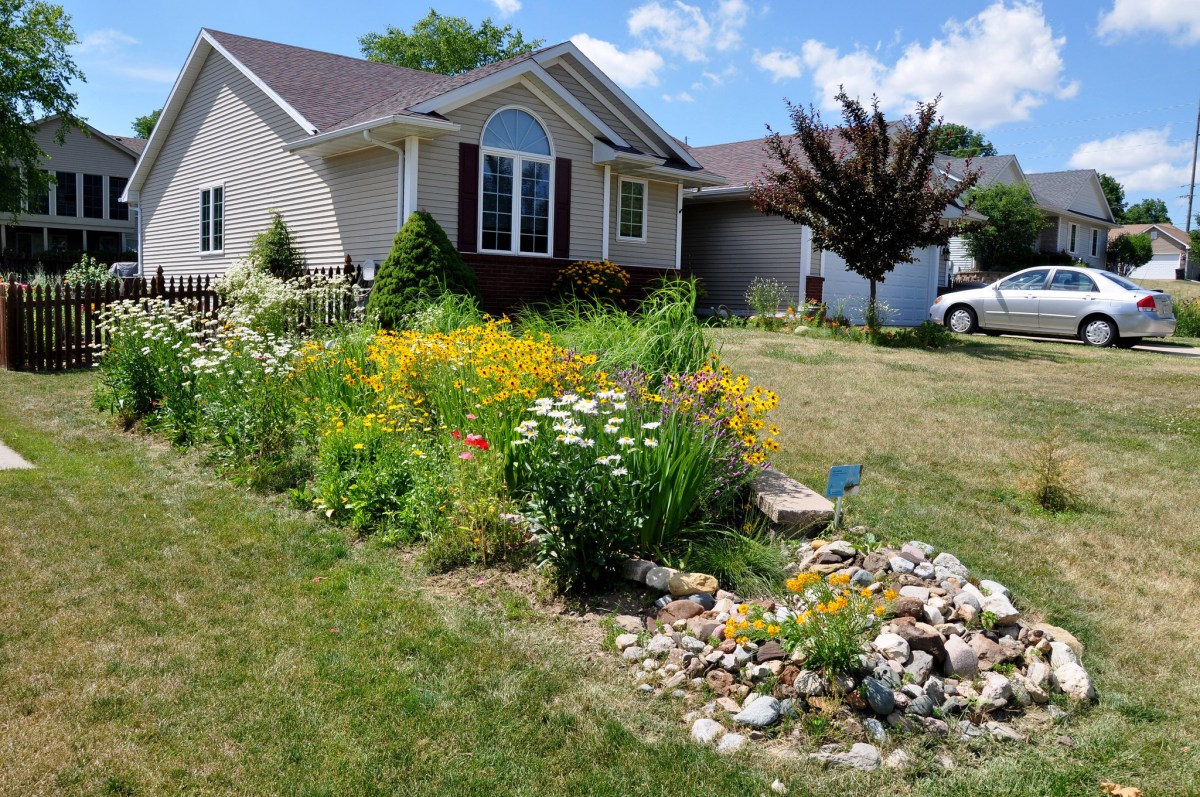
A rain garden looks like an attractive, lush garden bed planted with native wildflowers, grasses, and shrubs in a gently sloped depression. During dry weather, it appears no different from a well-maintained garden border. During and shortly after rain, a shallow pool of water collects in the basin and soaks away within hours. Mature rain gardens display seasonal color from spring blooms through fall seed heads and attract butterflies, hummingbirds, and songbirds throughout the growing season.
How Long Does a Rain Garden Take to Drain?
A rain garden takes 12 to 48 hours to drain completely after a typical storm. The Groundwater Foundation states that rain gardens hold water only during and following a rainfall event and stay dry the rest of the time. Gardens that hold water longer than 48 hours need drainage improvements, either through soil amendment, depth adjustment, or underdrain installation.
Putting It All Together
Rain gardens manage stormwater runoff, filter pollutants, reduce flooding, and support native wildlife, all in one planted depression that enhances your yard's appearance. The key to a successful rain garden is proper site selection, correct sizing at roughly 20% of your drainage area, engineered soil that drains at least 0.5 inches per hour, and native plants matched to moisture zones. With minimal maintenance after the first growing season, a rain garden provides decades of drainage performance and environmental benefit.
Whether you handle the project yourself or work with a professional team, the planning steps covered here, infiltration testing, sizing calculations, placement rules, and plant selection, apply to every rain garden. If your property has standing water, erosion, or flooding you want to solve the right way, White Shovel Landscapes can help you design and install a system that fits your yard and your goals.
Give us a call at 256-612-4439 to set up a free estimate.



You May Also Like

Sep 12, 2026
3 min
How to Keep Landscape Edging Straight

Sep 11, 2026
3 min
How to Decorate a Patio: Ideas for 2025 and 2026
Sep 9, 2026
3 min
How to Trim Around Landscape Edging
Sep 7, 2026
3 min
What Does a Lawn Look Like After Aeration
Have a Project in Mind?
If this post sounds like your yard, tell us about it. Request an estimate online or give us a call, and we’ll talk through what your property needs.





Transforming Huntsville & Madison yards since 2011 with expert landscape design, garden makeovers, mulching, and top-quality installations.


