Providing Best Services in Huntsville & Madison, AL


Follow us on Social.





Sep 1, 2026

3 min

Landscaping
Stamped Concrete vs Pavers: Which Is Better?
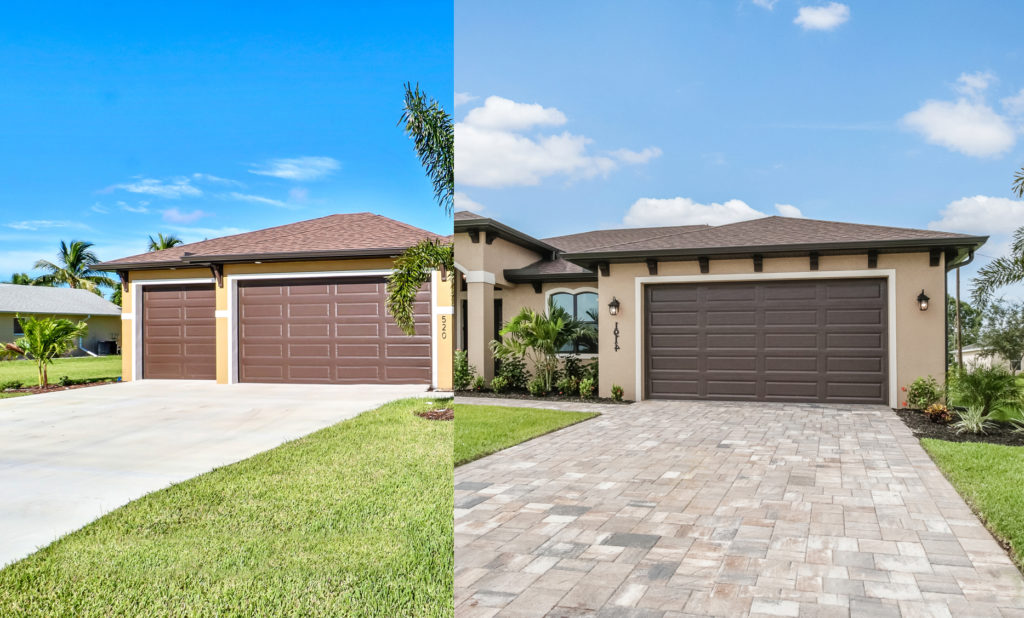
Pavers are the better long-term patio surface for most homes, because they carry higher material strength, flex with ground movement instead of cracking, drain through their joints, and repair invisibly. Stamped concrete wins on upfront cost and offers a wider range of patterns in a single continuous surface.
Both materials build a good patio. They fail in completely different ways, though, and the difference traces back to one thing: a slab is rigid and a paver field is flexible. Below we compare the two on strength, lifespan, ground movement, drainage, maintenance, repair, cost, and resale, then give you a decision sequence for your own yard.
Stamped Concrete vs Pavers: Which Is Better for a Patio?
Pavers are better than stamped concrete for durability, drainage, and repair, while stamped concrete is better for upfront cost and for creating one continuous patterned surface. Neither material is a wrong choice. The right one depends on your soil, your water, and how long you plan to own the house.
Most comparisons you find online are published by companies that sell one material or the other, so they read accordingly. We install natural stone, brick, and pavers, so treat what follows with that in mind and check the sourced figures for yourself. Where stamped concrete genuinely performs better, we say so.
What Is the Difference Between Stamped Concrete and Pavers?
The difference between stamped concrete and pavers is that stamped concrete is one continuous poured slab imprinted with a pattern, while pavers are thousands of individually manufactured units set on a flexible sand and gravel base. Everything else about how these two surfaces behave follows from that single structural distinction.
Stamped concrete is poured wet, colored, then imprinted before it cures. Pattern comes from rubber stamps pressed into the surface, and over 175 stamp patterns and textures are commercially available according to Brickform's product catalog, ranging from cut slate to cobblestone to wood plank. Once it cures, the patio is a single rigid plate sitting on the ground.
Pavers arrive already finished. Each unit is manufactured to a published standard, ASTM C936, which has governed interlocking concrete pavers since it was first approved in 1982. That standard requires a minimum average compressive strength of 8,000 psi. A standard residential poured concrete patio is typically a 3,000 psi mix, which means the individual paver units start at more than twice the compressive strength of the slab they compete against. Getting either material to perform means getting the base underneath it right, which is where most of the work in a patio installation actually happens.
Rigid versus flexible is the distinction worth holding onto. A slab resists movement until it cracks. A paver field absorbs movement and stays intact.
What Lasts Longer, Pavers or Stamped Concrete?
Pavers last longer than stamped concrete because the units meet a higher strength standard, tolerate freeze-thaw cycling by specification, and can be replaced individually rather than resurfaced as a whole. A well-poured stamped patio still delivers decades of service, but it ages as one piece and shows every repair.
The specification gap is the clearest evidence. ASTM C936 requires pavers to survive at least 50 freeze-thaw cycles with average material loss under 1%, and caps average water absorption at 5%. No comparable pass or fail standard governs a residential stamped slab. The table below sets the two side by side on the measures that decide lifespan.
MeasureStamped ConcreteInterlocking PaversCompressive strengthTypically 3,000 psi residential mixMinimum 8,000 psi average, required by ASTM C936Freeze-thaw standardNo residential pass or fail specificationAt least 50 cycles, under 1% material lossWater absorptionVaries with mix and sealer conditionCapped at 5% averageResponse to ground movementRigid, cracks when stress exceeds tensile strengthFlexible, individual units shift and reseatSurface drainageSheds water to the edgesDrains through sand-filled joints into the baseRepair methodPatch or resurface, repair stays visibleLift and replace individual units, repair invisibleSealing requirementReseal every few years to protect color and surfaceOptional, joint sand stabilizer is the common choice
Sources: ASTM C936/C936M Standard Specification for Solid Concrete Interlocking Paving Units; American Concrete Institute slab guidance; Interlocking Concrete Pavement Institute Tech Spec 2; Brickform technical documentation.
What Type of Patio Lasts the Longest?
Natural stone and interlocking pavers last the longest of the common patio surfaces, followed by brick, then stamped concrete, then wood decking. Longevity tracks with two properties: how the material handles water, and whether damage can be repaired without replacing the whole surface. Stone and pavers score well on both. A slab scores well on neither, which is why it tends to be resurfaced rather than repaired once it reaches a certain age.
Do Pavers Shift or Settle Over Time?
Yes, pavers shift and settle slightly over time, and the installation is designed around that fact rather than against it. The Interlocking Concrete Pavement Institute specifies setting installed pavers 1/8 to 1/4 inch above final grade specifically to absorb the minor settling that every flexible pavement undergoes.
Minor settling is the mechanism that keeps a paver patio intact. Ground swells, individual units rise slightly and redistribute the stress across the field. Ground contracts, they seat back down. Nothing is bonded to anything else, so nothing has to break for the surface to accommodate movement. When a section does settle unevenly, the fix is to lift the affected units, correct the bedding sand below, and reset them.
A slab has no such release. Concrete's tensile strength runs only about 400 to 700 psi on a standard 3,000 psi residential mix, far below its compressive strength, so it fails in tension long before it fails in compression. That is why control joints exist. The American Concrete Institute recommends spacing them at 24 to 36 times the slab thickness, producing 8 to 12 foot panels on a typical 4-inch patio, cut one quarter to one third of the slab depth. The joints do not prevent cracking. They decide where the crack goes.
Grade changes magnify all of this. Stepped and terraced designs put different sections of a patio on ground that moves at different rates, and multi-level patios handle that far more gracefully in a modular material than in a continuous pour.
The same logic applies to anything holding back soil at the edge of a patio. Properly built retaining walls use segmental units for exactly this reason, since a flexible wall survives soil pressure that would crack a rigid one.
Which Is Better on Clay Soil, Pavers or Concrete?
Pavers are better on clay soil because clay expands when wet and contracts when dry, and a flexible paver field absorbs that seasonal movement while a rigid slab cracks against it. Expansive clay is the single most common reason a poured patio develops cracks that were never the concrete's fault. Improving structure and infiltration in clay soil before any hardscape goes down reduces how much the ground moves in the first place, which benefits either material.
Which Drains Better, Pavers or Stamped Concrete?
Pavers drain far better than stamped concrete, because water passes down through the sand-filled joints into the base course instead of running across the surface to the edges. This is the most consequential difference between the two materials and the one homeowners hear about least.
Paver joints stay filled with graded bedding sand meeting ASTM C33 requirements rather than mortar. Sand-filled joints let rainwater move vertically into the crushed base below. The base course then spreads that water into the subgrade, which keeps sheet flow off the patio surface and reduces the volume racing toward whatever sits downhill.
A stamped slab does the opposite. Every drop that lands on it has to leave at the perimeter, which concentrates runoff into a narrow band at the patio edge. That band is where erosion starts, where mulch washes out of beds, and where water begins collecting against a foundation. Patios that discharge their entire surface volume into one low corner are a frequent cause of standing water in yards that drained acceptably before the hardscape went in.
None of this makes a slab unworkable. It means a poured patio needs its runoff planned for deliberately, with grading and collection sized to the surface area, and proper drainage solutions designed alongside the patio rather than added after the first heavy storm reveals the problem.
What Are the Drawbacks of a Stamped Concrete Patio?
The drawbacks of a stamped concrete patio are cracking at and away from control joints, dependence on periodic resealing, repairs that remain visible, and a sealed surface that becomes slippery when wet. Each one has a management strategy, and a good installer addresses all four at the design stage.
Cracking is the drawback homeowners worry about most and the one with the most nuance. Stamped concrete is no more crack-prone than any other concrete, and a properly poured slab with correct mix ratios, adequate control joints, and controlled curing has a low chance of significant cracking. Thermal forces in a slab without adequate jointing can exceed 1,000 psi, though, which is more than enough to move concrete that has nowhere to go.
Visible repair is the quieter drawback. Hairline cracks in stamped concrete are repairable, and Brickform's technical guidance notes they are no harder to address than cracks in a plain slab. Matching a repair into an existing stamped pattern with aged color is another matter entirely. The patch holds, but you see it.
What Happens if You Don't Reseal Stamped Concrete?
If you do not reseal stamped concrete, the color fades, the surface absorbs water and stains, and freeze-thaw damage accelerates as moisture penetrates the unprotected top layer. Sealer is what protects the decorative surface, and stamped patios need resealing every few years depending on use and sun exposure. Warm earth tones hold their color noticeably longer than cool grays under high UV and humidity, so color selection affects how quickly a lapse in resealing becomes visible.
Are Pavers or Stamped Concrete More Slip Resistant?
Pavers are more slip resistant than sealed stamped concrete, because their manufactured surface texture stays exposed while a film-forming sealer creates a slick layer over concrete. The slipperiness belongs to the sealer rather than the concrete itself, and it is correctable with anti-slip additives or non-film-forming sealers. Surface temperature is a separate matter that affects both materials, and keeping a patio cool underfoot comes down to choosing lighter colors regardless of which material you pick.
What Is the Most Low Maintenance Patio?
Pavers are the most low maintenance patio surface, because they require no resealing cycle and their appearance does not depend on a protective coating staying intact. Both materials need occasional cleaning, but only one of them degrades visibly when a maintenance task gets skipped. Here is what each surface actually asks of you:
- Stamped concrete, resealing. Required every few years. Skipping it means faded color and an unprotected surface, so this is the one task that is not optional.
- Stamped concrete, cleaning. Sweep or blow off debris, rinse, scrub stubborn areas, rinse again. A sealed surface makes this easier.
- Stamped concrete, crack monitoring. Address hairline cracks early, before water gets into them and widens them through freeze-thaw.
- Pavers, joint sand. Top up joint sand occasionally, or use a stabilizer at installation to reduce sand loss.
- Pavers, weed and moss control. Joints can host growth, which stabilized sand largely prevents.
- Pavers, occasional resetting. Lift and reset any unit that settles low. This is an afternoon of work, not a project.
- Both, keeping water moving. Neither surface is helped by sitting wet, so the grading around the patio matters as much as the patio.
How Often Does Stamped Concrete Need to Be Resealed?
Stamped concrete needs to be resealed every few years, with the exact interval depending on foot traffic, sun exposure, and how the surface is used. A patio that hosts regular gatherings with food and drink spills needs resealing sooner than one that sees light use. Heavy direct sun shortens the interval further, since UV exposure breaks down the sealer film from above while traffic wears it from the surface.
Do Pavers Need to Be Sealed?
No, pavers do not need to be sealed, though sealing is available as an option for color enhancement and stain resistance. The units themselves already meet the 5% maximum absorption requirement in ASTM C936, so they are not depending on a coating for water resistance. Most paver installations use a joint sand stabilizer rather than a surface sealer, which locks the joint material in place without putting a film over the patio.
Can You Repair a Single Damaged Paver?
Yes, you can repair a single damaged paver by lifting it out and dropping a replacement into the same space, and the repair is invisible once the joint sand is refilled. Nothing is bonded, so no cutting, patching, or color matching is involved.
Invisible repair changes the economics of a patio over decades. A stain, a chip, or a cracked unit becomes a fifteen-minute fix using a spare from the original pallet, which is why keeping a small number of leftover units is standard practice on any hardscaping job. The same damage on a slab means either living with a visible patch or resurfacing the whole area.
Access is the other advantage nobody mentions. Running a gas line, an irrigation lateral, or a drain pipe under an existing paver patio means lifting a row, trenching, and putting the units back. Doing the same under a slab means breaking concrete and pouring a section that never quite matches.
Is It Cheaper to Do Stamped Concrete or Pavers?
Stamped concrete is generally cheaper than pavers to install, while pavers are generally cheaper across the full life of the patio. Which number matters depends entirely on your time horizon.
Upfront, a stamped patio involves pouring and finishing a single surface, while a paver patio involves manufactured units, a deeper compacted base, edge restraints, and the labor to set each piece. That labor difference is real and it shows up in every estimate.
Over twenty years the comparison inverts. A stamped patio carries a recurring resealing cycle, and it eventually reaches a point where patching stops looking acceptable and resurfacing becomes the option. A paver patio carries no resealing requirement and absorbs damage one unit at a time. Neither path is wrong, but they are different financial shapes, and a homeowner planning to sell in three years is answering a different question than one planning to stay for twenty.
Which Adds More Resale Value, Pavers or Stamped Concrete?
Pavers typically add more resale value than stamped concrete, because buyers read them as a premium material and because a paver patio in year ten still looks close to the way it looked in year one. Condition at the moment of sale drives most of the difference. A well-maintained stamped patio shows beautifully; one that missed a resealing cycle reads as deferred maintenance to anyone walking through.
The patio is also only one component of what a buyer sees. Outdoor space that reads as coherent and intentional does more for a listing than any single surface, which is why add value conversations usually start with the whole yard rather than one element of it.
Material choice works best decided alongside beds, walkways, and planting, not in isolation from them. That integration is the job of landscape design, and it is the step that determines whether a patio looks placed or looks planned.
Is Stamped Concrete Outdated?
No, stamped concrete is not outdated, and current pattern and color technology produces results that look nothing like the orange-tinted slabs that gave the material its dated reputation. We install pavers rather than concrete, and this is still the honest answer.
Modern stamped color relies on three components working together: integral color mixed into the concrete before pouring, an optional color hardener broadcast onto the surface for richer tone and added abrasion resistance, and a release agent applied before stamping that settles darker pigment into joints and low spots. That third component is what creates depth and keeps the surface from reading as painted concrete. Installations that skip the release color are the ones that look artificial, and they are the source of most of the material's bad reputation.
Stamped concrete remains the stronger option in a few specific situations. It creates one continuous patterned surface with no joints between units, it offers pattern variety that no manufactured paver line matches, and it can be poured into curved and irregular shapes that would require extensive cutting in a modular material. If the design calls for a large sweeping curve with a single unbroken texture, concrete does that better. Either material also outperforms doing nothing, and there are plenty of ways to build curb appeal before committing to a full patio.
Can You Put Pavers Over an Existing Concrete Patio?
Yes, you can put pavers over an existing concrete patio, provided the slab is structurally sound and the added height does not create problems at doorways or thresholds. The existing slab becomes the base, with a thin bedding layer above it and an edge restraint around the perimeter. Drainage needs planning, since water passing through the paver joints reaches the old slab and has to be directed off it rather than allowed to sit. A slab with significant heaving or structural cracking should come out rather than be built over.
How to Choose Between Stamped Concrete and Pavers
You should choose between stamped concrete and pavers by working through your soil, your water, your sun exposure, your time horizon, and your tolerance for maintenance, in that order. Answering these in sequence usually eliminates one material before you get to the bottom:
- Start with the soil. Expansive clay that swells and shrinks seasonally favors a flexible surface. Stable, well-drained soil opens both options.
- Follow the water. Map where runoff goes today. A large impermeable surface concentrates every drop at its edges, so if that edge points at a foundation or a low corner, permeable joints solve a problem that grading alone would have to handle.
- Count the sun. Full-sun patios age sealer faster, which shortens the resealing interval on stamped concrete and makes lighter colors worth choosing in either material.
- Set your time horizon. Selling within a few years favors the lower upfront cost. Staying twenty years favors the lower lifetime cost.
- Be honest about maintenance. A resealing cycle you will not keep up with turns a premium surface into a faded one. Choose the material that matches the upkeep you will actually do.
- Think about the next project. Patios rarely stay isolated, and matching a future walkway design to a modular material is simpler than matching a new pour to an aged stamped pattern.
Climate belongs in the calculation too. Huntsville sits in USDA Hardiness Zones 7b and 8a, with average winter lows between 5 and 15 degrees Fahrenheit, which puts local patios through a real freeze-thaw cycle every year rather than an occasional one. Water that has soaked into an unsealed surface expands when it freezes, and it does that repeatedly through a North Alabama winter.
Soil compounds it. On the Madison and Tennessee Valley clay we build on most often, seasonal swelling is the factor that decides whether a patio is still level in a decade, and it is the reason we steer most homeowners here toward modular materials.
Getting the base right matters more than the surface choice either way. A thoughtful hardscape design starts below grade, because no material performs above a base that was not built for the ground it sits on.
Frequently Asked Questions
Is It Okay to Pressure Wash Stamped Concrete?
Yes, it is okay to pressure wash stamped concrete, using a wide fan tip held well back from the surface. Aggressive close-range washing strips sealer and can etch the decorative texture. Sweep or blow off loose debris first, rinse, scrub stubborn spots with a push broom while the surface is wet, then rinse again.
Can You Resurface a Stamped Concrete Patio?
Yes, you can resurface a stamped concrete patio using a stampable overlay applied directly over the existing slab. Overlays let you change pattern and color without tearing out the old patio, which makes them a practical option for a slab that is structurally sound but visually worn. A slab with active structural cracking or heaving is not a good candidate, since the overlay will telegraph the movement underneath.
How Do You Make Stamped Concrete Look New Again?
You make stamped concrete look new again by deep cleaning the surface, addressing any hairline cracks, then applying fresh sealer. Sealer is what restores the depth and color saturation that makes stamped concrete look finished. Where color has faded significantly, a tinted sealer or a stain can bring tone back before the clear coat goes on.
Why Is New Stamped Concrete Turning White?
New stamped concrete turns white because of efflorescence, a chalky mineral deposit left behind when moisture moves through the concrete and evaporates at the surface. Efflorescence is cosmetic rather than structural and is most common in the first year while the slab finishes curing. It usually weathers off over time, and it can be removed with a cleaner formulated for the purpose.
What Time of Year Is Best to Seal Concrete?
The best time of year to seal concrete is spring or fall, when temperatures are moderate and rain is not imminent. Sealer needs dry surface conditions and a stable temperature window to cure correctly. Sealing in peak summer heat causes the product to flash off too quickly, and sealing near freezing prevents it from curing at all.
How Long Does a Patio Installation Take?
Most patio installations take two to three weeks from start to finish, depending on size and complexity. Base preparation accounts for more of that time than the surface work does, since excavation, grading, and compaction all have to be correct before anything decorative goes down. Weather extends the timeline on either material, though a paver installation can resume after rain sooner than a pour can.
Making the Call
Pavers hold the technical advantage on the measures that matter over decades. They start at more than twice the compressive strength of a standard residential slab, they carry a published freeze-thaw specification, they flex with clay instead of cracking against it, they drain through their joints rather than dumping water at the edge, and they repair without leaving a mark. Stamped concrete answers back with lower upfront cost, pattern range no modular material matches, and continuous curved surfaces that pavers require cutting to achieve.
The deciding factors are usually underground rather than on the surface. Soil that moves, water that has nowhere good to go, and a base built without either in mind will undo an expensive patio in either material. If you would like someone to walk your yard and tell you which one your ground can actually support, we are glad to do that. You can see more of our work at White Shovel Landscapes or reach us at 256-612-4439.



You May Also Like

Sep 12, 2026
3 min
How to Keep Landscape Edging Straight

Sep 11, 2026
3 min
How to Decorate a Patio: Ideas for 2025 and 2026
Sep 9, 2026
3 min
How to Trim Around Landscape Edging
Sep 7, 2026
3 min
What Does a Lawn Look Like After Aeration
Stay Connected and Inspired
Get the latest landscaping tips, seasonal care guides, and exclusive offers delivered straight to your inbox. Don’t miss out on expert advice and ideas to transform your outdoor spaces.
Sign Up for Our Newsletter Today!




Transforming Huntsville & Madison yards since 2010 with expert landscape design, garden makeovers, mulching, and top-quality installations.


