Providing Best Services in Huntsville & Madison, AL


Follow us on Social.




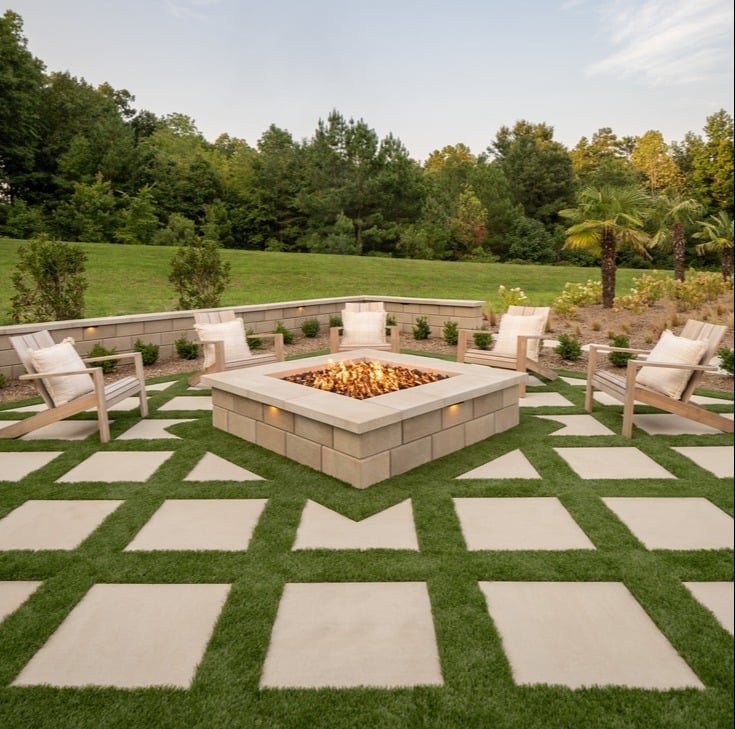

Sep 1, 2026

3 min

Landscape Design
How to Style a Fire Pit: Outdoor Patio Ideas
You style a fire pit by making five decisions in order: the layout, the material match to your patio, the size relative to your seat count, the lighting around it, and the layered details on and near the pit. A fire pit that reads as designed rather than dropped in place gets those five right before anything is purchased.
Below we cover layouts with real footprints, which materials hold up under repeated heat, the diameter and seating numbers nobody publishes, the clearance the fire codes actually require, and what the research says a fire feature returns at resale.
How to Style a Fire Pit: Outdoor Patio Ideas
You style a fire pit by treating it as the anchor of a room rather than an object sitting on pavers. The fire pit sets the geometry of the space, and every other decision follows from where it sits and how large it is. Houzz describes the same principle from the homeowner side, noting that adding a fire pit changes how the whole space gets used.
Changing how a space gets used is a layout problem before it is a decorating problem. Furniture arrangement, traffic paths, lighting placement, and planting all reorganize around the fire, which is why picking accessories first produces a space that never quite settles. The finished look that reads as intentional comes from the same sequencing we use to make a yard look professionally landscaped.
Make the decisions in this order:
- Set the layout. Decide where the fire pit sits and how seating wraps it before choosing anything else.
- Match the material. Tie the pit to the patio surface and to the house, then confirm the material handles repeated heat.
- Size it to the seat count. Diameter follows the number of people you host, and patio dimensions follow diameter.
- Layer the lighting. Fire alone lights faces, not paths, so the surrounding light does the real work.
- Add the details last. Coping ledge, fire glass, planters, textiles, and covers finish the space once the structure is settled.
Step one carries the most weight, because a layout mistake cannot be corrected with cushions.
What Are Some Creative Patio Layouts With a Fire Pit?
Creative patio layouts with a fire pit include the centered round, the offset corner, the sunken conversation pit, the sectional-facing rectangle, and the zoned patio that separates fire from dining. Each layout produces a different footprint, and the footprint is what decides whether the layout fits your yard.
The centered round is the default for good reason. A round pit in the middle of a circular or square patio lets seating flow evenly around it, and Belgard notes that the rounded shape naturally encourages conversation and connection while softening the overall hardscape. The offset corner works the opposite way, pushing the pit to one edge so the remaining patio stays open for a table or traffic.
Sunken layouts do the most with a slope. Dropping the seating area below grade creates enclosure without walls, and it turns a grade change from a problem into the feature that defines the room. Getting the elevations right is the hard part, and that grading work sits at the center of how we approach hardscaping on sloped lots.
Zoned layouts serve larger yards. Belgard describes fire pits surrounded by lounge seating, dining areas, or built-in seat walls depending on how the space is meant to work, and separating the fire zone from the dining zone with a low planting bed or a change in paver pattern keeps both usable at once.
What Are Some Backyard Patio Ideas With a Fire Pit?
Backyard patio ideas with a fire pit include integrating the pit into the paver field, wrapping it with a seat wall, pairing it with a stepping stone approach path, and building a coping ledge wide enough to hold drinks. Houzz recommends that last detail specifically, noting that fire pits with ledges give guests somewhere to set a drink or their marshmallow supplies.
Approach paths matter more than they sound. Houzz suggests accentuating a fire pit patio set in the middle of a lawn with a stepping stone path, which turns the walk out to the fire into part of the design rather than a trip across wet grass.
Material variety in the field is worth considering too. The Houzz patio fire pit gallery holds 34,075 photos, and its surfaces span natural stone, concrete pavers, poured concrete, tile, stamped concrete, decking, and gravel, so almost any existing surface has precedent.
What Are Some Good Ideas for a Fire Pit Area in a Small Backyard?
Good ideas for a fire pit area in a small backyard include a compact pit paired with built-in seating, a low-profile bowl instead of a tall built-in, and a corner placement that preserves open ground. Belgard makes the case that smaller yards support comfortable fire pit areas through compact fire features paired with built-in seating, efficient patio layouts, and carefully selected materials.
Built-in seating is the space saver. Seat walls and bench caps hold the same number of people as chairs while occupying a fraction of the depth, and they remove the visual clutter of six mismatched seats in a tight yard.
Scale discipline does the rest. A pit sized for eight in a yard that hosts four leaves no room to walk, and the space reads cramped no matter how good the materials are. Sizing to actual use is covered further below.
Should a Fire Pit Match the Patio Pavers?
A fire pit should either match the patio pavers exactly or contrast with them deliberately, and the failure mode is landing between the two. Matching reads calm and built-in, while a clear contrast reads like a designed focal point, and a near-match reads like a mistake. Houzz frames the same choice as letting the existing hardscape determine the look, either continuing the same material or contrasting it.
Tying the pit to the house is the third option and often the strongest. Using the same stone or masonry family that appears on the home facade connects the patio to the architecture instead of treating the yard as a separate project, and it is the approach we lean toward on brick and stone homes across Huntsville and Madison. Deciding between matching and contrasting is easier once the surface itself is settled, and choosing the right patio material comes first in that order.
Heat behavior narrows the field regardless of appearance. Extra Space Storage notes that limestone holds moderate surface temperatures and keeps the pit exterior from getting extremely hot, that flagstone works well as a cap because the flat surface stays cooler, and that cinder block is fire resistant but not fire rated, so repeated exposure can make it crumble.
MaterialHeat behaviorStyling characterPhotos in the Houzz patio fire pit galleryNatural stone paversLimestone holds moderate surface temperatures; flagstone works well as a capTraditional to rustic, varies with cut9,743Concrete paversDurable and low maintenance; fire brick recommended for the burn chamberClean and modular, wide color range7,595Poured concrete slabWater resistant, though vulnerable to thermal spalling under direct heatModern and minimal3,219TileNeeds a heat-rated setting and is best kept off the pit itselfDecorative, strong pattern potential1,937Stamped concreteSame spalling exposure as poured slabMimics stone at a distance1,741DeckingCombustible; requires a barrier and clearanceWarm and residential1,121GravelNoncombustible surface, though loose gravel is unsuited inside the pitCasual and campsite-like574
Sources: Houzz gallery facet counts for patio fire pit photos; Extra Space Storage on fire pit materials; Lowe's on fire pit construction materials.
The frequency column is worth reading as evidence rather than fashion. Natural stone and concrete pavers together account for the clear majority of built examples, which tells you both materials have been proven across thousands of installations. That track record is why most of our fire pit work sits on a paver patio rather than a poured slab.
What Is the Perfect Size for a Fire Pit?
The perfect size for a fire pit is the diameter that matches your usual seat count, which for most families lands between 36 and 44 inches. Size follows seating, and patio dimensions follow size. Unilock recommends planning at least 6 feet of clear room on all sides between the fire pit and the edge of the patio, which gives guests a comfortable distance from the heat plus walking space behind the chairs.
Those two numbers combine into a patio dimension. Unilock notes that a medium round fire pit of 3 feet calls for a patio at least 15 feet in diameter, which accommodates four to six chairs or a small curved conversational sofa. A large square or rectangular pit of 6 feet pushes the patio to at least 18 feet across.
Working the arithmetic backward is the more useful direction for most yards. Measure the patio you have or can build, subtract 6 feet from each side, and the remainder is the largest pit the space supports. Fitting that footprint into the rest of the yard is part of what we resolve during landscape design rather than at installation.
Research bears out the mid-size default. The fire feature project surveyed in the 2023 Remodeling Impact Report from the National Association of Realtors and the National Association of Landscape Professionals was defined as a dry-stacked natural stone kit with a gas burner on a 10-foot diameter flagstone patio, which is a compact, realistic residential installation rather than a showpiece.
Is a 60 Inch Fire Pit Too Big?
A 60 inch fire pit is too big for most residential patios, and it works only where the patio measures roughly 22 feet across or more. Applying the 6-foot clearance standard on all sides to a 5-foot pit produces a 17-foot minimum before any walking path is added, and Unilock already sets 18 feet as the floor for a 6-foot rectangular pit.
Scale problems show up as unusable space rather than as a visual complaint. An oversized pit pushes seating to the patio perimeter, which puts guests farther from each other and closer to the edge, and it turns a conversation circle into a ring of people staring at a large fire.
Large pits earn their place on large properties. Where the patio genuinely supports it, a 60 inch pit seats eight or more and works as a real gathering feature.
How Far Should Seating Be From a Fire Pit?
Seating should sit far enough from a fire pit that guests feel warmth without heat, which in practice means roughly 3 feet from the edge for a wood-burning pit and somewhat closer for gas. Wood fires peak hotter and throw sparks, so the seating distance has to account for the peak rather than the average.
A walking path behind the seats is the second measurement. Leaving roughly 3 feet behind the primary seating keeps guests from squeezing between chairs and the fire, and it is the reason the Unilock 6-foot allowance covers both the seat depth and the path.
Seat height interacts with pit height. A pit built slightly lower than the seating lets people look down into the flames rather than across them, and a coping ledge 12 inches or wider doubles as a foot rest and a heat buffer.
How Far Away From a House Should a Fire Pit Be Placed?
A fire pit should be placed at least 25 feet from the house when it burns wood, and no closer than 10 to 15 feet under any circumstances. The model fire codes set the standard: the International Fire Code requires that recreational fires not be conducted within 25 feet of a structure or combustible material, and that portable outdoor fireplaces not be operated within 15 feet, with an exception for one- and two-family dwellings.
Published guidance conflicts on this point and the conflict is worth naming. Lowe's advises placing fire pits at least 10 feet from the house or other structures, which is well under the code figure, while the International Fire Code also defines a recreational fire narrowly as a fuel area 3 feet or less in diameter and 2 feet or less in height. Anything larger falls under open burning rules requiring 50 feet.
Fuel type is what reconciles the numbers. A contained gas burner produces no embers and no ash, so many jurisdictions treat it differently from an open wood fire, while a wood fire throws sparks that travel on wind. Local rules govern either way, and the safe practice is to design to the stricter figure and confirm with the local fire authority before building.
Overhead and underfoot clearance matter as much as horizontal distance. Lowe's advises never placing a fire pit under a covered patio, keeping the pit clear of combustible materials, and skipping windy days entirely.
Can You Put a Fire Pit Under a Pergola?
You can put a fire pit under a pergola only with a gas burner, adequate overhead clearance, and open sides, and never with a wood fire. The distinction is embers and smoke: a contained gas flame produces neither, while a wood fire sends both straight up into the structure.
Real installations reflect that split. Among the 34,075 patio fire pit photos in the Houzz gallery, roughly 11,939 carry no cover at all, while 4,915 sit under a pergola and 6,067 under a roof extension, so covered fire features are common but remain the minority. Open-air placement is the default for a reason.
Where shade is the actual goal, structures beat compromise. A pergola positioned beside the fire zone rather than over it delivers daytime shade without the clearance problem, and the other approaches to keeping a patio cooling through summer work alongside a fire feature rather than against it.
How to Decorate an Outdoor Fire Pit
You decorate an outdoor fire pit by dressing the surfaces around it and inside it rather than the pit walls themselves. The pit is a heat source, so decoration lives on the coping, the seating, the planting, and the light. Lowe's frames the same idea, noting that atmosphere is everything and that a fire pit and comfortable seating go hand in hand.
The elements worth layering in:
- A wide coping ledge. A noncombustible cap 12 inches or wider holds drinks, doubles as a foot ledge, and buffers heat away from the seating.
- Fire glass or lava rock. Lowe's notes that decorative fire stones, also sold as fire glass, and lava rocks finish a gas pit and do not burn.
- Comfortable, weather-resistant seating. Lowe's recommends nonflammable weather-resistant seating such as Adirondack chairs or outdoor sectionals, kept a safe distance from the flame.
- Textiles kept back from the flame. Cushions, throws, and rugs warm the space and belong outside the immediate heat zone, secured on breezy evenings.
- Container plantings. Planters define the edge of the fire zone and soften the hardscape without adding fuel near the flame.
- Garden accents. Lowe's suggests wind chimes, statuary, and fountains as ways to further develop the surrounding landscape.
- A fitted cover. Lowe's notes that a cover protects the pit from weather, keeps out critters, and extends its life.
Every one of those items works better once the light is right, which is the piece most fire pit areas get wrong.
How Do You Light a Fire Pit Area at Night?
You light a fire pit area at night with low-level path and perimeter lighting, because firelight illuminates faces and nothing else. Paths, steps, and seat wall edges all disappear once the fire is the only light source, which makes the space feel smaller and less safe than it is.
Warm, dim, and low is the formula. Fixtures aimed down at grade level keep glare out of eye line and preserve the fire as the visual center, while anything bright enough to compete with the flame flattens the whole effect. String lights overhead give a festive layer, and Lowe's specifically recommends running them around the patio or across trees.
Research supports the investment. The 2023 Remodeling Impact Report gives landscape lighting a perfect Joy Score of 10 out of 10, the highest of any outdoor project surveyed alongside an in-ground pool. Getting the layout right takes some restraint, and the landscape lighting guidance we follow keeps fixtures from overwhelming the space.
What Is the Current Trend in Fire Pits?
The current trend in fire pits is the linear gas fire table, along with integrated seat walls, low-profile bowls, and pits that convert to usable table surfaces. The direction of travel is toward fire features that work as furniture rather than as standalone objects. Belgard reports that linear fire tables offer a sleek contemporary approach while creating a dramatic focal point, that their elongated shape suits modern hardscape layouts, and that they help define seating arrangements in larger spaces.
Dual-purpose design is the second thread. Lowe's notes that fire pit tables typically pair a base with a decorative top and that a burner cover converts the whole piece into a table when the fire is not lit, which turns a seasonal feature into a year-round one.
Integration is the third. Belgard describes built-in seating around a fire pit as a way to create a more functional and cohesive gathering space while reducing the need for extra patio furniture, using seat walls, bench caps, and integrated lounge areas to define the space. Clean definition at the edges finishes the look, which is the same reason landscape edging choices show up in the final result more than people expect.
Shape preference has settled rather than shifted. Belgard notes that rectangular and square pits give a clean structured appearance suited to both modern and traditional spaces, while circular pits remain the classic gathering form, so neither is going out of style.
What Is a Seat Wall Around a Fire Pit?
A seat wall around a fire pit is a low masonry wall built at sitting height, usually finished with a bench cap, that provides permanent seating and defines the edge of the fire zone. Belgard describes seat walls, bench caps, and integrated lounge areas as tools that define the space while improving comfort and flow through the hardscape.
Seat walls solve two problems at once. They seat more people than chairs in the same depth, and they hold the shape of the room when the furniture is put away for winter. On graded lots a seat wall can also serve as a low retaining wall, which pays for itself twice.
Cap width is the detail that determines comfort. A bench cap needs enough depth to actually sit on, and 14 inches or more is a reasonable working minimum for a wall meant to seat guests rather than just hold a drink.
What Is the Best Design for an Outdoor Fire Pit?
The best design for an outdoor fire pit is a built-in unit with a fire brick liner, a noncombustible coping cap, proper drainage in the base, and a shape matched to the patio geometry. Built-in construction is what separates a fire pit that looks like part of the house from one that looks like an accessory. Houzz makes the point directly, noting that portable pits are more affordable while a built-in design is hard to beat on appearance and may add to home value.
Liner and cap do the structural work. A fire brick or steel insert takes the direct heat so the decorative block never does, and a noncombustible cap protects both the wall material and anyone leaning on it.
Drainage is the detail most builds skip. A pit with no way to shed rainwater holds standing water against the base, which accelerates freeze damage in winter and leaves ash sitting in a slurry. A gravel base under a weep opening handles it.
Professional installation applies to a specific subset. Lowe's advises that a homeowner with basic skills can install a fire pit, while built-in or gas-connected models warrant a professional to meet local codes and handle safe connection.
What Type of Fire Pit Lasts the Longest?
The type of fire pit that lasts the longest is a masonry pit built from brick or natural stone with a fire brick liner. Extra Space Storage notes that the biggest advantage of brick fire pits is durability, with a long lifespan, little maintenance, and good containment of stray embers.
Metal pits split by alloy. Extra Space notes that cast iron stays hot well after the fire is out while steel is weather resistant and lighter than cast iron, and that both give off substantial heat. Concrete falls in between, described as low maintenance and water resistant so warping and cracking are less likely, though heavy enough to be effectively permanent.
The short-life category is worth naming. Cinder block is fire resistant but not fire rated, so a cinder block pit used regularly will eventually crumble at the burn face.
Is a Gas or Wood Fire Pit Better for a Patio?
Gas is better for a patio on convenience and clearance, and wood is better on atmosphere and cost of operation. Extra Space Storage notes that burning wood is more affordable than gas but requires regular cleaning and closer attention to the surrounding area, while gas pits save time because there is no ash or soot cleanup, at the cost of losing the classic crackling flame.
Clearance is where gas wins decisively on tight patios. A contained gas burner produces no embers, which is why gas features can sit closer to structures and under open overhead structures where a wood fire cannot.
Installation runs the other direction. Extra Space notes that a gas pit requires running a natural gas line from the house or connecting a propane tank, which makes it a larger up-front project than setting a wood-burning pit in place.
Should You Put Anything in the Bottom of a Firepit?
Yes, you should put a heat-rated filler in the bottom of a firepit, and the wrong filler is a hazard rather than a shortcut. Extra Space Storage warns that treated wood, hard rock, sand, and gravel are not made for high temperatures and can be dangerous or release chemicals into the air when used as fill, and recommends lava rocks, fire beads, fire nuggets, or fire stones instead.
Hard rock is the one that surprises people. River rock and other dense stones can hold trapped moisture that turns to steam under heat, and steam with nowhere to go cracks the stone apart. Lava rock is porous, which is exactly why it handles the cycle.
Filler purpose differs by fuel. In a gas pit the filler covers the burner and distributes flame, so appearance and heat rating both matter. In a wood pit a layer of lava rock over a gravel drainage base protects the pit floor and lets water pass through.
Will a Fire Pit Damage a Concrete Patio?
A fire pit can damage a concrete patio through thermal spalling, and the damage is preventable rather than inevitable. Concrete holds moisture in its pores, and rapid heating turns that moisture to steam that flakes the surface off in chips, which is why a portable pit set directly on a slab is the highest-risk setup.
Prevention comes down to breaking the heat path. A fire pit pad or heat shield under a portable unit, legs that hold the fire bowl several inches off the surface, or a paver base built specifically to carry the pit all keep the slab from taking direct radiant heat. Built-in masonry pits with a fire brick liner and their own footing avoid the issue entirely.
Fuel choice shifts the risk. A gas pit produces steady moderate heat with no ember contact, while a wood fire creates hot spots and drops embers, so a wood pit on concrete needs more separation than a gas one does.
Existing slabs are workable with the right approach. Setting a paver field over or beside a slab gives the pit a proper base and improves the appearance at the same time, which is why we usually build the pit into new hardscape rather than onto old concrete.
What Are the Do's and Don'ts of a Fire Pit?
The do's of a fire pit are attending it constantly, keeping extinguishing means within reach, using a spark screen, and clearing combustibles; the don'ts are burning treated lumber, lighting in wind, placing it under cover, and leaving children unsupervised. The model fire codes make the first one a requirement: open burning, bonfires, recreational fires, and portable outdoor fireplaces must be constantly attended until the fire is extinguished.
Lowe's supplies the practical version of the same list. Check local laws for compliance, keep the pit at a safe distance from structures, never place it under a covered patio, supervise children, keep combustible materials clear, skip windy conditions, add a spark screen to reduce flying embers, clean out ash and debris regularly, and keep a garden hose or a bucket of sand nearby.
Fuel discipline belongs on the list too. Extra Space Storage specifically warns against burning lumber, and treated or painted wood releases compounds that have no place in a space people are sitting around.
Good habits protect a real investment, which raises the question of what that investment actually returns.
How Much Value Does a Fire Pit Add to a House?
A fire pit recovers roughly 56 percent of its cost at resale, according to the 2023 Remodeling Impact Report from the National Association of Realtors and the National Association of Landscape Professionals. That same report gives a fire feature a Joy Score of 9.7 out of 10, which is where the more useful part of the answer lives.
Those two numbers point in different directions on purpose. The report measures financial recovery separately from homeowner satisfaction, and a fire feature scores near the top on enjoyment while landing mid-pack on payback, which makes it a lifestyle project with partial financial return rather than an investment play. The broader picture is different, and a well-designed landscape does add value in ways a single feature cannot.
The patio underneath tells a better financial story. That same report puts cost recovery on a new patio at roughly 95 percent with a Joy Score of 9.9, and an overall landscape upgrade at roughly 100 percent, so the fire pit performs best as part of a larger hardscape project rather than as a standalone add-on.
What Backyard Designs Add the Most Home Value?
The backyard designs that add the most home value are the ones tied to the whole landscape rather than to a single feature. The 2023 Remodeling Impact Report ranks standard lawn care service highest at roughly 217 percent cost recovery, followed by landscape maintenance at 104 percent, an overall landscape upgrade at 100 percent, an outdoor kitchen at 100 percent, and a new patio at 95 percent.
Realtor behavior reinforces the pattern. That report found that 92 percent of Realtors recommend improving curb appeal before listing, and that landscape professionals saw the largest demand increases for an overall landscape upgrade at 61 percent, landscape maintenance at 58 percent, and a new patio at 55 percent. Whole-yard work is where the returns concentrate, which is why landscape installation planned as one project outperforms features added one at a time.
Are Backyard Fire Pits Worth It?
Backyard fire pits are worth it for use rather than for resale, and the research supports that framing. A Joy Score of 9.7 out of 10 in the 2023 Remodeling Impact Report puts a fire feature above an outdoor kitchen, tree care, and standard lawn care on homeowner satisfaction, while its 56 percent cost recovery sits below most other outdoor projects.
Season extension is the practical payoff. A fire feature makes a patio usable through the cool months on either side of summer, which turns a three-season space into a nearly year-round one. How much that matters is a question about your own habits, and how the resale impact lands depends heavily on the rest of the yard.
What to Know Before Buying a Fire Pit
Before buying a fire pit, settle five things: your fuel access, your patio surface, the clearance you actually have, your usual seat count, and your local burn rules. Four of those five are measurements, and taking them before shopping prevents the most common purchase mistake, which is buying a pit the yard cannot accommodate.
Local rules deserve a call rather than an assumption. Burn restrictions, seasonal bans, and clearance requirements vary by jurisdiction across North Alabama, and the fire codes leave meaningful discretion to the local authority on how gas features are treated.
Surface and clearance decide the rest. A patio that cannot give 6 feet on all sides caps the pit diameter, a wood deck rules out direct placement, and a covered patio rules out wood fuel entirely. Working those constraints out on paper is part of how we approach any outdoor patio that includes a fire feature.
Fuel access is the last gate. A wood pit can go almost anywhere that clears the setbacks, while a natural gas pit needs a line run from the house and a propane unit needs somewhere to conceal the tank.
Frequently Asked Questions
What Is the Safest Backyard Fire Pit?
The safest backyard fire pit is a contained gas unit, because it produces no embers, no ash, and no flying sparks. Extra Space Storage also identifies ethanol as a low-risk option, noting that it burns with no smoke or ash and runs cooler than gas or wood. Among wood-burning options, a chiminea contains stray sparks better than an open pit because the flames direct up through the stack.
Does Having a Fire Pit Increase Your Insurance?
Having a fire pit may affect your homeowners insurance, and the answer depends entirely on your policy and your carrier. We are not insurance advisors and cannot tell you how any specific policy treats a fire feature. Call your carrier before you build, ask directly about permanent versus portable features, and get the answer in writing.
Do You Need a Permit for a Fire Pit?
You may need a permit for a fire pit, and it depends on your jurisdiction and the type of fire. The International Fire Code treats a recreational fire of 3 feet or less in diameter and 2 feet or less in height differently from larger open burning, which typically does require a permit. Gas connections and built-in masonry features often trigger separate requirements, so check with your local fire authority and building department first.
How Do You Keep a Fire Pit From Smoking?
You keep a fire pit from smoking by burning seasoned dry hardwood and giving the fire adequate airflow underneath. Wet or green wood produces most backyard smoke complaints, since the fire spends its energy driving moisture out of the wood instead of burning cleanly. Air intake openings at the base of the pit and a raised grate both improve combustion.
Can You Use a Fire Pit on a Wood Deck?
You can use a fire pit on a wood deck only with a heat barrier, adequate clearance, and preferably gas fuel. Fire safety guidance is consistent that a fire pit should never sit directly on a wooden deck, since decking is combustible and radiant heat alone can scorch or ignite it. A deck-rated pad plus a raised pit with legs is the minimum arrangement, and the model codes still require clearance from combustible material.
How Do You Store a Fire Pit in Winter?
You store a fire pit in winter by cleaning out all ash, drying the interior, and covering it or moving it under shelter. Lowe's notes that a fitted cover protects the pit from the elements, keeps out critters, and extends its life. Ash left sitting through winter holds moisture against metal and masonry alike, which is what causes most off-season damage.
Wrapping It Up
Styling a fire pit is a sequence of five decisions, and the order matters more than any single choice. Layout comes first because it sets the geometry of the whole space. Material follows, matched to the patio and the house and checked against how it behaves under repeated heat. Size comes from the seat count, with roughly 6 feet of clearance on all sides deciding what the patio can hold. Lighting does the work firelight cannot. Details go on last. Underneath all of it sits the clearance the fire codes require, which is 25 feet from structures for a wood fire and no less than 10 to 15 feet for a contained one.
The research says the same thing in different language: a fire feature scores 9.7 out of 10 on homeowner enjoyment while the patio it sits on recovers closer to 95 percent of its cost. Build the patio well and the fire pit becomes the reason you use it. If you are working out where a fire feature fits on your property, the team at White Shovel Landscapes is glad to walk the space with you, take the measurements, and sketch the layout before anything is ordered.
We handle the grading, the base, the paver field, and the pit as one project, which is the only way the clearances and the sight lines come out right.
A free estimate is a simple place to begin.



You May Also Like

Sep 12, 2026
3 min
How to Keep Landscape Edging Straight
Sep 11, 2026
3 min
How to Decorate a Patio: Ideas for 2025 and 2026
Sep 9, 2026
3 min
How to Trim Around Landscape Edging

Sep 7, 2026
3 min
What Does a Lawn Look Like After Aeration
Have a Project in Mind?
If this post sounds like your yard, tell us about it. Request an estimate online or give us a call, and we’ll talk through what your property needs.





Transforming Huntsville & Madison yards since 2011 with expert landscape design, garden makeovers, mulching, and top-quality installations.


