Providing Best Services in Huntsville & Madison, AL


Follow us on Social.





Sep 1, 2026

3 min

Lawn Care
How to Tell What Kind of Zoysia Grass You Have
You tell what kind of zoysia grass you have by measuring five traits: leaf blade width, blade stiffness and leaf hairs, seed head shape and color, spread rate, and growth posture. Blade width alone narrows the answer to one of three zoysia species, and the remaining four traits point to a named cultivar.
Below we walk the identification step by step, give the measured blade widths that separate one cultivar from the next, cover how to rule out bermudagrass and St. Augustinegrass, and explain what changes in your lawn care once you have an answer.
How to Tell What Kind of Zoysia Grass You Have
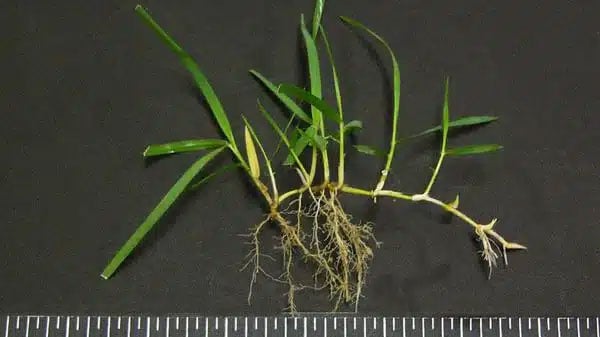
You tell what kind of zoysia grass you have by working from species down to cultivar using measurable leaf and stolon traits. Leaf blade width is the single most reliable starting point, because zoysia blades run 0.08 to 0.16 inches wide, or 2 to 4 millimeters, according to NC State Extension. Color is the least reliable trait, since color shifts with fertility, season, and mowing height while blade width holds steady.
Blade width holds steady because it is a genetic trait of the cultivar rather than a response to care. That makes a small ruler or a set of calipers more useful than a photograph. Pull a single blade, lay it flat, and measure across the widest point.
Here is the sequence we follow when a homeowner asks us to identify an existing zoysia lawn:
- Measure the leaf blade width at the widest point. A blade under 2 millimeters points to a very fine matrella-type cultivar, a blade near 2 millimeters points to the Emerald group, and a blade above 3 millimeters points to the coarser Japanese lawngrass group.
- Run the blade between two fingers. NC State Extension notes that zoysiagrass feels stiff to the touch and offers more resistance than bermudagrass, and the stiffness comes from the leaf structure rather than from dryness.
- Look at the upper leaf surface in strong light. NC State Extension records hairs standing upright on the zoysia leaf blade, with at least a few long hairs near the base, and hair length varies enough between cultivars to be diagnostic.
- Check the leaf tip and the ligule. Zoysia leaf tips are sharply pointed, and NC State Extension describes the ligule as a short fringe of hairs 0.008 inches long, or 0.2 millimeters, with auricles absent entirely.
- Find a seed head if the lawn has gone unmowed. The LSU AgCenter describes a singular zoysiagrass seed head that is red to purple in color with small white flowers, and NC State Extension records the seeds alternating along a spikelet.
- Watch how fast it spreads and how it sits. Some cultivars run aggressively along the surface and others creep. Stolon spread differences between cultivars are large enough to separate them, which we cover further below.
Those six traits come out of the same identification key that turf professionals use.
How Can I Identify My Grass Type?
You identify your grass type by reading six botanical features: vernation, ligule, auricles, collar, sheath margin, and seed head. Vernation is how the youngest leaf sits inside the bud, and NC State Extension records zoysiagrass leaves as rolled in the bud rather than folded. Folded vernation rules zoysia out immediately, which is why professionals check it first.
Rolled vernation narrows the field, and the ligule narrows it further. The ligule sits where the leaf blade meets the sheath, and on zoysiagrass NC State Extension measures it as a short fringe of hairs 0.2 millimeters long. Auricles are the small projections some grasses carry at that same junction, and zoysiagrass has none.
The collar and the sheath finish the key. NC State Extension describes the zoysia collar as continuous with hairy edges, and the sheath as split with overlapping margins, sometimes carrying a tuft of hairs at the throat. A hand lens makes all four features readable in about a minute.
Reading the key on a lawn you have never identified starts with one question that comes before cultivar.
How Do You Tell If You Have Zoysia Grass?
You tell if you have zoysia grass by checking for stiff blades, upright hairs on the leaf surface, sharply pointed leaf tips, and a dense mat that spreads slowly. The stiffness test plus the leaf hair test together separate zoysiagrass from every other common warm-season lawn grass. NC State Extension states the comparison directly: zoysiagrass has hairs standing upright on the leaf blade, and bermudagrass does not.
Density is the second confirmation. The LSU AgCenter describes zoysiagrass as a medium to fine textured turfgrass with a thick, dense growth habit that produces both stolons above ground and rhizomes below ground. Two spreading structures instead of one is why an established zoysia mat resists a finger pushed toward the soil.
Slow recovery is the third. The LSU AgCenter notes that zoysiagrass tolerates wear and traffic well but recovers slowly, so a lawn that fills a bare spot in two weeks is probably not zoysia. The table below sets the four grasses most often confused in Alabama side by side.
GrassLeaf blade widthHairs on leaf bladeFeelSpread habitSeed headZoysiagrass2 to 4 mmPresent, upright, longer near the baseStiff, resists the handStolons and rhizomes, slowSingle spikelet, red to purpleBermudagrass2 to 4 mmAbsent on the bladeSoft, flexibleStolons and rhizomes, fastThree to seven finger-like spikesSt. Augustinegrass4 to 10 mmAbsentThick, coarse, foldedStolons only, fastShort spike on a flattened stemCentipedegrass2 to 4 mmAbsentSoft, apple-green colorStolons only, slowShort single spike
Sources: NC State Extension TurfFiles; LSU AgCenter turfgrass species identification; Clemson University Home & Garden Information Center.
How Do You Tell Zoysia From Bermuda Grass?
You tell zoysia from bermuda grass by looking for upright hairs on the leaf blade and by feeling the blade between your fingers. NC State Extension confirms that zoysiagrass carries those hairs while bermudagrass does not, and that zoysiagrass is stiff to the touch and offers more resistance.
Resistance shows up in the mower too. Bermudagrass blades bend away from a dull rotary blade and zoysia blades fight it, which leaves frayed gray tips across a zoysia lawn cut with worn equipment. Spread rate gives a third check, since bermudagrass closes a bare patch in weeks while zoysiagrass takes a full season or longer.
Bermudagrass also invades zoysia lawns, and a mixed stand reads as two textures in the same yard. Fabric barriers rarely stop a running warm-season grass on their own, as we found when testing whether weed paper holds bermudagrass back.
How Do You Tell Zoysia From St. Augustine Grass?
You tell zoysia from St. Augustine grass by blade width, since St. Augustine blades run roughly twice as wide. Zoysia blades measure 2 to 4 millimeters across, according to NC State Extension, while St. Augustinegrass blades are broad enough to identify from standing height.
Blade width pairs with spreading structure. St. Augustinegrass spreads by thick above-ground stolons only, so its runners sit on the surface where a hand can trace them, while zoysiagrass also pushes rhizomes below ground where nothing is visible. Pulling a runner and finding no underground stems points away from zoysia.
Once zoysia is confirmed, the next question is which zoysia.
What Are the Three Types of Zoysia Grass?
The three types of zoysia grass are Japanese lawngrass, manilagrass, and mascarenegrass. NC State Extension identifies these as Zoysia japonica, Zoysia matrella, and Zoysia tenuifolia, the three major zoysiagrass species suitable for turf. Blade width and cold tolerance separate them.
- Zoysia japonica (Japanese lawngrass): the coarsest of the three and the most cold hardy. Clemson University notes that most zoysiagrass lawns are planted with a cultivar from this species, and that the Meyer family within it carries a medium-coarse leaf texture. Meyer, El Toro, Palisades, Empire, Zenith, and JaMur belong here.
- Zoysia matrella (manilagrass): fine textured with a tighter canopy and less cold hardiness than japonica. Zeon, Diamond, Royal, Cavalier, and Zorro sit in this group, which is where most golf-course fairway and putting-surface cultivars come from.
- Zoysia tenuifolia (mascarenegrass): the finest and least cold hardy, with very narrow blades and a mounding habit. It appears more often as an ornamental than as a lawn, and it contributes genetics to hybrids rather than standing alone in most yards.
Emerald zoysia sits between two of those species as a japonica and tenuifolia hybrid, which explains its fine texture paired with the thatch tendency Clemson University flags in over-fertilized stands. Hybrid parentage is also why species identification alone rarely settles the question a homeowner is asking.
What Kind of Zoysia Grass Do I Have?
The kind of zoysia grass you have is identified by matching your measured leaf width and leaf hair length against published cultivar measurements. Crown leaf width measurements recorded in United States plant patent filings for zoysiagrass separate the common cultivars clearly: Diamond at 1.13 millimeters, Royal at 1.63 millimeters, Cavalier at 1.87 millimeters, Cashmere at 1.89 millimeters, Emerald at 2.10 millimeters, El Toro at 3.32 millimeters, and Meyer at 3.64 millimeters.
Those measurements put Meyer and El Toro in the medium-coarse texture class, Emerald and Cashmere in the fine class, and Diamond, Royal, and Cavalier in the very fine class. Texture class is the fastest way to cut the candidate list roughly in half before any other trait gets checked.
Cutting the list further calls for spread rate. Patent trial data recorded at Carbondale, Illinois measured five-year stolon spread at 426.5 centimeters per meter for JaMur and 372.0 for Zeon against just 48.6 for Meyer, so an aggressively running fine-bladed zoysia is far more likely to be Zeon than Meyer. The same trial rated turf texture on a nine-point scale where nine is finest, placing Zeon at 9.0, Emerald at 8.3, Meyer at 7.3, JaMur at 5.7, El Toro at 4.3, and Chinese common zoysia at 2.0.
Growth posture supplies a final check. That trial rated posture on a nine-point scale where nine is most vertical, placing Meyer at 9 and El Toro at 8 against JaMur at 4, so a coarse zoysia that lies flat and runs hard is JaMur rather than Meyer. If the cultivar still will not resolve, the practical question shifts to which grass suits the site going forward, and we help homeowners weigh the best grass type for their lot.
Is My Grass Emerald or Zeon Zoysia?
Your grass is Emerald or Zeon zoysia depending on leaf hair length and spread rate, since the two look nearly identical at a glance. Emerald carries pronounced hairs on the upper leaf surface, measured at 2.153 millimeters in greenhouse trials recorded in zoysiagrass patent filings, which is longer than the 1.767 millimeters measured on Meyer and the 1.263 millimeters on El Toro.
Hair length pairs with spread behavior to settle it. Zeon spread 372.0 centimeters per meter in the Carbondale trial against 91.2 for Emerald, so Zeon closes ground roughly four times faster. A fine-bladed zoysia that filled a repair patch within one season is Zeon.
Thatch depth adds a third signal. Clemson University notes that Emerald develops excess thatch quickly when over-fertilized, and the same patent trial rated Zeon's thatch thickness lower than every cultivar tested except JaMur. A spongy fine-bladed lawn leans Emerald.
Is Zenith the Same as Palisades Zoysia?
No, Zenith is not the same as Palisades zoysia, though the two look close enough that suppliers and installers confuse them. Both are Japanese lawngrass cultivars with similar blade width and color, and the practical difference sits in how each one is sold. Zenith is available as seed, while Palisades is sold as sod and plugs only.
Availability becomes the identification clue. A zoysia lawn that was seeded rather than sodded is almost certainly Zenith, since the fine-textured and medium cultivars sold as sod produce little viable seed. The Turfgrass Group notes that Zenith carries better cold tolerance and a faster growth rate than some alternatives, which also shows up as quicker patch recovery.
Sod origin is worth chasing, because paperwork resolves what eyesight cannot.
Which Zoysia Grass Has the Finest Blade?
Diamond zoysia has the finest blade of the common cultivars, measured at 1.13 millimeters of crown leaf width in patent trial data. Royal follows at 1.63 millimeters and Cavalier at 1.87 millimeters, and all three fall in the very fine texture class.
Very fine blades carry a maintenance cost. These cultivars are bred for close mowing on golf and sports surfaces, and holding them at lawn height produces a puffy canopy that scalps easily. Finding a blade under 1.5 millimeters in a residential yard usually means the sod came off a specialty order rather than a standard pallet.
Is There an App to Tell Me What Type of Grass I Have?
Yes, there are plant identification apps that can tell you what type of grass you have at the species level, and no app reliably identifies the cultivar. Photo-based identification can distinguish zoysiagrass from bermudagrass or St. Augustinegrass, and it cannot distinguish Zeon from Emerald or Zenith from Palisades.
The limit is a measurement problem rather than a software problem. Cultivars within one species separate on differences of a few tenths of a millimeter in leaf width and hair length, as the patent trial figures show, and a phone photograph of a mowed lawn carries no reference scale. A ruler on a pulled blade beats a photograph every time.
Apps also read a mowed lawn poorly because mowing removes the leaf tip, the seed head, and much of the ligule detail that a key depends on. Letting a small test patch grow for two weeks before photographing improves the result substantially.
How Do You Find Out What Sod Was Installed?
You find out what sod was installed by checking the installation records, contacting the installer, and calling the sod supplier. Closing documents on a newer home sometimes list the landscape scope, and installers frequently keep job files with the pallet source.
Supplier records are the strongest lead when they exist, though many sod yards keep no cultivar record past the invoice. Pulling a four-inch plug and carrying it to a local sod farm gets a visual comparison against live inventory, which is how most cultivar questions actually get settled. We keep cultivar records on every sod installation we perform for exactly that reason.
When records run out entirely, the lawn itself still carries readable traits through the off season.
Can You Identify Zoysia Grass When It Is Dormant?
Yes, you can identify zoysia grass when it is dormant, because the structural traits survive dormancy even though color disappears. Dormant zoysiagrass keeps its stiff blade, its upright leaf hairs, its rolled vernation on any surviving green tissue, and its stolon and rhizome network.
Thatch density is the most useful dormant-season signal. Zoysiagrass builds a dense mat that stays firm underfoot through winter, and the LSU AgCenter notes that thatch develops over time especially in zoysiagrass, which distinguishes a dormant zoysia lawn from a thinner dormant bermudagrass lawn.
Cultivar identification is harder in dormancy for one reason: fall color retention differs between cultivars, so a lawn that browned early is not necessarily the cultivar it appears to be. Waiting for spring green-up gives a cleaner read on both blade width and hair detail.
Can You Mix Different Types of Zoysia Grass?
Yes, you can mix different types of zoysia grass physically, and the mixture shows as a visible seam in texture and color. Two cultivars from different texture classes never blend into one uniform surface, because blade width and growth posture stay genetically distinct no matter how the lawn is maintained.
The seam lasts longer on zoysia than on other grasses. Zoysiagrass spreads slowly, so a mismatched patch does not get absorbed by the surrounding turf the way a bermudagrass patch would, and the boundary can stay readable for several seasons. That is the practical reason cultivar identification matters before any repair work begins.
Mowing height makes the mismatch worse. A medium-coarse cultivar held at the height that suits a fine cultivar gets scalped, and a fine cultivar held at the coarse cultivar's height grows puffy, so one mowing setting cannot serve both. Poor surface preparation compounds it further, and most patch failures we see trace back to the sod installation mistakes that happen before the sod ever arrives.
Preparation problems and cultivar mismatch often show up in the same patch. A repair that used the wrong cultivar on unprepared ground fails twice, once on texture and once on grade.
Grade and soil condition sit underneath both problems. A patch laid over compacted or uneven ground settles below the surrounding turf within a season, so soil repair comes before the sod order rather than after it.
A patchy, mismatched surface also creates the opening that weeds need.
What Grass Chokes Out Weeds the Best?
Zoysiagrass chokes out weeds the best among warm-season lawn grasses, because its canopy density leaves little bare soil for weed seed to reach. The LSU AgCenter attributes that suppression to a thick, dense growth habit fed by both stolons and rhizomes, and states that mowing at the appropriate height is key to preventing scalping and reducing weed encroachment.
Appropriate height depends on the cultivar you just identified. The LSU AgCenter recommends mowing zoysiagrass at 1 to 2 inches routinely, with coarse-bladed zoysiagrass mowed higher and narrow-leafed zoysiagrass tolerating lower heights, and never removing more than one-third of the leaf blade in a single pass.
Density fails where the stand thins. Shade, compaction, and scalping all open the canopy, and once daylight reaches bare soil the weed control methods that matter shift from prevention to recovery.
Recovery takes longer than the loss did. Zoysiagrass closes ground slowly, so a canopy that opened over one wet summer can take a full growing season to knit back together.
Recovery on a stand that has already lost ground is a different job from maintenance. Heavy weed infestation in a thin zoysia lawn calls for rebuilding the canopy rather than adding another spray.
Recovery starts with a level, healthy surface, which is where topdressing comes in.
What Kind of Sand for Zoysia Grass?
The best sand for zoysia grass is a washed, screened river sand applied in thin passes rather than a single deep layer. Clint Waltz, turfgrass specialist at the University of Georgia, recommends topdressing a zoysiagrass lawn with an eighth to a quarter inch of river sand, letting it work into the canopy, then applying another eighth to a quarter inch weeks later.
Thin passes matter because zoysiagrass has to grow through the material. Burying the canopy suppresses the stand rather than leveling it, and Waltz advises adding sand progressively and directing more material into the low spots and less onto the high spots.
Sand choice matters even more on clay. Waltz warns that too much sand over clay soil behaves like a brick, losing drainage and creating compaction, and river sand handles clay better than uniformly sized play or masonry sand. North Alabama clay makes that warning practical rather than theoretical, and a sand-over-clay layer that stops water is a worse problem than the low spot it was meant to fix.
Correcting the soil profile beats burying it. Where a lawn has both grade problems and a hard clay layer, soil amendment addresses the cause instead of stacking material on the symptom.
Amendment works from the profile up. Loosening the layer beneath the turf lets rhizomes spread and lets water move down instead of sideways across a buried sand seam.
Water movement decides whether any of it holds. Low spots that pond after every rain need the water path fixed first, and drainage solutions come before topdressing on every project we run.
Persistent wet areas tell their own story. A lawn holding water after every rain will thin no matter which zoysia cultivar sits on top of it.
Why Knowing Your Zoysia Type Changes Your Lawn Care
Knowing your zoysia type changes your lawn care because mowing height, fertility, shade expectations, and repair sourcing all shift by cultivar. A single identification answers four maintenance questions at once.
Mowing height is the first. The LSU AgCenter sets the range at 1 to 2 inches with coarse-bladed zoysiagrass mowed higher and narrow-leafed cultivars mowed lower, so the blade width you measured sets the mower deck rather than a general rule.
Fertility is the second. The LSU AgCenter recommends up to 2 pounds of nitrogen per 1,000 square feet per year, applied midspring to midsummer, with never more than 1 pound per 1,000 square feet in a single application. Clemson University adds the cultivar-specific caution that Emerald builds excess thatch quickly under heavy feeding, so the fine-textured cultivars need the lower end of that range.
Shade tolerance is the third, and it varies enough to change where a cultivar belongs in the yard. Clemson University describes Emerald as carrying more shade tolerance than Meyer, and Zeon as showing good shade and drought tolerance along with tolerance for wet growing conditions. Yards in Huntsville and Madison with heavy tree cover on one side and full sun on the other often need a cultivar decision per zone. We settle those zone decisions during landscape design.
Zone-by-zone cultivar choices also change the mowing plan, since two cultivars in one yard rarely share a height of cut. Splitting the yard into two mowing zones is often simpler than forcing one setting across both.
Soil chemistry is the fourth. The LSU AgCenter puts the ideal zoysiagrass soil pH between 6 and 7 and recommends following soil test results rather than guessing, and correcting pH and structure through lawn soil repair does more for a thin stand than another fertilizer pass.
Frequently Asked Questions
What Is the Hardest Grass to Get Rid Of?
The hardest grass to get rid of is bermudagrass, because it spreads by both stolons above ground and rhizomes below ground and regrows from rhizome fragments left in the soil. Zoysiagrass is also difficult to remove for the same structural reason, though its slow spread rate makes it less aggressive as an invader. Removing either one calls for full soil-level removal rather than surface treatment.
What Is the Most Invasive Grass?
The most invasive grass in southern lawns is bermudagrass, which spreads fast enough to cross a bed edge in a single season. Zoysiagrass spreads far more slowly, and patent trial data recorded five-year stolon spread of 48.6 centimeters per meter for Meyer against 426.5 for JaMur, so cultivar choice determines how much edging maintenance a zoysia lawn creates.
How Wide Are Zoysia Grass Blades?
Zoysia grass blades are 0.08 to 0.16 inches wide, or 2 to 4 millimeters, according to NC State Extension. Within that range, crown leaf measurements from zoysiagrass patent filings run from 1.13 millimeters on Diamond to 3.64 millimeters on Meyer. Measuring at the widest point of a fully expanded blade gives the most consistent reading.
What Does a Zoysia Grass Seed Head Look Like?
A zoysia grass seed head looks like a single narrow spike, red to purple in color, carrying small white flowers, according to the LSU AgCenter. NC State Extension describes the structure as a spikelet with seeds alternating along the head. That single-spike form separates zoysiagrass from bermudagrass, which produces several finger-like spikes from one point.
Does Zoysia Grass Have Hairs on the Leaf?
Yes, zoysia grass has hairs on the leaf, and NC State Extension records them standing upright on the blade with at least a few long hairs near the base. Hair length differs by cultivar, measured in patent trials at 2.153 millimeters on Emerald and 1.767 millimeters on Meyer, while Royal and Cashmere measured zero. Absent hairs on a fine-bladed zoysia point toward the very fine matrella cultivars.
What It All Comes Down To
Identifying your zoysia grass comes down to measurement rather than appearance. Blade width places the lawn in one of three species, leaf hair length and spread rate narrow it to a cultivar group, and seed head shape and growth posture confirm it. Color and general impression mislead, because both respond to fertility and season while the structural traits hold steady. When two cultivars refuse to separate by eye, installation records, supplier invoices, and a plug carried to a sod farm finish the job.
The answer earns its keep afterward. Cultivar identity sets your mowing height, caps your nitrogen rate, predicts how a shaded corner will perform, and tells you what to order when a patch needs replacing. If you are working through an existing zoysia lawn and want a second set of eyes on it, the team at White Shovel Landscapes is glad to walk the yard, measure a few blades, and talk through what the stand needs.
Most zoysia lawns resolve to a cultivar group in a single visit, and the ones that do not still tell us what the stand needs.
Bring us photos or a pulled plug and we can usually narrow the cultivar on the spot. A free estimate is a simple place to begin.


You May Also Like

Sep 12, 2026
3 min
How to Keep Landscape Edging Straight

Sep 11, 2026
3 min
How to Decorate a Patio: Ideas for 2025 and 2026
Sep 9, 2026
3 min
How to Trim Around Landscape Edging
Sep 7, 2026
3 min
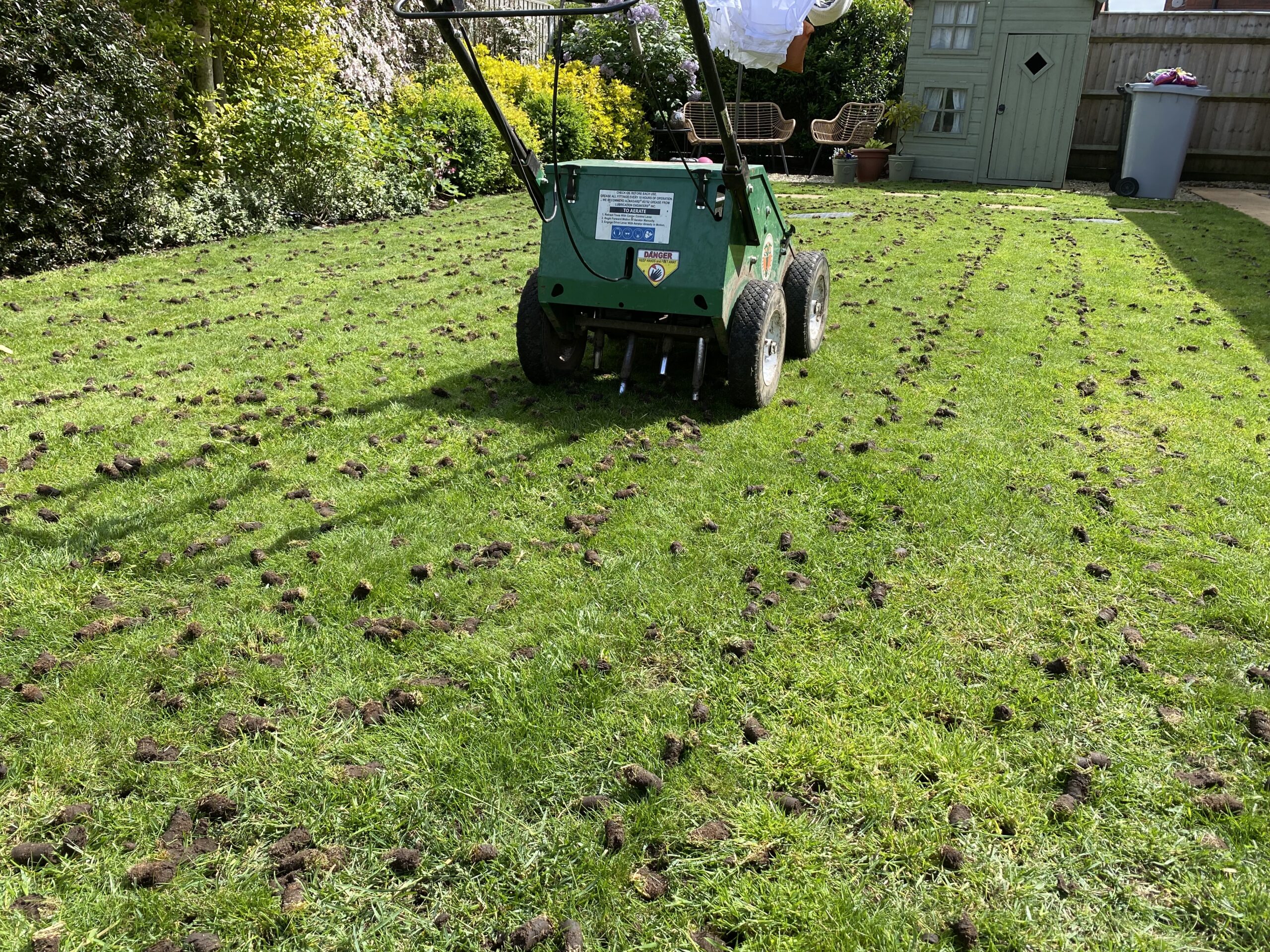
What Does a Lawn Look Like After Aeration
Have a Project in Mind?
If this post sounds like your yard, tell us about it. Request an estimate online or give us a call, and we’ll talk through what your property needs.




Transforming Huntsville & Madison yards since 2011 with expert landscape design, garden makeovers, mulching, and top-quality installations.


